
Teaching
Rated Gold in the 2023 Teaching Excellence Framework (TEF) for the outstanding quality of our teaching and graduate outcomes

Food and nutrition specialists are always in demand, playing crucial roles in everything from product development to public health. On our food and nutrition courses you'll engage with some of the most important ideas and debates in this fast-moving sector.




On our undergraduate courses, you’ll have the opportunity to take a year long work placement between your second and third years, gaining valuable experience in the food and nutrition sector.
This allows you to apply your learning in a professional setting and graduate with an Applied Professional Diploma to strengthen your CV. Previous students have secured placements with organisations such as Tesco, Asda, Sainsbury's, Morrisons, Greencore, Unilever, GSK, Premier Foods and Samworth Brothers.
A food and nutrition degree can lead to careers in:
Common roles include public health nutritionist, sports nutritionist, food product developer, food safety and quality manager, behaviour change practitioner, and food marketing executive. These careers allow graduates to improve health outcomes, support healthier communities and help create more sustainable food systems.
Our food and nutrition graduates go on to work for leading organisations across the food and health sectors, including major manufacturers, retailers and public health bodies. Recent graduates have secured roles with companies such as Premier Foods, Cranswick, My Protein and the NHS – building successful careers in areas such as product development, nutrition, quality assurance and health improvement.
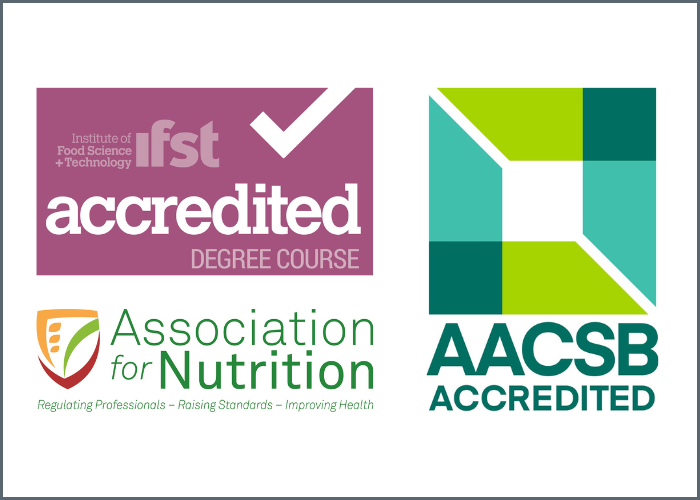
To become a nutritionist in the UK, you usually need to study a nutrition-related degree to provide you with the underpinning scientific knowledge in evidence-based nutrition. Our BSc (Hons) Human Nutrition and Health courses are accredited by the Association for Nutrition (AfN), which means that after graduation you can apply for direct entry to the UK Voluntary Register of Nutritionists as a Registered Associate Nutritionist (ANutr). You can then build your professional experience and work towards becoming a Registered Nutritionist (RNutr).
Yes, food and nutrition is a science-based discipline. Our courses explore how food, nutrients and diet affect health, wellbeing and the wider food system, using knowledge from areas such as biology, chemistry, physiology, public health and food science.
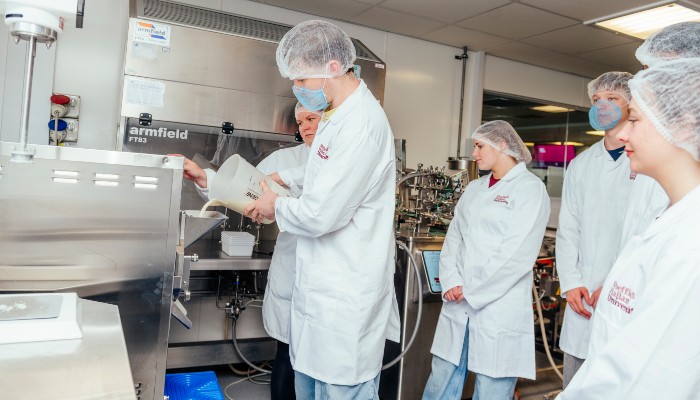
On our BSc (Hons) Food and Nutrition course, you’ll study topics such as food composition and nutrient function, food safety, innovative and sustainable food product development, sustainable processing and packaging, and food quality management.
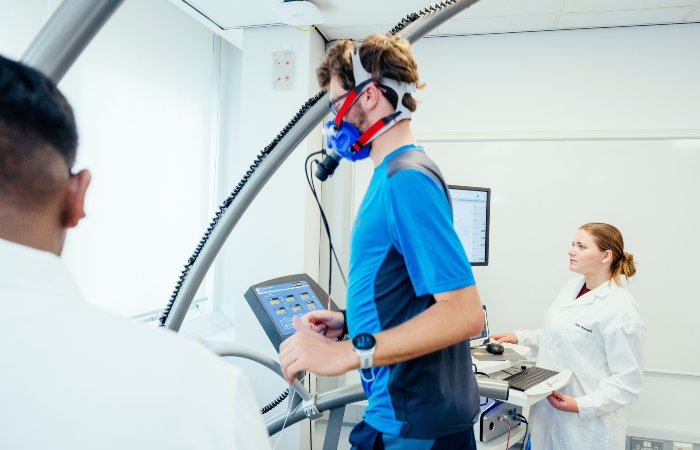
Our BSc (Hons) Human Nutrition and Health covers physiology and biochemistry for nutrition, food choice, nutrition in health and disease, and how nutrition is applied to specific populations and contexts. You’ll also develop practical skills through specialist facilities, live projects and placements.
Rated Gold in the 2023 Teaching Excellence Framework (TEF) for the outstanding quality of our teaching and graduate outcomes
Students voted us a top 5 university in England and gold for our cost-of-living support at the Whatuni Student Choice Awards 2026
95% of our graduates are in work or further study 15 months after graduating (2022/23 Graduate Outcomes Survey)


.jpg)