
Dr Walid Omara BSc, MSc, PhD, FHEA, FIBMS, FRSB, MASM
Senior Lecturer Biomedical Sciences
Summary
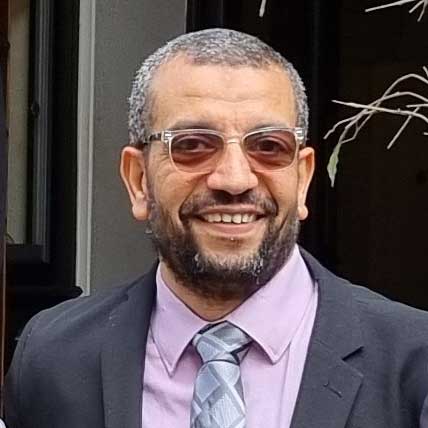
My main areas of interest include molecular microbiology, microbial biotechnology, and systems biology, with a focus on yeast-based biosynthesis of metal nanoparticles for sustainable applications. I lead modules in microbiology, immunology, and biochemistry, and supervise MSc, MRes, and PhD research projects. I'm passionate about inclusive education, research-led teaching, and fostering student engagement through real-world scientific inquiry and industrial partnerships.
About
With many years of academic, research, and professional experience in microbiology, biotechnology, and pharmaceutical sciences, Dr Omara has established himself as a leader in education, research, and academic governance. He earned his PhD in Microbiology and Biotechnology from the University of Manchester and holds Master's and Bachelor's degrees in Pharmacy and Microbiology from prestigious Egyptian institutions. Dr Omara’s research has focused on microbial biotechnology, yeast-based biosynthesis of nanoparticles, microbial communication, and systems biology, contributing to innovations in bioremediation, antimicrobial resistance, and nanobiotechnology. He has authored numerous publications and presented his work globally, often collaborating across disciplines and institutions.
Dr Omara’s teaching excellence is complemented by multiple teaching qualifications and fellowships, including recognition by the Higher Education Academy and the Royal Society of Biology. He is a Senior Lecturer in Biosciences and the Course Leader for the MSc/MRes Pharmacology and Biotechnology programme at Sheffield Hallam University. He teaches a range of undergraduate and postgraduate modules, including Cell Biology, Biochemistry, Microbiology, Immunology and Microbiology (Level 5), and Fundamental Molecular Microbiology (Level 7). His teaching is enriched by research-led content and a strong commitment to inclusive learning environments. He also supervises students at undergraduate, MSc, MRes, and PhD levels, guiding research in microbiology, pharmacogenomics, and biotechnology.
Beyond academia, he has served extensively in educational governance, acting as a governor, chair, and committee member in several UK schools and organisations. He is currently a mentor in the American Society for Microbiology’s Future Leaders Programme and chairs the UK Arab Academic Association. Dr Omara’s career is defined by his commitment to interdisciplinary research, inclusive education, and impactful community engagement, making him a respected figure in biosciences education and research leadership.
Teaching
School of Biosciences and Chemistry
College of Health, Wellbeing and Life Sciences
I have a wide range of teaching experience. I have been a module leader for both undergraduate and postgraduate modules (L4 Cell Biology, Biochemistry and Microbiology; L5 Immunology & Microbiology; L7 Fundamentals of Microbiology); and a course leader for postgraduate after leading undergraduate course (MSc/MRew Pharmacology & Biotechnology, and BSc Biology). Working in UK HEIs has given me the opportunity to teach a wide range of subjects such as Medical Microbiology, Clinical Immunology, Biotechnology, Biochemistry, Molecular Biology, Virology, Bacteria: Genes to Behaviour, Infectious Diseases and Health, Infection and Immunity, Pathogenicity, Pathogenesis of Infection, Microbial and other causes of diseases, ICT and Study Skills, Biology of Diseases, Laboratory Methods and Analytical Techniques, Neurophysiology PBL group; Pharmacology, Neuroscience and Human Biology.
Scientific and Professional Membership
· Chair of Arab Academics Association in the UK (UKAAA) since June 2024
· Fellow of Royal Society of Biology Apr. 2024
· Member of American Society of Microbiology Feb. 2024
· Member of Black Microbiologists Association Jan. 2024
· Fellow of Higher Education Academy Sep. 2021
· Member of Society for Applied Microbiology April 2020
· Fellow of Institute of Biomedical Sciences since April 2015
· Member of Microbiology Society 2018
· Chair of British Egyptian Academics Association in the UK (BEAA) since July 2019
· Member of Society for General Microbiology since January 2009
· Member of the British Biochemical Society since March 2007
· Member and Co-founder of the Egyptian Society of Biotechnology since October 1995
· Member of the Egyptian Pharmacists Syndicate (Practicing Pharmacist) since August 1992
External Examiner and program verifier
I have been an external examiner for several HE institution such as; MSc Infection Control at the University of Essex; MSc Biomedical Sciences at the University of Northampton; and MSc Medical Microbiology at Leeds Beckette. I have also been a panel member with Leeds Trinity University for verification of IBMS-accredited Biomedical Science program in addition to Medical Bioscience program.
Biological Sciences / Biomedical Sciences / Pharmacology.
MSc Pharmacology and Biotechnology
MRes Pharmacology and Biotechnology
MSc Molecular Microbiology
BSc Biomedical Sciences
BSc Biology
L4: Cell Biology, Biochemistry and Microbiology; Microbial and other causes of diseases, ICT and Study Skills, Biology of Diseases, Laboratory Methods and Analytical Techniques, Human Biology
L5: Immunology & Microbiology; Medical Microbiology, Clinical Immunology, Biotechnology, Biochemistry, Molecular Biology, Virology, Bacteria: Genes to Behaviour, Infectious Diseases and Health, Infection and Immunity
L6: Pharmacology; Pathogenicity, Pathogenesis of Infection, Neurophysiology, Neurosciences
L7: Fundamentals of Microbiology); Biotechnological Approaches of Pharmacology, Molecular Pharmacology and Biotechnology, Applied Laboratory Practice, Applied Laboratory and Research Practice,
Research
- Health Research Institute
Theme 1: Metal Nanoparticle Biosynthesis and Green Nanotechnology
Building on my current work in yeast-mediated biosynthesis of selenium, silver, and gold nanoparticles, I will expand this programme to investigate genotype–phenotype relationships in nanoparticle yield, morphology, and biofunctionality using Saccharomyces cerevisiae and non-conventional yeast. My aim is to build a biofoundry-inspired pipeline for metal nanoparticle biosynthesis that integrates metabolomics, transcriptomics, and CRISPR-based strain optimisation. Therefore, we aim to identify novel gene clusters and regulatory circuits underpinning biosynthetic efficiency. These nanoparticles have demonstrated antimicrobial, catalytic, and diagnostic relevance, supporting translational partnerships with healthcare, environmental, and material science sectors.
Theme 2. Smart Yeast Delivery Systems for Biotherapeutics and Biotransformation
I will further develop engineered yeast strains as biosafe delivery vectors that release therapeutic payloads in response to environmental cues (e.g. pH, enzymes). This builds on my patented work (US20101272698-A1) with yeast lysis mutants regulated by SRB1 and PKC1 promoters. Future directions include engineering tunable expression-lysis circuits for targeted oral vaccine, enzyme replacement for metabolic disorders, and microbiota-modulating agents.
We will design multi-layered synthetic circuits responsive to physiological triggers and explore encapsulation strategies using yeast-derived microcapsules. Collaborations with MIB’s enzymology and therapeutic biotechnology groups will be instrumental in progressing this theme in addition to collaboration with pharmaceutical industry partners, this platform will be adapted for clinical and nutraceutical applications.
Theme 3: Microbial Engineering for Bioremediation and Bioresource Valorisation
Complementing my nanoparticle research, this programme aims to harness yeast and bacterial co-cultures for the biotransformation of plastics, xenobiotics, and heavy metals, producing biosurfactants, pigments, or valuable metabolites. using engineered yeast and bacterial systems. My work applies systems biology and comparative omics to optimise strains like Candida tropicalis, Pseudomonas, and Bacillus. These initiatives will support pilot bioreactors, metabolic profiling, and LCA (Life Cycle Assessment) to validate bioeconomic potential which align with the University’s commitment to environmental sustainability. I plan to combine whole-genome sequencing, RNA-seq, and proteomic data to identify metabolic nodes that can be rewired for enhanced biotransformation of xenobiotics and polymer waste.
Theme 4: Microbial communication and human healthcare: Microbial pathogenesis in polymicrobial community
This research focuses on the interplay between Candida albicans (C. albicans) and other bacterial strains in a polymicrobial community, exploring their symbiotic relationship and its implications for healthcare. This interaction can be either direct where C. albicans and other organisms are growing together in the same environment. However, indirect interaction will also be investigated.
C. albicans is a notorious opportunistic yeast, often associated with invasive infections, especially in the presence of indwelling medical devices. Co-infection, involving simultaneous infections by multiple pathogens, poses a significant threat as it allows collaborative enhancement of virulence factors. Other organisms such as E. coli, Ps. aeruginosa, S. aureus, P. mirabilis, etc. are common cause of hospital-acquired infections (HAI). Therefore, their existence is investigated for its impact on C. albicans growth, biofilm formation, and resistance to antifungals. These biofilms in addition to resistant to antimicrobial agents, create a conducive environment for other pathogens so C. albicans forms interkingdom bio
Dr Omara has led teaching-focused initiatives, such as designing inclusive assessment models for international postgraduate students, incorporating omics technologies into MSc lab practicals, and organising student field trips to industry partners like Labcorp and Lubrizol. He plays a key role in curriculum enhancement, course validation, and promoting equity and inclusion in postgraduate research through his involvement in the Yorkshire Consortium for Equity in Doctoral Education (YCEDE). Additionally, he has recently be selected in the mentorship scheme of the American Society of Microbiology (Microbiology Leadership Mentoring Scheme) as well as Wellcome Trust Mentorship (Broadening Horizon Mentoring Scheme)
Publications
Journal articles
Negm, W.A., Elekhnawy, E., Habib, D.A., El-masry, S.M., ElBedaiwy, H.M., Abo-Saif, M.A., ... El Afify, S.R. (2026). Targeting ferroptosis and oxidative stress: Ipomoea pes-caprae-synthesized selenium nanoparticles accelerate healing in infected wounds via Nrf2/HO-1 activation. Journal of Drug Delivery Science and Technology, 115 (1). http://doi.org/10.1016/j.jddst.2025.107694
El-Baky, R.M.A., Senosy, E.M., Omara, W., Mohamed, D.S., & Ibrahim, R.A. (2020). The Impact of the Implementation of Culture-based Antibiotic Policy on the Incidence of Nosocomial Infections in Neonates Hospitalized in Neonatal Intensive Care Unit in a General Egyptian Hospital in Upper Egypt, 2016-2018. Journal of Pure and Applied Microbiology, 14 (3), 1879-1892. http://doi.org/10.22207/jpam.14.3.27
Parker, S., Fraczek, M.G., Wu, J., Shamsah, S., Manousaki, A., Dungrattanalert, K., ... O’Keefe, R.T. (2018). Large-scale profiling of noncoding RNA function in yeast. PLOS Genetics, 14 (3). http://doi.org/10.1371/journal.pgen.1007253
Parker, S., Fraczek, M.G., Wu, J., Shamsah, S., Manousaki, A., Dungrattanalert, K., ... O'Keefe, R.T. (2017). A resource for functional profiling of noncoding RNA in the yeast Saccharomyces cerevisiae. RNA, 23 (8), 1166-1171. http://doi.org/10.1261/rna.061564.117
Mohamed, S.K., Albayati, M., Omara, W.A.M., Abdelhamid, A.A., Potgeiter, H., Hameed, A.S., & Al-Janabi, K.M. (2012). Functionalization of ibuprofen core structure compound: Part 1 Synthesis of potential chemotherapeutic agents incorporated ibuprofen substructure and their in vitro antimicrobial study. Journal of Chemical and Pharmaceutical Research, 4 (7), 3505-3517.
Wentzel, A., Bruheim, P., Øverby, A., Jakobsen, Ø.M., Sletta, H., Omara, W.A.M., ... Ellingsen, T.E. (2012). Optimized submerged batch fermentation strategy for systems scale studies of metabolic switching in Streptomyces coelicolor A3(2). BMC systems biology, 6 (1), 59. http://doi.org/10.1186/1752-0509-6-59
Omara, W.A.M., Rash, B.M., Hayes, A., Wickham, M.S.J., Oliver, S.G., & Stateva, L.I. (2010). Conditional cell-wall mutants of Saccharomyces cerevisiae as delivery vehicles for therapeutic agents in vivo to the GI tract. Journal of biotechnology, 147 (2), 136-143. http://doi.org/10.1016/j.jbiotec.2010.03.010
Nieselt, K., Battke, F., Herbig, A., Bruheim, P., Wentzel, A., Jakobsen, Ø.M., ... Wellington, E.M.H. (2010). The dynamic architecture of the metabolic switch in Streptomyces coelicolor. BMC genomics, 11 (1), 10. http://doi.org/10.1186/1471-2164-11-10
Other activities
External Examiner and program verifier:
I have been an external examiner for several HE institution such as; MSc Infection Control at the University of Essex; MSc Biomedical Sciences at the University of Northampton; and MSc Medical Microbiology at Leeds Beckette. I have also been a panel member with Leeds Trinity University for verification of IBMS-accredited Biomedical Science program in addition to Medical Bioscience program.
SCIENTIFIC AND PROFESSIONAL MEMBERSHIP
· Member of The Skin Microbiome in Healthy Ageing Network
· Member of British Society for Cell Biology
· Chair of Arab Academics Association in the UK (UKAAA)
· Fellow of Royal Society of Biology
· Member of American Society of Microbiology
· Member of Black Microbiologists Association
· Member of Environmental Biotechnology Network (EBNet)
· Member of Biomass Biorefinery Network (BBNet)
· Member of High Value Biorenewables Network (HVB)
· Fellow of Higher Education Academy
· Member of Society for Applied Microbiology
· Fellow of Institute of Biomedical Sciences
· Member of Microbiology Society
· Chair of British Egyptian Academics Association in the UK (BEAA)
· Member of Society for General Microbiology
Postgraduate supervision
I supervise postgraduate students (MSc/MRes/PhD) in the following areas:
Microbial biotechnology and yeast bioengineering
Nanobiotechnology and metal nanoparticle biosynthesis
Antimicrobial resistance and bioremediation
Pharmacogenomics and microbial-host interactions
Systems and synthetic biology in microorganisms