
Lightmain: Bringing Manufacturing In-House Drives Innovation
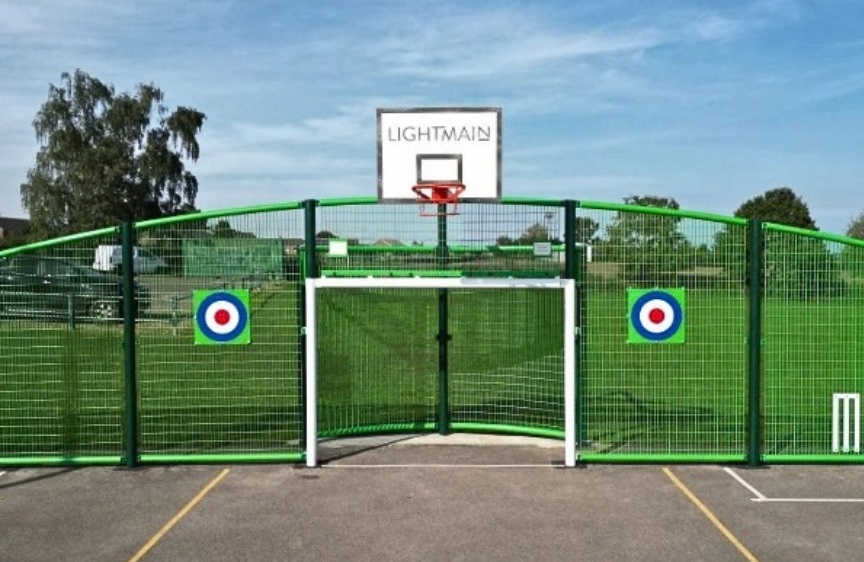
Lightmain is a specialist manufacturer and provider of outdoor play and leisure solutions across the UK. The company designs, manufactures, supplies and installs bespoke products that enhance community spaces, including multi-use games areas (MUGAs), play equipment, outdoor street furniture and shelters.
Drawing on its heritage in manufacturing for the mining industry, Lightmain has built a reputation for producing heavy-duty, durable products designed to withstand long-term use. The business diversified into its current markets in the early 2000s and, since changing ownership in 2015, has become part of Create Partnerships. Today, its office team is based in Sheffield, with production operations located in Thurnscoe.
The Challenge
Lightmain approached the South Yorkshire Innovation Programme (SYIP) to explore a long-standing strategic ambition: bringing its manufacturing and production capabilities back in-house. Since 2015, production had been subcontracted, the leadership team recognised that an internal manufacturing capability could offer greater control, efficiency and flexibility. It would also strengthen the company's ability to deliver a complete turnkey service, from design and manufacture through to installation and would reinforce its brand as a producer of high-quality steel products made locally.
However, the business recognised that bringing production back under the company's control represented a major investment. Before making such a significant commitment, Lightmain needed to fully understand the financial, operational and strategic implications of the move.
The Project and Impact
Working with academics from Sheffield Hallam University, Lightmain undertook a comprehensive feasibility study that assessed the practical and financial implications of bringing manufacturing operations back in-house. The project examined key factors including premises costs, staffing requirements, leasing arrangements, stockholding, raw material management and potential savings from internal production processes.
By analysing the full operational picture and modelling various scenarios, the study provided a clear evidence base that enabled Lightmain to make informed decisions based on evidence rather than assumption and proceed with confidence. As a result, the company has leased a production facility in Thurnscoe which created three new full-time roles and has already seen an additional full-time member of staff come on board since the facility opened.
Bringing manufacturing in-house better positioned the business for product development and process innovation, and they went on to successfully apply for the SYIP Deploy Grant.
The SYIP Deploy Grant provided funding towards the purchase of a professional-grade 3D printing system, bringing rapid prototyping capability in-house, and enabling Lightmain to test and refine new concepts through real-world trials. With direct access to manufacturing capabilities, the business now has greater freedom to trial ideas, test concepts and develop new products.
The flexibility provided by the new facility has enabled the business to gradually integrate and expand this product offering while maintaining quality and control throughout the process. Additionally, their growth plans have already included the appointment of two new Business Development Managers, including an apprentice, to help identify opportunities in new and emerging markets.
Lightmain also welcomed a University of Sheffield student, Aranza Freyre Carrera, on a nine-month placement within their Marketing team, working on enhancing brand consistency across digital platforms, driving higher engagement and rankings across their website, and establishing an efficient marketing workflow. Aranza reflected:
‘My placement year gave me invaluable insight into a new industry while helping me strengthen my digital marketing, website management, and content creation skills. It has been a rewarding experience that has boosted my confidence and helped me become more autonomous.’
Will Moroney, Managing Director at Lightmain, described the experience of working with the SYIP team as collaborative, supportive and highly effective. Will explained:
‘The whole process was very smooth, right from the outset discussing the potential outline and concept of the programme, through to the application and delivery of the project. Communication was very strong throughout with regular catch-up meetings and discussions with the delivery teams at Sheffield Hallam University, The University of Sheffield, and Barnsley Council.’
The South Yorkshire Innovation Programme is being delivered by Sheffield Hallam University in partnership with The University of Sheffield and Barnsley Metropolitan Borough Council and is part-funded by the South Yorkshire Mayoral Combined Authority.
To find out more about SYIP, please visit shu.ac.uk/syip

Speak to our team
Find out how the South Yorkshire Innovation Programme can help your business.
Get in touch