
SHU Researchers Selected to Present at Prestigious OpenFest 2025
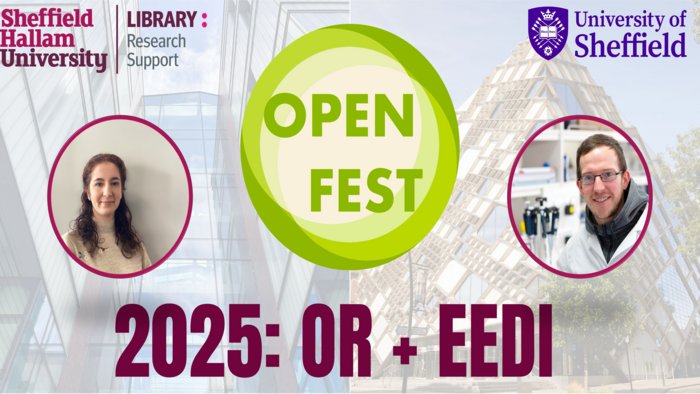
School of Computing and Digital Technologies Graduate Teaching Associate PhD student Ronak Naeemaee and her PhD Director of Studies Dr Lewis Quayle (Senior Lecturer in Data Science and Analytics) have been selected to present their research at OpenFest 2025 - the flagship international celebration of Open Research co-hosted by the University of Sheffield and Sheffield Hallam University.
Their talk, titled "Beyond the Median: Open Tools for Equitable and Rigorous Biomarker Validation in Cancer Research", will be delivered on Tuesday 2nd September as part of the session Diversity in (open) data and metadata for representative research. The OpenFest line-up features a distinguished list of speakers from globally respected institutions including the Universities of Cambridge, Edinburgh, Pennsylvania, and the Francis Crick Institute.
The PhD project which Ronak is working on, entitled "Unlocking Precision Medicine: Advanced Survival Analysis Tools for Cancer Biomarker Validation", addresses a longstanding methodological challenge in translational oncology: the arbitrary stratification of patients in survival analyses. This often involves dividing patients into ‘high’ and ‘low’ expression groups based on a median or other simple threshold of a continuous biomarker (e.g., gene or protein expression level), without accounting for the underlying data distribution or confounding variables. These oversimplified practices can obscure clinically meaningful associations and lead to missed opportunities to identify biologically significant biomarkers - some of which may represent viable therapeutic targets. Such risks are particularly acute in datasets with strong underlying covariate biases or limited demographic diversity. Ronak’s work introduces a novel multivariate modelling approach that systematically evaluates all possible stratification points while adjusting for key clinical and demographic variables such as age, sex, tumour stage, and ethnicity.
Their tools are being developed as an open-source R package and browser-based web application, enabling equitable access for researchers and clinicians regardless of coding experience. In alignment with FAIR and Creative Commons principles, all code, data, and outputs are openly licensed and hosted on GitHub, Zenodo, and SHURA.
“OpenFest is a unique platform that not only foregrounds the technical but also the societal impact of research,” said Dr Quayle. “We’re proud to be developing tools that not only enhance reproducibility and accessibility but help uncover clinically relevant biomarkers that might otherwise be overlooked - ultimately supporting more equitable and effective precision medicine.”
OpenFest 2025 centres on the theme Open Research and Equity, Equality, Diversity and Inclusion (OR+EEDI). The inclusion of this project within such a programme highlights the growing recognition that methodological transparency and demographic representativeness are central to building trustworthy and inclusive scientific knowledge.
For more information, visit the OpenFest 2025 website.