Helen is an artist-researcher at Sheffield Hallam University and the residency forms part of her PhD research which explores femicide and systemic gender-based violence in Mexico. Her work focuses on the tireless search of families for missing loved ones and the role religion plays in mourning and funeral rituals, when often bodies have not been found.
Helen’s newest installation, Ceremonial Ritual, will be open to the public from 10:00 until 16:00 from Saturday 23 to Monday 25 August and 11:00 until 16:00 on Tuesday 26 August inside Old St George’s Chapel in Sheffield Cathedral. Helen will be at the Cathedral to talk to visitors about the artwork from 13:00 to 15:00.
Helen said: “I am grateful to Sheffield Cathedral for the trust they have shown in making me the first artist in residence. Developing work on such a complex subject within this space has been both challenging and rewarding. The cathedral’s history, architecture and presence have shaped the work in ways I could not have anticipated and sharing it publicly here has opened conversations around the subject. This project has deepened my practice and, I believe, set an example of how artists and institutions can collaborate on difficult subjects in meaningful spaces”.
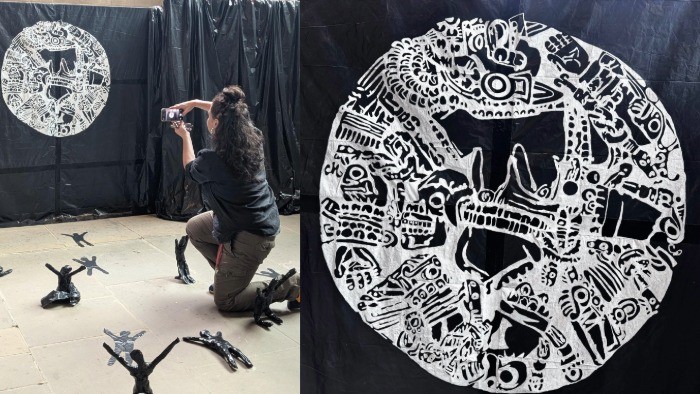
Ceremonial Ritual features puppets made from black rubbish bags and duct tape, materials that are a chilling sight in some Mexican Towns where abandoned black bags are suspected to conceal the dismembered bodies of women.
The installation also features a painted reproduction of the Coyolxāuhqui Stone, a carved Aztec stone unearthed in the 1970s at the base of the Templo Mayor, depicting the mythical goddess, Coyolxāuhqui in a state of dismemberment and decapitation.
The work poses questions around the links between the ritualised violence of the past and systemic gender-based violence in modern Mexico.
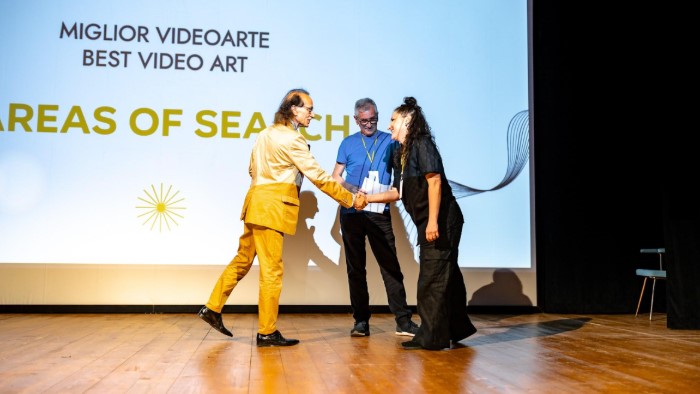
Last year, Helen’s award-winning short film Areas of Search was debuted at Sheffield Cathedral as part of No Bounds Festival 2024. The film investigates the religious aspect of families in Mexico who have lost a daughter or sister to femicide and the areas where people search for the victims’ bodies.