Contact us
For help with a story or to find an expert
Email: pressoffice@shu.ac.uk
Phone: 01142 252811
On social media
No false starts for Team GB: Sheffield Hallam University starting light system helped athletes train for gold medal success in 2026 Winter Olympics
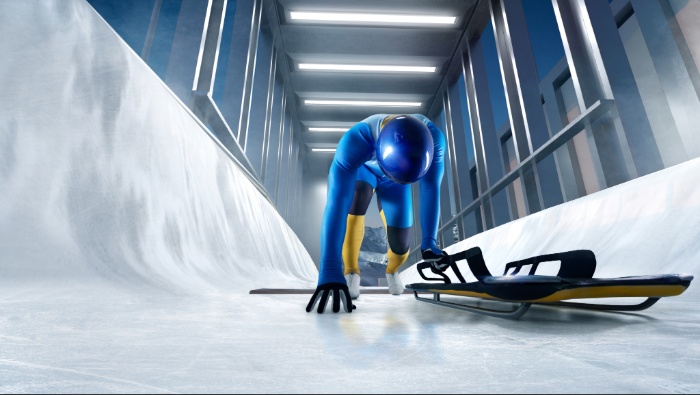
So, a team from Sheffield Hallam University Sports Engineering Research Group (SERG) partnered with the British Bobsleigh and Skeleton Association (BBSA) to develop a bespoke portable training system which allowed the Team GB skeleton athletes to train for the most precise starts at the 2026 Milano-Cortina Olympic Winter Games.
This year, the games hosted its first ever mixed team event - where one female, and one male skeleton athlete complete the course, then their times are combined to determine their placing - and Team GB duo Tabby Stoecker and Matt Weston went on to win the gold medal in this Olympic-first.
Their success in the events mean the skeleton athletes, along with Weston’s gold in the men’s singles event, are bringing home two of the three gold medals won by Team GB.
The skeleton team, which also includes Sheffield Hallam University alumni Amelia Coltman, who was competing in her first Olympic games, trained using the bespoke starting light system, helping them to hone their techniques at facilities in the UK and on location during the season.
Since training with the system, on average both male and female athletes have seen a consistent drop of 0.1 seconds in their starting time. With athletes starting at 0.25 seconds and dropping to consistently hit 0.15 seconds
Dr Leon Foster, Senior Research Fellow in the School of Sport and Physical Activity at Sheffield Hallam University, said: “The incredible performance of the Team GB skeleton athletes at this year’s Winter Olympics is a brilliant reflection of how sports science and engineering research can successfully partner with competitors to improve performance and move forward our understanding of what we are capable of as athletes.
“The development of the portable training system has helped to give British skeleton athletes the edge and hone their starting and reaction techniques for the best possible races.”
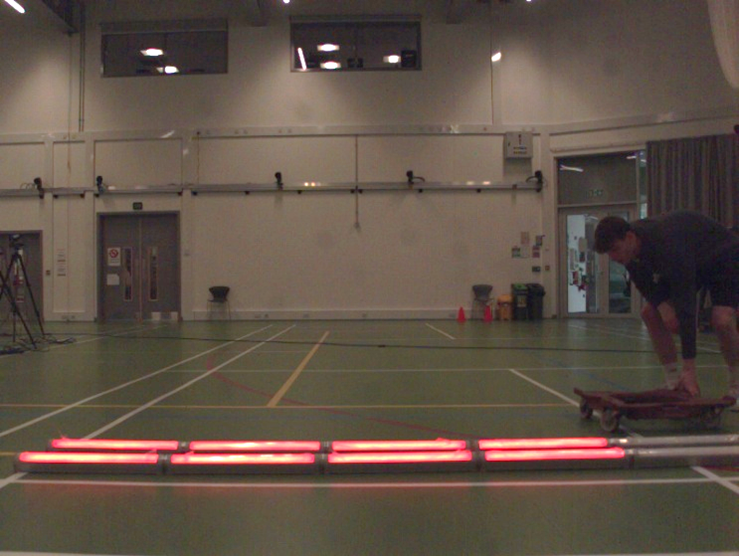
(High Speed Video validation of the system at the AWRC Motion Analysis Lab)
The mixed team skeleton is a new event at the Winter Olympics, and unlike the other skeleton and bobsleigh events, features a unique reaction-based start procedure, which adds a visual spectacle at the start of the race.
The system consists of several lights which flash in a fixed rhythm, similar to a Formula 1 start in motor racing, but with the additional of a sound cue. The lights go out and timing for the event starts. Reaction times and push power both matter as athletes are given a time penalty for any false start, which can potentially cost them a chance at a medal.
In the lead up to the Winter Olympics, the athletes have trained with the system which matches and evolves with the official starting procedures used in competition, but with the added benefit of recording training data for each athlete.
Ed McDermott, British Bobsleigh and Skeleton Senior Coach from the UK Sports Institute, said: “The introduction of the bespoke reaction start system developed by Sheffield Hallam University has given us the ability to refine our technical and tactical models and really target the team race.
“With the start being a more significant piece of the overall result, it was vitally important we had a system that we trusted and could use to confidentiality develop our strategies to win.”
Dr Foster added: “The long-standing research partnership between Sheffield Hallam University and the BBSA has translated to incredible performances at the Winter Olympics and made us all very proud!”
Contact us
For help with a story or to find an expert
Email: pressoffice@shu.ac.uk
Phone: 01142 252811