Contact us

For help with a story or to find an expert

Email: pressoffice@shu.ac.uk
Phone: 01142 252811

On social media

 Facebook
 Instagram
 YouTube
 Bluesky

22 September 2026

Sheffield Hallam receives Royal Society funding to further primary climate education
Sheffield Hallam University is one of ten organisations to receive funding from the Royal Society Science Community Grant to connect South Yorkshire primary schools with STEM academics

Press contact: Emma Griffiths | e.griffiths@shu.ac.uk

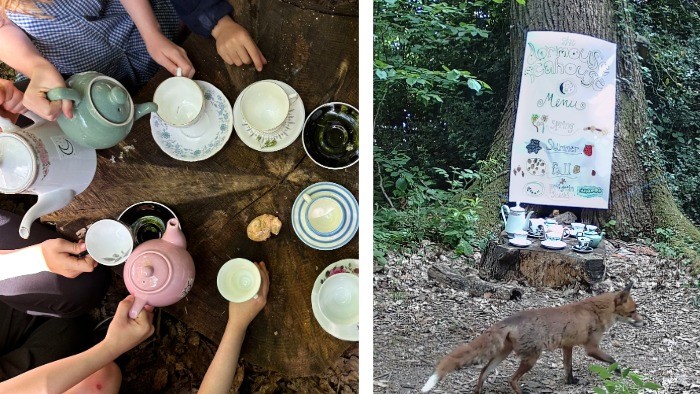
Left: A top down view of children playing pretend with a tea set outdoors, there are teapots and teacups on a tree stump. Right: The tree stump tea party set up in the woods, with a fox in the foreground captured on a hidden wildlife camera.
Pupils from one previous participating school undertaking a 'mad-hatters tea party' and finding out which animals might come to tea (images provided by Dr Kaisu Koski, Sheffield Hallam University)

The £105k funding will support the continuation of the Tomorrow’s Climate Scientists Partnership, a project which links 25 local primary schools to university and industry-based STEM professionals to engage children in climate and sustainability education relevant to their local area.  

Lee Jowett, who leads the project from Sheffield Hallam University, said: “South Yorkshire ranks in the top ten nationally for STEM research funding, but that expertise hasn't always reached the children and communities on its doorstep. With Tomorrow's Climate Scientists we've deliberately identified schools that often miss out, including those with high numbers of children on free school meals, with special educational needs, or from minority ethnic backgrounds. The expertise was always there. It just needed connecting. This funding means we can keep doing that, sharing what our research tells us about good climate education with local teachers so they have the knowledge and confidence to bring climate science to life for their pupils.” 

The project aims to engage children in scientific research linked to their local environment, build teachers’ confidence and knowledge in climate science, support STEM professionals in developing their public engagement skills, and create lasting connections between schools and universities.  

There have already been two cohorts from a similar Royal Society funded project, between 2024 and 2026, which showed benefits for the children, teachers and STEM professionals who took part.  

The children involved took part in investigative learning outside of the classroom; setting up wildlife cameras, measuring the air quality outside of their school, and looking at which habitats had the most invertebrates.  

In previous cohorts it was noted that this type of learning was particularly beneficial to children who might struggle in traditional learning contexts.  

Teachers who took part also felt more confident after the project, in both their own subject knowledge and in structuring learning to involve children in more practical investigations.  

The project has had a lasting impact on the first two cohorts, with schools involved having since applied for full Royal Society Partnership Grants, embedded new approaches to their curriculums and repeated the projects with other year groups.  

The project will now continue with a new cohort of 25 South Yorkshire primary schools thanks to the Royal Society Science Community Grant, a three-year programme funded by a donation by the Julia Rausing Trust.  

Sir Paul Nurse, President of the Royal Society, said: “I am very pleased to announce these ten Science Community Grants. The Royal Society has long advocated for practical hands-on science to be conducted in schools. Schools are where most people first encounter science. Practical science helps students experience the scientific process, evaluate evidence, understand uncertainty, and appreciate how science helps us understand and improve the world. We want all students to experience and be inspired by science. Embedding more practical science in schools is an important step to help build future generations of scientists and innovators, and to equip people with the scientific literacy required to be successful citizens.” 

If schools would like to be considered for the project, please get in touch with the project lead Lee Jowett via email. 

Contact us

For help with a story or to find an expert

Email: pressoffice@shu.ac.uk
Phone: 01142 252811

On social media

 Facebook
 Instagram
 YouTube
 Bluesky