Funded by the Biotechnology and Biological Sciences Research Council (BBSRC), the YBDTP is a collaboration of nine universities to train the bioscience researchers of the future, ensuring they are fully equipped to address fundamental and strategic biological questions of national and global importance.
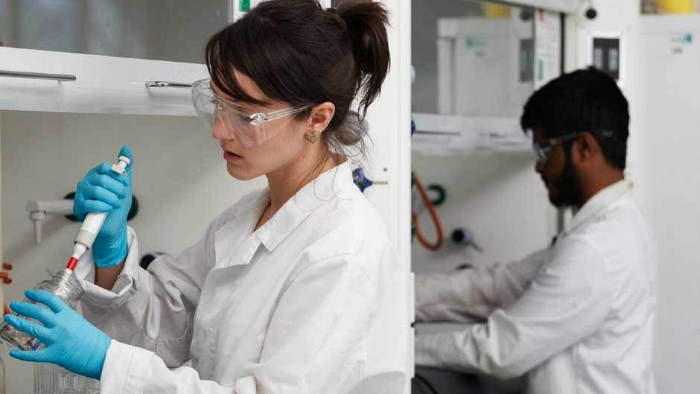
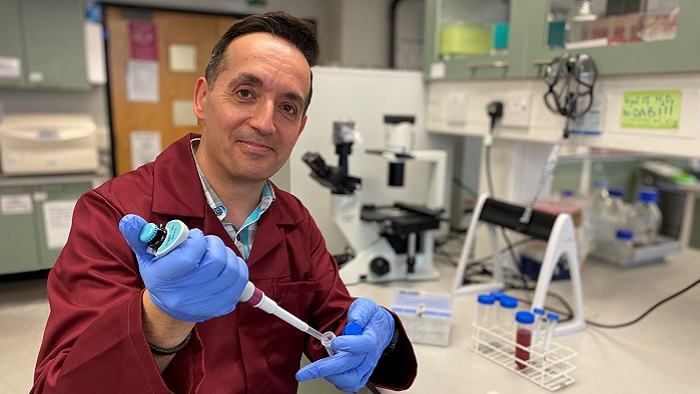
Sheffield Hallam has welcomed two PhD students as part of the programme who will be working on research projects focused on the detection of breast cancer and the prevention of chemotherapy-induced hair loss.
Doohan Blackburn will work alongside Dr Nik Georgopoulos on research focusing on cooling-based medical technologies to prevent chemotherapy-induced hair loss and chronic neuropathic pain, and the clinical development of emerging scalp and limb cooling technologies in this area. Research carried out in partnership with Paxman Scalp Cooling, found that combining scalp cooling treatment with antioxidants can significantly reduce or even prevent the damage to hair follicles caused by chemotherapy drugs.
Doohan said: “To be able to carry out research which will work towards positively impacting patients undergoing chemotherapy treatment is a privilege. The chance to work alongside like-minded individuals as part of the YBDTP is a fantastic opportunity to learn and develop my skills as a research scientist and I look forward to collaborating with the other students in the future.”
Lucy Burton will work under the supervision of Professor Simona Francese to support ongoing research into the non-invasive detection of breast cancer from fingertip smears. The research uses a technology called Matrix Assisted Laser Desorption Ionisation Mass Spectrometry (MALDI MS) to detect breast cancer through fingertip smears. An initial study on a small cohort of women found the technology to be 98% accurate.
Lucy said: “After many years in pharmaceutical contract research, this PhD gives me the opportunity to return to hands-on science and apply my experience to new and emerging areas of research. Inspired by Professor Francese’s work on breast cancer detection using mass spectrometry, I’m excited to expand my expertise into proteomics and contribute to research with genuine clinical impact.”
Professor David Smith, Head of Research in the School of Biosciences and Chemistry at Sheffield Hallam University, said: “We’re delighted to welcome our two new PhD students as part of the Yorkshire Bioscience Doctoral Training Partnership. Their roles will be vital in significant ongoing research projects at the University looking at cancer detection and the prevention of side effects of chemotherapy.
“Through collaborations across Yorkshire, we will be opening our research labs to doctorial research students from a range of different backgrounds focusing on our expertise in the application of advance technologies and the mechanistic analysis of biological systems. Our students will train alongside the rest of the YBDTP cohort and can develop a range of skills and connections that will set them up for a bright future in science.”
Building on the success of the previous White Rose Doctoral Training Partnership in Mechanistic Biology, the collaboration has attracted major investment from the Biotechnology and Biological Sciences Research Council (BBSRC) and from the partner institutions.
The partnership will offer cutting-edge research projects in bioscience and biotechnology, complemented by an interdisciplinary training programme and professional placements to give students the variety of skills needed for the UK bioeconomy.
The first cohort of PhD students recently attended a multi-day induction event which provided training and opportunities to build networks across the partnership. Training was delivered by representatives from the University of Leeds, Sheffield Hallam University and the University of York and focused on some of the key elements of PhD research.
The YBDTP is a collaboration involving Sheffield Hallam University, the University of Leeds, the University of Sheffield, the University of York, Leeds Beckett University, Teesside University, the University of Bradford, the University of Huddersfield and the University of Hull.
Applications for entry to projects for 2026 are now open. For further information, including how to apply, visit the YBDTP website.