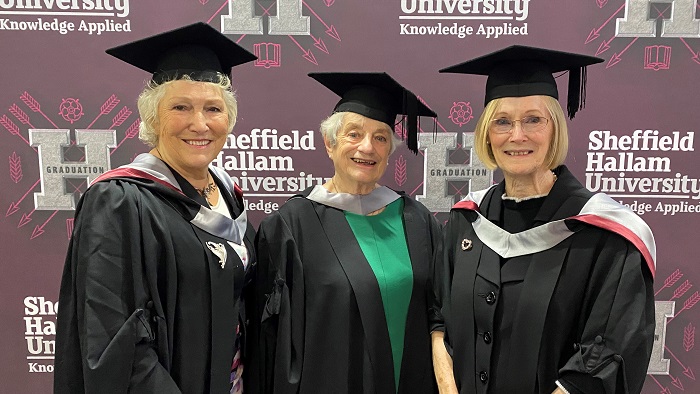
Over the next two weeks, almost 9,000 of our students will be donning their caps and gowns to celebrate their achievements, marking the end of their journey at Sheffield Hallam University.
Many of those graduating will be from South Yorkshire and potentially the first in their family to attend university.
After successfully completing their studies, they will now be joining the regional workforce, as teachers, healthcare professionals, in business and as part of our growing creative industries.
All of our graduates, wherever they are from, will be entering the world of work as highly skilled professionals, ready to give back to the city and region they call home.
It's wonderful to celebrate our graduates and watch them set off into the world to apply their skills and make a positive difference.
But there are still too many young people in our region who face significant barriers to accessing the right training for them – and we are keen to play our part in addressing this issue.
The Post-16 Education and Skills White Paper, published two weeks ago, outlines how the Government intends to meet the Prime Minister's target for two-thirds of young people achieving higher-level qualifications by age 25 (through either degrees, higher technical qualifications, or apprenticeships).
The Paper offers a welcome vision for skills and is a timely call to action to all tertiary education providers to work more closely together.
At Sheffield Hallam, we have been pioneering this approach through our partnership with South Yorkshire colleges, which demonstrates the transformative potential of genuine collaboration.
Our regional agreement, signed in January 2024, has already enabled us to jointly secure £1.3 million from the Higher Technical Education Skills Injection Fund and work together with employers to design Higher Technical Qualifications (HTQs) that truly meet employer needs.
This collaborative partnership has brought a consistency of approach across the region, with clear pathways for learners, and is making a significant contribution to achieving South Yorkshire’s growth aspirations.
Collaboration delivers better outcomes for everyone – students’ progress more effectively, employers get the skills they need, and institutions thrive through shared purpose.
The White Paper’s regional skills focus provides the impetus to build on these strong foundations.
If we are to scale up our collective offer to learners and employers, with a greater diversity of training pathways to expand participation, we will need to cultivate a much more coherent post-16 education and skills system.
The emphasis on addressing the nearly one million young people currently not in education, employment or training is crucial.
No single institution can tackle this challenge alone.
The proposed auto-enrolment system and improved data sharing between schools, colleges and universities will help, but we need the relationships and trust that enable us to wrap support around vulnerable young people as they navigate transitions.
Like university leaders across the country, I welcome the White Paper’s renewed focus on collaboration, and the recognition of the role all tertiary education providers play in supporting economic growth in the regions we serve.
I also welcome the emphasis on research and the critical role universities play in driving meaningful economic and social change.
At Hallam, our focus on research that enables healthier lives, builds stronger communities and drives future economies is a deliberate alignment with local, regional and national priorities.
Here too, collaboration is key, as universities research specialism are often complementary which offers exciting opportunities to scale our impact.
Given the complex challenges our country faces we need to develop our research partnerships to tackle these head on.
The journey ahead will require sustained commitment from government, educational institutions and employers.
But for the first time in many years, we have a vision for post-16 education that sees the tertiary education sector as an integrated whole, serving learners throughout their lives rather than dividing them at arbitrary age boundaries, and recognition that the research capabilities our universities offer are critical if we are to tackle the complex challenges society faces head on.