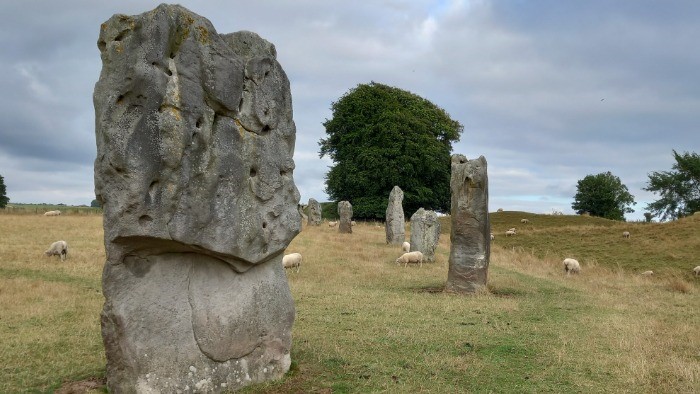
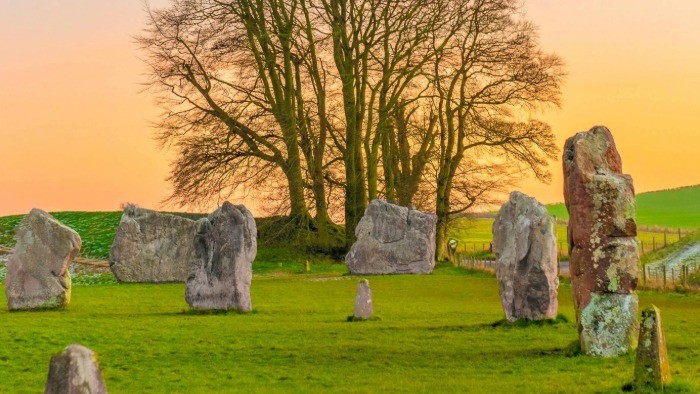
In the results, one in four people also said that they have visited a prehistoric stone circle. Almost 5% of these timed their visit to coincide with a solstice or equinox.
The results come as part of the latest release of findings from the National Folklore Survey for England, that looks at beliefs around the natural world.
As well as stone circles, three quarters of people had visited a place in England that was associated with a legend or story they had heard or read about. And 40% of people – approximately 16 million people between 16 and 75 – had heard of a story or legend surrounding a spring, cave or other natural feature of their local area.
Dr Diane A. Rodgers, Senior Lecturer in Media from Sheffield Hallam University and Co-Lead on the Folklore Survey project, said: “I was amazed to see that such a huge number of respondents – about 76%, which equates to over 30 million people – said that they have visited places in England associated with a legend or story as a direct result of something they have seen in the media.
“This really shows the potential for films, documentaries and social media trends to encourage and invigorate folklore tourism in different parts of the country, and how our stories can shape people’s weekend and holiday activities! It’s interesting that the 25-34 age group were most likely to say they visit legendary sites, and that younger generations are remaining enchanted with and fascinated by the natural world.”
Dr Ceri Houlbrook, Senior Lecturer in Folklore and History and Programme Leader in Folklore Studies at the University of Hertfordshire, said: “We have long celebrated midsummer. In the past, communities would gather around bonfires and decorate their doors with greenery and flowers. Midsummer Eve was also a key date for love divination – a tradition that Shakespeare drew on in A Midsummer Night’s Dream. In Hertfordshire, girls would pluck the yellow flower of St. John’s Wort in the evening, and if it was still fresh come morning, their chances of finding love were high. How we acknowledge midsummer now has changed, but the day is still clearly special to a lot of people.”
Within the survey’s findings on nature, a third of people said they felt a spiritual connection with the natural world.
An overwhelming majority of respondents agreed that ‘if nature suffered then we (as human beings) will suffer’ (85%) and that ‘trees are precious and should be respected’ (88%).
The survey also asked respondents whether they agree with certain folkloric beliefs about nature, including:
- 31% believe that a robin can be a visitation from someone who recently died
- Almost half believe that dock leaves grow near nettles and can be used to soothe their sting
- Over 40% believe the monthly phases of the moon affect human behaviour
- 44% believe that cows sitting or lying in a field means it will rain
- And almost 60% believe in the phrase ‘red sky at night shepherd’s delight, red sky in the morning shepherd’s warning’
Responses also highlighted some lesser-known beliefs, like ‘not eating blackberries after a certain date because they are tainted by the devil, ‘you must never eat or cut apples until St Swithun has christened them’, and ‘the Rowan tree is protective and wards off evil, especially witchcraft’.
Laura Kemp-Smyth is the Squire of Saddleworth Women’s Morris and Clog which dances at summer and winter solstice. She said: “My morris side makes a special effort to mark the solstices. It’s a beautiful time of year, and I feel it’s important to mark the longest day. As a society we sometimes forget how much we rely on nature to sustain us. Marking the solstice helps us to take a step back and remember that, connect with nature and note the changing of the seasons. People do it in their own ways, but we like to go up to a local landmark at the top of Hartshead Pike where there are great panoramic views and dance down the sun. If we’re lucky, we’re treated to a stunning sunset, which feels truly magical.”
Led by academics from Sheffield Hallam University, the University of Hertfordshire, and Chapman University, USA, the survey captures an accurate snapshot of contemporary folk culture in England, more than 60 years after the last Survey of English Language and Folklore, that was launched in 1964.
The findings follow recent research from Sheffield Hallam University which found that the Altar Stone of Stonehenge could have travelled via glacier before arriving at Salisbury Plain.