OSPREY brings together a multidisciplinary consortium of 17 institutions in 12 countries to develop practical, evidence-based solutions that strengthen the online protection of elected officials and members of police forces and increase the resilience of society and democratic institutions.
Elected officials and members of police forces play an essential role in safeguarding and supporting our democratic institutions. Yet, across the United Kingdom and Europe, they increasingly face online harms that affect their safety, wellbeing, and ability to carry out their duties, including a sharp rise in online abuse, harassment, doxing, threats, misinformation, and coordinated digital attacks. These harms affect personal wellbeing, operational effectiveness, and public trust in democratic institutions.
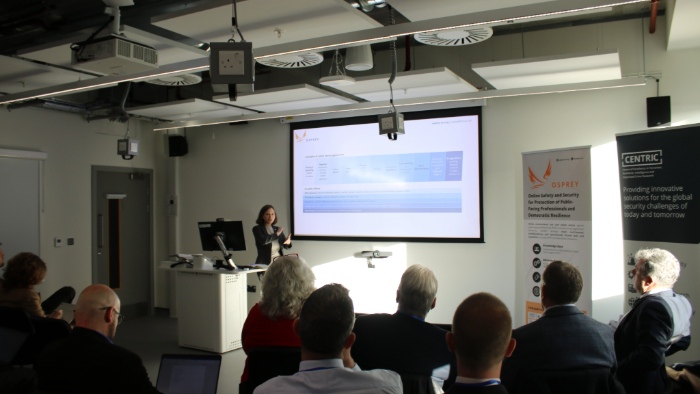
The two-day kick-off meeting on 2–3 December 2025 is the launch event for OSPREY attended by speakers, external guests, and project partners.
Over the next three years, OSPREY will:
- Build a knowledge base and taxonomy of online harms affecting public-facing professionals;
- Develop AI-driven threat and risk analytics to support early detection and proactive response to online abuse;
- Create digital forensics tools for efficient evidence collection and reporting;
- Design specialist training curricula for law enforcement and public institutions;
- Produce a transferable, operational toolkit for public-facing professionals, their families, and organisations.
- Raise awareness and support evidence-based policy and capacity building for better protection of public-facing professionals from online harms.
Professor Saskia Bayerl, Head of Research at CENTRIC and OSPREY Project Coordinator, said: “The protection against online harms is not only an issue of protecting elected officials and members of police forces, but of securing online spaces for communities, children, as well as democratic institutions. OSPREY aims to empower victims, organisations, and families to effectively manage online harms and support organisations and policymaker to contribute to a more resilient and informed professional community and democracy.”