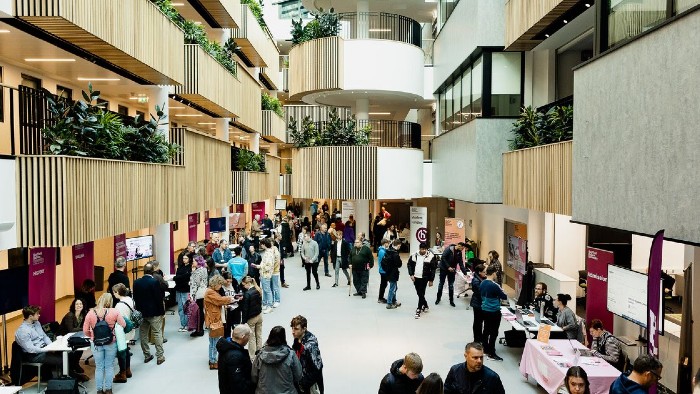

Everything you need to know...
-
Tuition fees
Home: £22,980 for the course
International/EU: £37,640 for the course -
Course duration
2 Years
-
Study location
-
Start date
January 2028
Course summary
- Explore dietetic connections with biomedical, food and nutritional sciences.
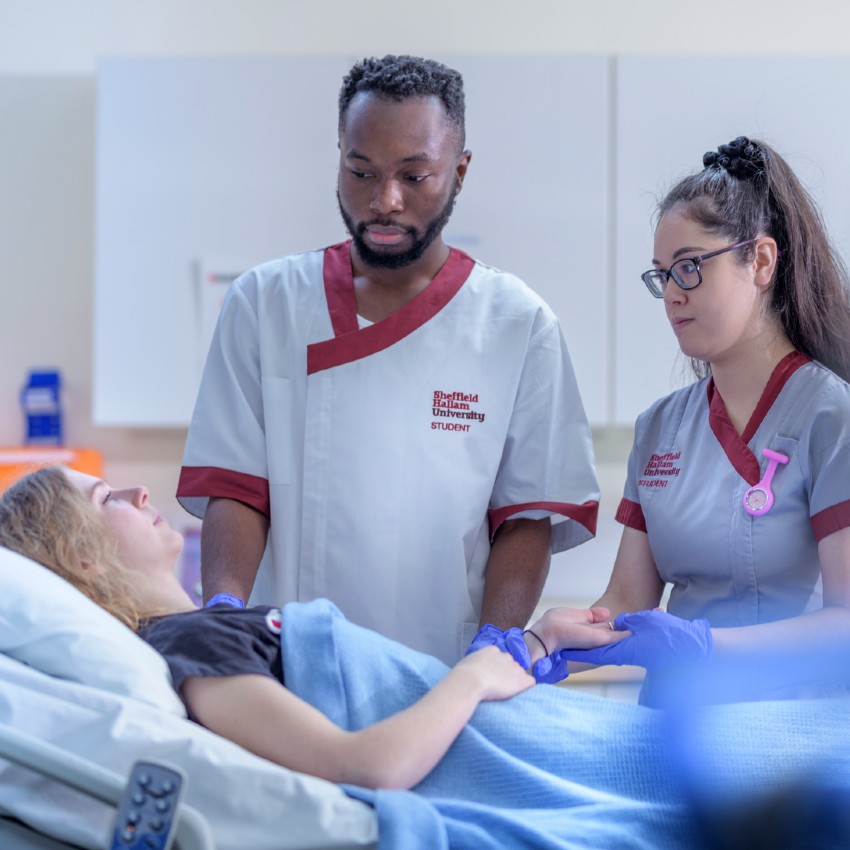
- Enhance your dietetic skills with academic study, simulated practice and placements.
- Apply diet therapy to promote health and manage various conditions.
- Learn from internationally and nationally renowned, award-winning dietitians.
- Gain eligibility for HCPC registration – compulsory for UK Dietitians.
Personalising dietetic care for diverse users and training in cutting-edge simulation suites, you’ll graduate from a course with high employment rates. You’ll gain advanced skills on a Master's degree that supports your career progression and enables you to excel professionally. Follow us on Instagram and TikTok (@SHUDietetics) to see what our students are engaging in on the course.
Health and social care funding
Home fee-paying students can access a non-repayable maintenance grant of at least £5,000 per year. Eligible students can receive upfront payments for placement travel/accommodation costs.
Accredited by

Health and Care Professions Council, the (HCPC)
Provides eligibility to apply for HCPC registration as a dietitian. This course is accredited by the British Dietetic Association (BDA) as delivering the approved pre-registration curriculum framework.
How you learn
Our courses are designed around key principles based on engaging you with the real-world, collaborating with others, challenging you to think in new ways, and providing you with a supportive environment in which you can thrive.
On this course you’ll engage in enquiry-based learning by collaborating with your fellow students. You’ll explore the evidence that underpins dietetic practice, identifying solutions through guided lectures and self-directed learning. You’ll then discuss these in face-to-face consolidation sessions, developing research-informed knowledge and supporting you to apply theory to practice.
You’ll learn from tutors who are engaged in research, professional practice and networks – with teaching qualifications and fellowship with the Higher Education Academy. They’ll help you understand the latest evidence-based practice – so you can apply current knowledge to real-world projects – making you stand out to employers.
You learn through:
- Digital learning packages and e-tivities
- Collaboration
- Group work
- Practical workshops
- Simulation
- Placement learning
- Lectures
- Seminars and discussion
- Professional networks and social media
- Independent study
- Assessment activities
- Using and engaging with research
Key Themes
You’ll study nutrition, food and biomedical sciences to establish the scientific foundation for dietetics. You’ll explore the interplay of nutrients, food, genetics, physiology, anatomy, pharmacology, and immunology in health and disease. Using this knowledge, you’ll apply dietetics to manage various diseases through diet therapy, tailoring nutritional care plans for diverse service users.
You’ll develop patient-centred care through topics that focus on professional skills – such as communication, reflection and interdisciplinary working. Public health nutrition topics will equip you to manage population health, devising intervention plans and public health campaigns.
You’ll apply your knowledge and skills in clinical and leadership placements to further enhance them. Additionally, you’ll learn research methodologies and conduct a project to advance dietetic practice.
Through collaboration, you’ll learn with, from and about other professions. Using this knowledge, you’ll be able to work inter-professionally in integrated services as part of contemporary health and social care.
Course Support
You’ll be supported in your learning journey towards highly skilled, graduate-level employment including:
- Access to specialist support services to help with your personal, academic and career development
- Access to our Skills Centre with one to ones, webinars, and online resources, to get help with planning your assignments
- Work-based employability activities, networking opportunities and placement
- Support from both your placement supervisors and university tutors during your placements
Student's success story

"During my placement at Sheffield Children’s Hospital, I had the opportunity to contribute to a Blended Diet Workshop in collaboration with the Blend Culinary Foundation. The project strengthened my ability to evaluate emerging evidence while balancing nutrition with family-centred care. Most rewarding was empowering families with the knowledge, skills and confidence to safely implement blended diets, and being part of an innovative development in dietetic practice that could genuinely improve quality of life".
Nikki Leung
Msc Dietetics (Pre-registration) student
Applied learning
You’ll apply your learning to real-world scenarios and experiences to enhance your skills, confidence, creativity, resilience, integrity and curiosity.
Live Projects
You’ll collaborate with peers on projects that contribute to campaigns like Nutrition and Hydration Week, and Dietitians Week – held online, on campus or through publications. These projects allow you to apply theory to real-life nutrition and dietetic scenarios, developing the critical and ethical approaches that are crucial for professional competence.
In your final year, you'll take part in real-world research projects, partnering with NHS Trusts for service improvements or conducting primary research in your areas of interest. You'll also be encouraged to publish your findings or present them at conferences.
Work Placements
You’ll undertake four work-based placements during your course, covering the four pillars of advanced practice: clinical, education, leadership and research. These placements are integral for developing critical, evidence-based, ethical approaches to your practice, ensuring your readiness as a competent professional. All placement-based experiences are compulsory to meet the course’s learning outcomes.
Placement experiences progress from observation and task-oriented activities to applying your knowledge and skills with selected service users and groups. You’ll gain experience in various settings that reflect current service delivery, including simulated, virtual or real-world.
In your second year there are leadership placements in extended-scope settings, promoting greater independence within your scope of practice. These challenging experiences support and enhance your communication skills, engagement with vulnerable groups and service user care, and your transition to the final placement. You’ll consolidate practice working with service users where there’s complexity – also having the opportunity to manage your own caseload, demonstrate safe and effective care, and undertake a project to innovate practice.
The majority of our placements are located within a one-hour drive from Sheffield. We ensure the placement element of your course complies with the Professional and Statutory Regulatory Body governing the dietetics profession. By successfully completing all elements of the course, you’ll have demonstrated the requirements to register as a dietitian.
Networking Opportunities
You’ll benefit from visits by internationally and nationally renowned, award-winning dietitians as guest lecturers, providing the latest updates in their specialised dietetic fields. Additionally, professionals from the food industry facilitate practical sessions.
Our teaching team maintains strong connections with the British Dietetic Association and other professional networks, offering the most up-to-date professional news, networking opportunities and work prospects. You'll also have the option to join the British Dietetic Association as a student member, giving you access to professional networks and resources to support your ongoing professional development.
Modules
Important notice: The structure of this course is periodically reviewed and enhanced to provide the best possible learning experience for our students and ensure ongoing compliance with any professional, statutory and regulatory body standards. Module structure, content, delivery and assessment may change, but we expect the focus of the course and the learning outcomes to remain as described above. Following any changes, updated module information will be published on this page.
Year 1
Compulsory modules
Module Aim:
This module will develop a critical knowledge of theory underpinning communication and behaviour change integrating this with the professional skills required to structure effective person-centred dietetic consultations.
Delivery:
Lectures, seminars, simulation, tutor-led and self-directed learning.
Indicative content:
-
Professionalism
-
Communication and behaviour change theory
-
Person centredness
-
Information systems
-
Documentation
-
Clinical Governance
-
Communication skills: -
-
Meet and greet,
-
Paraphrasing, reflecting emotions and questions,
-
Information exchange and typical day
-
Summarising
-
Ending consultations.
-
Service user- practitioner relationships
-
Placement preparation
-
Group Education
-
Integrating and adapting professional skills in consultations.
This module develops professional skills, integrating these with dietetic management of conditions in consultations and group sessions.
The aim of this module is to enable you to apply knowledge of research theories, including epistemology, and methods in order to critically evaluate research paradigms and evidence for practice. It will enable you to develop a critical understanding of research approaches, principles and processes that underpin research activity in the workplace and address the ethical dilemmas and organisational complexities of undertaking practice-based research.
Indicative content:
- Research paradigms
- Research context
- Research Question Development ·
- Research methods
- Systematic literature review
- Data collection
- Methods of data analysis
- Ethics and research governance Service user involvement in research
- Inclusive perspectives of research
- Proposal development
Module Aim:
To appreciate the roles and responsibilities of dietitians working within health and care and start to develop knowledge, skills and professional practice through observation and participation in learning activities.
Delivery
Through observation and experiential learning activities students work towards placement learning outcomes.
Indicative Content
-
Applying knowledge into practice
-
Dietary assessment
-
Communication with individuals
-
Reflection and review
-
Professionalism
-
Multi-professional working
-
Evidencing learning in a professional portfolio
-
Developing skills working with a range of service user groups, conditions, and settings.
This module introduces students to the placement setting and provides an opportunity to start to apply knowledge, professional skills, and behaviours into dietetic practice.
Module Aim:
To begin to apply theoretical knowledge and develop the range of professional practice skills needed to work as a dietitian in the placement setting working with selected service users/groups and clinical conditions in a range of settings.
Delivery
Through participation in a 50-day placement, students develop and start to apply knowledge, professional skills and behaviours in selected service users working towards placement learning outcomes.
Indicative Content
In selected service users (individual, groups and populations) students can demonstrate:
-
Applying knowledge into practice
-
Comprehensive nutrition and dietary assessment
-
Communication skills and approaches
-
Reflection and review
-
Professionalism
-
Multi-professional working
-
Care Planning and monitoring
-
Prioritisation and management of workload
-
Planning, development and delivery of group education sessions
-
Transition from directed to more self-directed practice.
This module enables students to develop and apply knowledge, professional skills, and behaviours in selected service users.
Module Aim:
This module will develop a critical knowledge of the principles and evidence-base underpinning dietetic practice together with the professional skills required for its application.
Delivery:
Lectures, seminars, practicals, tutor-led and self-directed learning.
Indicative content:
-
UK Dietary Guidelines and recommendations
-
Eating habits.
-
Healthy Eating
-
Social determinants and food choice
-
Equality, diversity, and inclusion
-
Food in multicultural society
-
Food labelling
-
BDA Care Process
-
Assessment of nutritional status, dietary intake, and analysis
-
Person centred care
-
Dietary management of clinical conditions.
-
Reflective Practice
-
Macro and micronutrients, functional foods
-
Inter-professional collaboration
-
Professional skills
-
Placement preparation
This module provides orientation to key principles in dietetic practice.
Final year
Compulsory modules
Module Aim:
This module will advance knowledge and professional practice skills where there is complexity of practice working within public health and acute clinical settings.
Delivery:
Seminars, group work, practicals, simulation, tutor-led and self-directed learning.
Indicative content:
-
Placement preparation
-
Reflection
-
Policy and Commissioning Frameworks
-
Epidemiology and Determinants of Health
-
Community Profiling
-
Health Promotion and Psychology theories
-
Planning, designing, and evaluating Public Health Nutrition Interventions
-
Leadership
-
Employability
-
Advanced Communication and Behaviour Change
-
Dietary management of Complex Conditions
-
Justifying decision making
-
Clinical effectiveness
-
Governance, legal and ethical issues
-
Professional skills
-
Continuing Professional Development
This module prepares students for dietetic practice in complexity.
This module will enable you to develop and conduct an in depth investigation of a topic that challenges and contributes to your area of professional practice. It provides the opportunity to engage in and apply an understanding of research methods and demonstrate your ability to work with relative autonomy in undertaking a sustained, in-depth piece of independent learning, disseminating findings to your professional community
Indicative content:
- Creating and contributing to research and evaluation for practice
- Application of approaches to research, research methods including improvement and evaluation methodologies
- Project planning
- Data Analysis & Interpretation
- Data Management
- Dissemination of findings
- Challenges in applying study outcomes to practice
- Addressing inclusivity in your research process.
This module enables you to critically reflect on and evaluate the key components of integrated health and social care required to effectively support service users, carers and their families who have complex health and care needs.
You’ll learn through content linked to the case studies which are used to frame the module. This will include specific interventions related to physical and psycho-social challenges in addressing complex needs of patients with acute and long term conditions across a range of delivery settings in which you will work with other disciplines. Other elements of content will address the following:
- Co-morbidity
- Policy and legislation
- Care pathways
- Clinical reasoning
- Integrated care and advanced practitioner roles
- Leadership
Module Aim:
To continue to apply theoretical knowledge and develop the range of professional skills needed to work as a dietitian in an extended scope setting working with selected service user groups and communities with a range of nutrition and dietetic needs.
Delivery
Through participation in a 20-day placement, students continue to develop and apply knowledge, professional skills, and behaviours to lead leading nutrition and dietetic interventions in selected service user groups and communities.
Indicative Content
In selected service users (groups and communities) students demonstrate:
-
Applied knowledge in extended scope settings.
-
Nutrition assessment of groups and communities.
-
Communication skills and approaches with vulnerable communities
-
Reflection and review
-
Professionalism – scope of practice and seeking appropriate support.
-
Interprofessional working.
-
Planning, interventions, and review
-
Prioritisation and project management
-
Planning, delivery, and co-production of a workstream.
-
Leadership of activities and participation of service user groups and communities.
This module enables students to continue to develop and apply knowledge, professional skills, and behaviours in selected service user groups and communities.
Module Aim:
To become competent in translating theory into practice and demonstrating the professional skills to work as a registered dietitian.
Delivery
Through participation in a 60-day placement, students apply knowledge, professional skills and behaviours working with service users with complexity.
Indicative Content
In selected service users, students demonstrate:
-
Using knowledge to justify decision making.
-
Comprehensive assessment
-
Advanced communication skills
-
Reflection and review
-
Professionalism
-
Interprofessional working.
-
Care planning and evaluation
-
Caseload management
-
Delivery and evaluation of group education
-
Autonomous practice
Students consolidate knowledge, professional skills, and behaviours in complexity.
Future careers
This course prepares you for future dietetic careers in:
- NHS hospitals, primary care, mental health and learning disability settings
- Public health and health promotion
- Higher education
- Research
- Media
- Freelance practice
- Private, voluntary and independent organisations
- The food industry
- The pharmaceutical industry
Previous graduates are working in local NHS Trusts across South Yorkshire and East Midlands – and have moved onto more senior roles within a year.
Most graduates have job offers before the end of the course.
Equipment and facilities
We’ve invested over £100m in new facilities to help you study how and when you want. This means 24-hour libraries and study spaces designed by our students.
Teaching is mainly conducted at Collegiate Campus using modern classrooms and simulation spaces. Our simulation ward is equipped with two six-bedded areas, a nurses’ station, adapted bathrooms and toilets, a multi-professional room, and diverse mannikins to practise skills.
You’ll also work with:
- Specialist kitchen facilities for diet therapy practicals
- Dietary analysis software
- Simulated wards, GP practice rooms and house for practising consultations
- Physiology laboratories for nutritional assessment, body composition measurements and blood biochemistry facilities
Learn more about your department
Health and Social Care Facilities Tour
Learn what it's like to study health and social care at our Collegiate Campus from our adult nursing student Alex.
Where will I study?
You study at Collegiate Campus through a structured mix of lectures, seminars and practical sessions as well as access to digital and online resources to support your learning.
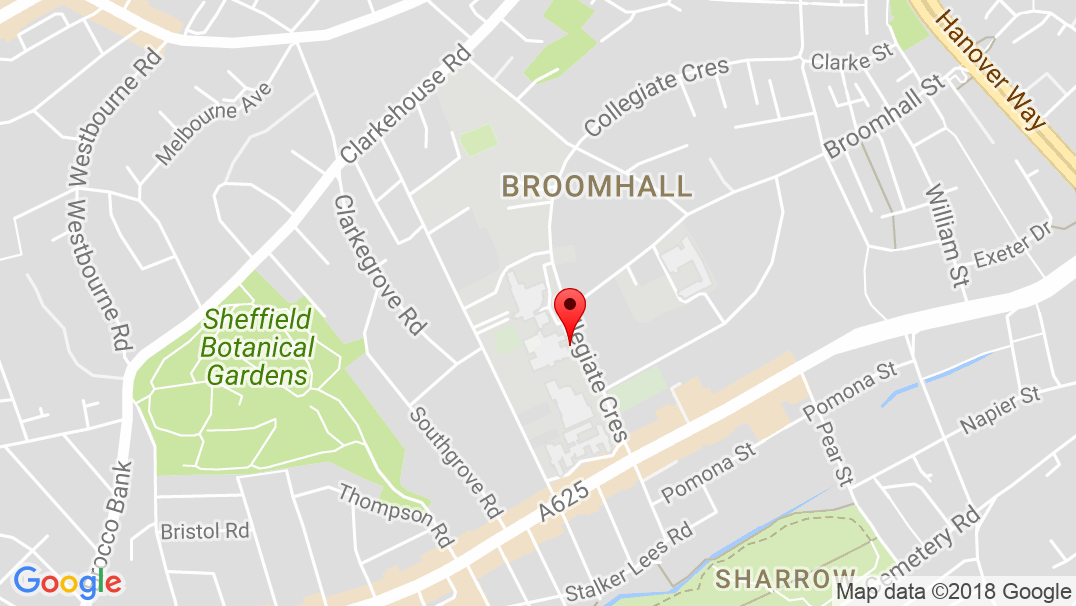
Collegiate campus
Collegiate Campus can be found just off Ecclesall Road, a bustling student district.
Collegiate Campus map | Campus facilities

Collegiate library
Collegiate Library can be found just off Ecclesall Road. It's open 24 hours a day, every day.
Learn moreEntry requirements
All students
First degree, normally at level 2:1 or above in a relevant science subject, such as biological or health sciences, nutrition, sport and exercise science.
Human physiology and biochemistry should be studied to level 5 or equivalent in first degree.
Experience of research or knowledge of research methods.
GCSE English and Maths C (Grade 4) or equivalent.
For international applicants IELTS 7.0 with no components below 6.5. Applicants must have a good command of written and spoken English on entry to the course. Please note, upon successful completion of the course graduates are eligible for registration with the Health Care and Professions Council.
Additional information for EU/International students
If you are an International or non-UK European student, you can find out more about the country specific qualifications we accept on our international qualifications page.
For details of English language entry requirements (IELTS), please see the information for 'All students'.
Fees and funding
Home students
Our tuition fee for UK students starting full-time study in 2027/28 is £22,980 for the course. The tuition fee displayed above is for the full course. If the full course is more than one year in duration, the fee will be divided into annual payments which will then be rounded. This may mean the total fee you pay is slightly higher than the fee stated above. If you take a break in study or have to re-take part of the course, you may also be charged an additional fee and will be notified of this at the time. Our tuition fee for UK students starting full-time study in 2027/28 are: Year 1: £11,490 Year 2: £11,490. Students taking out a student loan will only receive a maximum of £9,790 (for the 2026–27 academic year), leaving a shortfall that must be self-funded either during the course or at the point of withdrawal. The NHS Learning Support Fund offers a non-repayable training grant of £5,000 per year to all eligible new and current pre-registration students. You may also be eligible for additional financial support based on your circumstances up to the value of around £5,000. This includes parental support, travel/accommodation expenses and a financial hardship fund. Find out about health and social care funding options.
If you are studying an undergraduate course, postgraduate pre-registration course or postgraduate research course over more than one academic year then your tuition fees may increase in subsequent years in line with Government regulations or UK Research and Innovation (UKRI) published fees. More information can be found in our terms and conditions under student fees regulations.
International students
Our tuition fee for International/EU students starting full-time study in 2027/28 is £37,640 for the course which includes a placement supplement. The tuition fee displayed above is for the full course. If the full course is more than one year in duration, the fee will be divided into annual payments which will then be rounded. This may mean the total fee you pay is slightly higher than the fee stated above. If you take a break in study or have to re-take part of the course, you may also be charged an additional fee and will be notified of this at the time.
Additional course costs
The links below allow you to view estimated general course additional costs, as well as costs associated with key activities on specific courses. These are estimates and are intended only as an indication of potential additional expenses. Actual costs can vary greatly depending on the choices you make during your course.
General course additional costs
Additional costs for Health and Social Care (PDF, 371.2KB)Legal information
Any offer of a place to study is subject to your acceptance of the University’s Terms and Conditions and Student Regulations.

Come to an open day
Find out more at our postgraduate open days. Book now for your place.