
Everything you need to know...
-
Tuition fees
Home: £11,490 for the course
International/EU: £19,530 for the course -
Course duration
2 Years
-
Study location
-
Start date
September 2027
Course summary
- Study and gain skills in using cutting-edge technologies.
- Explore innovative methods of technical design and experimental architecture.
- Build your career, practical competence and expertise in decarbonisation.
- Develop your understanding of digital transformation and creativity.
- Undertake cross-disciplinary collaboration beyond typical practises of architecture.
Our MSc Zero Carbon Buildings and Technologies course provides industry links to equip you with the skills and vision to tackle the climate emergency. With decarbonisation strategies and resilient design practises, you’ll use data to explore complex construction challenges in a variety of contexts.
Employability
94% of our postgraduate students are in work or further study 15 months after graduating (2023/24 Graduate Outcomes Survey)
How you learn
The course brings together environmental and innovative technologies to achieve practical and sustainable goals in design, construction and operational practices. You’ll gain a strong theoretical and technical foundation in environmental architecture through experimentation and modelling, using data technologies to help you meet the needs of practice.
Sustainable development is at the core of the course. You’ll study modules that are developed to demonstrate knowledge and the practice of innovation, clean energy production, responsible energy consumption and healthy environments. The course has three integrated pillars covering design and construction, environment and performance, and digital and data technologies.
You’ll develop your knowledge, understanding and skills – applying them to environmental, digital and technically driven architectural design projects.
You learn through:
- lectures and seminars
- guest lectures
- individual and group exercises
- case studies
- field visits
- coursework
- projects
Key Themes
You’ll develop essential knowledge and skills in trimester 1 via two 30 credit modules. These modules extend into trimester 2 to allow progression into applied design, enabling students with or without an existing design background to flourish on the course.
All core modules are considered preparatory to, and extended by, the research project module. For example, in trimester 2 professionally focused modules draw on your skills and knowledge from trimester 1, supporting engagement in professional and interdisciplinary projects. Meanwhile, you’ll complete co-curricular activities with employers in both trimesters 1 and 2, giving you time to develop your confidence.
Your final research project is a consultancy project that academic teams will develop through employer-led scholarly research. You’ll undertake real-world inquiry and investigation through the exploration of data to assess zero carbon strategies. You’ll complete a reflective written element in your dissertation, covering the work experience and/or employability skills, individual capabilities and competencies gained through the different activities throughout the course or work experience. This helps you gain further skills for your future careers, especially in providing consultancy in energy and decarbonisation of the built environment.
Course Support
We aim to help you devise projects that match your interests while addressing contemporary environmental challenges. Projects can be located in a range of contexts, such as the practice you work in if you’re working while studying, or the home country of an international student.
You’ll also be supported to prepare for success with a meaningful and relevant learning experience, including:
- employability workshops for CV writing, interview techniques and networking
- our dedicated BOOST team helps you identify work experience positions aligned with your interests and career aspirations
Applied learning
Live projects
The course promotes innovation and creativity in architectural investigation and design, advancing beyond typical architectural practice by implementing research-informed teaching.
Research skills are supported throughout the course. The course is delivered through a range of industry-aligned modules that allow you to deal with real-world problems and solve them through research and development.
The course is also connected with leading international software companies in digital modelling and digital twin technology, enabling you to design and learn on both national and international scales.
Networking opportunities
The course promotes cross-disciplinary collaboration in design and is taught by experts across the subjects of architecture and engineering, providing you with a distinctly interdisciplinary experience.
Modules
Module and assessment information for future years is displayed as currently validated and may be liable to change. When selecting electives, your choices will be subject to the core requirements of the course. As a result, selections may be limited to a choice between one of two or more specified electives in some instances.
Year 1
Compulsory modules
This module aims to introduce and extend the knowledge and skills of using data-driven technologies in design. It focuses on exploring and evaluating data in buildings and city modelling. It offers skills to improve the process of modelling, analysis and management of data-driven design in the built environment. It provides a critical awareness of new initiatives in information technology (IT) pertinent to the construction industry. It supports the effective use of data and tools to enhance learning in other modules in the course.
The content explores theoretical and practical approaches to understanding and evaluating the process for creating and managing information and the digital description of every aspect of the built asset.
Seminars provide software instruction for and introduce wider case studies through both research and application of the software, the module explores:
- Overview of theories, technologies, and processes of building and city information modelling.
- Introduction to computational thinking for solving design problems
- Newly emerging ideas and practices of designing with data
- Collecting data, descriptive statistics, and data plotting
- Information modelling and information management
- Visual programming/coding in the modelling and design
- Research Methods
This module aims to provide fundamental and progressive ideas in decarbonisation and complex design parameters that influence technical solutions. This module explores the application of building performance and simulation tools through data-informed design to understand how the function of a building can be optimised. It will encourage specialisation, autonomy and critical thinking of environmental performance in buildings, via digital modelling, simulation and testing.
The module introduces the discipline of net-zero design through performance and optimisation. It covers both theoretical and practical approaches for understanding and evaluating the efficiency of environmental design. The content explores environmental architecture via specialist research and modelling of the indoor environment, to test, analyse and improve building performance, with a core focus on carbon emissions, energy efficiency and occupant health and comfort. Outcomes are optimised through digital experimentation and an evidence-informed approach using data technologies.
You’ll study topics such as:
- Net-zero carbon buildings and renewable energy technologies
- Climate emergency design and human comfort
- Evaluation methods of indoor environmental quality
- Carbon emissions and energy performance in buildings
- Experimentation and modelling using data optimisation and validation
- Data analytics to visualise and improve building performance
- Post occupancy evaluation, occupant satisfaction, health and comfort
- Innovation and originality in environmental architecture
- The role of testing, analysis and prototyping in technical research
- Experimental research methods
Alongside this, all students have the opportunity to undertake Carbon Literacy certification and could complete a short period of work experience related to the methods/techniques studied (30-40 hrs).
Final year
Compulsory modules
The module provides knowledge and understanding of professional Architecture, Engineering, Construction and Owner/Operations (AECO) sector education and practice in the UK. It focuses on how effective management of people and processes may future proof practice for the benefit of clients and building users. It investigates and analyses case studies to propose effective strategies for increasing productivity. It demonstrates the importance of change thinking and change management for zero carbon construction.
You’ll study topics such as:
- Introduction to the Architecture, Engineering, Construction and Owner/Operations (AECO) sector
- The regulatory framework for professional practice in the UK
- The role of Professional Statutory Regulatory Bodies (PSRBs) in professional education and practice
- Concepts of whole project/building life cycle
- Collaboration theory and practice between all parties
- Project, Construction, Practice, and Information Management: methodologies, processes, and protocols
- Risk and Total Quality Management (TQM)
- Introduction to research methodologies in the Built Environment
- Future-proofing the AECO sector
- Exemplary case studies of practice Research and Development (R&D) in management
- Feasibility studies in terms of costs and buildability
- Principles of contingencies/ risk allowance
- Sustainable costing and construction
- Project and site management methodology
- Complex construction methods
- Reporting progress of works
- Problem solving skills
- Risk Management and Dispute resolution methods
- Practice-based research
Alongside this, all students also have the opportunity to undertake Carbon Literacy certification and can complete a short period of work experience related to the methods/techniques studied (30-40 hrs).
The module aims to enable an individual student to undertake a sustained, in-depth and theoretically informed research project, involving a critical, evaluative or creative approach to an aspect of practice or design. This module is mandatory for students wishing to achieve the award of MSc. The output, a dissertation or artefact, complies with the University’s requirements for the award of Masters degrees and with the description of MA/ MSc awards by the Quality Assurance Agency for England and Wales.
The subject matter of the major project will relate to the relevant award. Cross-disciplinary and cross-professional major projects are also acceptable and welcome. You will be expected to take advantage of all forms of academic and professional media relevant to their specialist subject.
You’ll study topics such as:
- Project aims, objectives and purpose
- Reviews of theory and of existing studies, precedents and examples as appropriate
- A statement of research methods and methodology, including design methods where appropriate
- The execution of relevant data collection, management, presentation and analysis
- Construction of knowledge, including construction of an innovative technical or artistic proposal
Where creative work is involved, this will be informed by and related to the theoretical aspects of the project.
The research projects will be based on real technical problems that exist in the industry. The approach of the module is to develop the concept of Research and Development (R&D) such as fundamental research, feasibility studies, industrial research and experimental development.
Module Aim:
This module introduces environmental concepts and strategies of sustainable retrofitting and fabrication within the context of technical and environmental architecture to promote a forward-looking and holistic approach to construction technologies. It provides a historical, theoretical and practical framework for you to investigate current and future methods of making and retrofitting buildings. It will inspire you to develop, test, evaluate and justify technical design processes and proposals.
The module follows the development of climate emergency design in academia and current architectural practice. The content focuses on learning technical solutions and digital design methodologies for retrofitting and fabrication. A key aspect of the module will be the analysis of precedent and current industry practice.
You’ll study topics such as:
- Processes of sustainable retrofitting and technical design
- Emerging ideas and practices of retrofitting and construction technologies
- Retrofit performance evaluation
- Building envelope optimisation
- Planning for effective, sustainable retrofitting implementation and technology
- Introduction and theory of design for fabrication
- Materials for fabrication and construction of components and systems
- Research methodologies for retrofitting and fabrication
- Precedent and industry analysis
Future careers
This course prepares you for a wide range of careers, such as:
- environmental design and decarbonisation technology in architecture, architectural technology, engineering and built environment
- consultancy in environmental analysis, energy and carbon assessment, and building performance evaluation – focusing on decarbonisation
- software specialism in environmental data and modelling in the built environment
- technical retrofitting and digital prefabrication towards net zero
You could also follow an academic path to teach and research in environmental design, building science and technology, building performance, environmental data and decarbonisation in construction – with a pathway to undertake PhD study.
Equipment and facilities
The course has the distinct environmental focus to achieve zero fossil energy consumption and zero carbon emissions in building design. It’s designed to prepare you to work with new digital technologies that enable connection between energy and building systems, making them reliable and smart.
Classes are delivered in lecture theatres and seminar rooms as well as specialist IT laboratories, with specialist facilities such as:
- data-driven technologies software including BIM, CIM, Fabrication, Environmental Solutions and LCA
- workshop and laboratory resources for physical testing and fabrication
Where will I study?
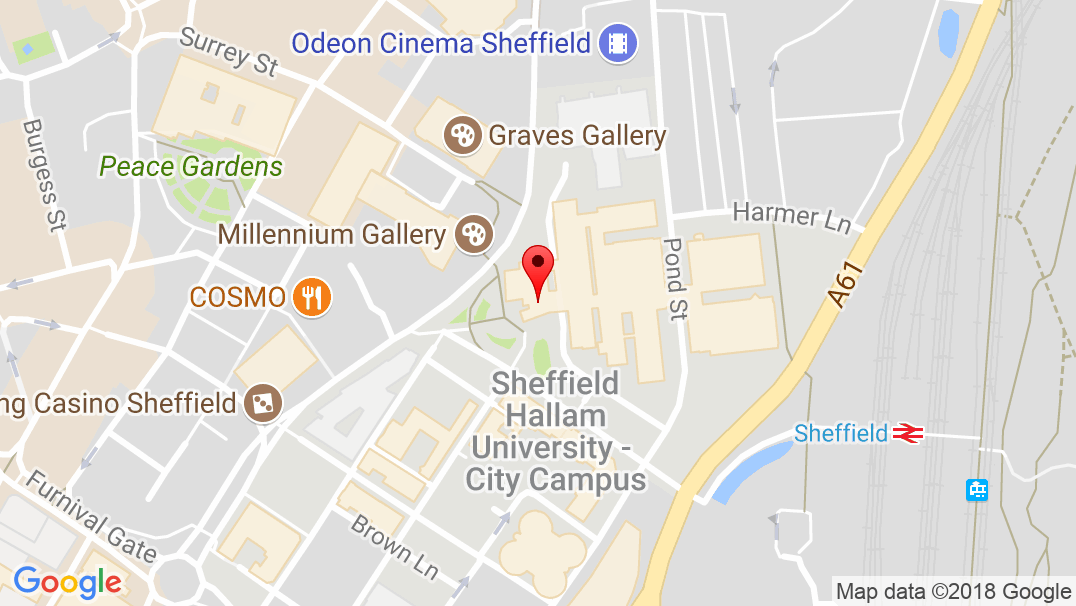
You study at City Campus through a structured mix of lectures, seminars and practical sessions as well as access to digital and online resources to support your learning.
City Campus
City Campus is located in the heart of Sheffield, within minutes of the train and bus stations.
City Campus map | City Campus tour
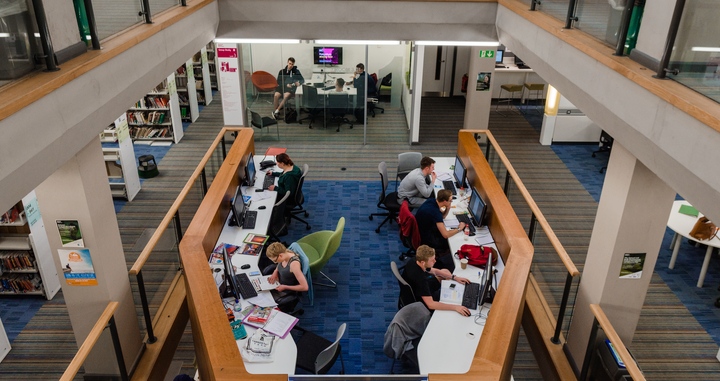
Adsetts library
Adsetts Library is located on our City Campus. It's open 24 hours a day, every day.
Explore the libraryEntry requirements
All students
2:2 undergraduate degree in: Architecture; Architectural Technology; Building Surveying; Construction Management; Project and Facility Management; Engineering (Civil, Electrical and Mechanical); Planning /Urban Design; Environmental Sciences/Studies; Landscape Architecture; Interior Design.
Additional information for EU/International students
If you are an International or non-UK European student, you can find out more about the country specific qualifications we accept on our international qualifications page.
For details of English language entry requirements (IELTS), please see the information for 'All students'.
Fees and funding
Home students
Our tuition fee for UK students starting part-time study in 2027/28 is £11,490 for the course. The tuition fee displayed above is for the full course. If the full course is more than one year in duration, the fee will be divided into annual payments which will then be rounded. This may mean the total fee you pay is slightly higher than the fee stated above. If you take a break in study or have to re-take part of the course, you may also be charged an additional fee and will be notified of this at the time. Our tuition fee for UK students starting part-time study in 2027/28 are: Year 1: £3,830 Year 2: £7,660.
If you are studying an undergraduate course, postgraduate pre-registration course or postgraduate research course over more than one academic year then your tuition fees may increase in subsequent years in line with Government regulations or UK Research and Innovation (UKRI) published fees. More information can be found in our terms and conditions under student fees regulations.
International students
This course is not eligible for full-time Student visa sponsorship. International/EU students may apply for part-time Student visa sponsorship on an individual basis. Please contact Admissions for further advice. Our tuition fee for International/EU students starting part-time study in 2027/28 is £19,530 for the course. The tuition fee displayed above is for the full course. If the full course is more than one year in duration, the fee will be divided into annual payments which will then be rounded. This may mean the total fee you pay is slightly higher than the fee stated above. If you take a break in study or have to re-take part of the course, you may also be charged an additional fee and will be notified of this at the time. Our tuition fee for International/EU students starting part-time study in 2027/28 are: Year 1: £6,510 Year 2: £13,020.

Scholarships and financial support
Find information on scholarships, bursaries and postgraduate student loans.
International scholarships up to £3000 ›
Alumni scholarships up to £2000 ›
Postgraduate loans for UK students ›
Additional course costs
The links below allow you to view estimated general course additional costs, as well as costs associated with key activities on specific courses. These are estimates and are intended only as an indication of potential additional expenses. Actual costs can vary greatly depending on the choices you make during your course.
General course additional costs
Additional costs for Sheffield Creative Industries Institute (PDF, 274.9KB)Legal information
Any offer of a place to study is subject to your acceptance of the University’s Terms and Conditions and Student Regulations.