Everything you need to know...
-
Tuition fees
Home: £11,490 for the course
International/EU: £19,530 for the course -
Course duration
2 Years
-
Study location
-
Start date
September 2027
January 2028
Course summary
- Develop advanced knowledge through practical, industry-focused learning.
- Analyse and solve complex infrastructure and construction challenges.
- Explore modern construction practice, project delivery and engineering management.
- Apply your learning to realistic industry scenarios and collaborative projects.
- Build your technical expertise, communication skills and leadership potential.
On our MSc Civil Engineering course, you'll combine advanced technical knowledge and practical skills with global research and industry practice. You'll explore sustainable infrastructure, project management and modern construction methods – advancing your engineering career or preparing for leadership roles in the construction industry.
More ways to study this course
If you want to gain valuable industry experience as part of your degree, explore our MSc Civil Engineering with Work Placement course. You can also study this course full time.

Come to an open day
Find out more at our postgraduate open days. Book now for your place.
How you learn
The MSc Civil Engineering course integrates the latest civil and construction engineering research and professional practice. You’ll develop the technical expertise, practical experience and professional skills to make a lasting impact on the built environment.
You learn through:
- lectures
- hands-on lab sessions
- tutorials
- regular feedback
- teamwork and group learning
- practical learning
- discussions
- self-directed study
- practical activities
- engineering software
Why choose Sheffield Hallam for civil engineering?
At Sheffield Hallam you’ll combine advanced technical knowledge with practical experience, collaborative projects and research-informed teaching. You’ll work on real-world engineering challenges while learning alongside experienced academics and industry professionals. These experiences will develop the analytical, technical and leadership skills you’ll need to work in the civil engineering and construction sectors.
You’ll work with students from different backgrounds, strengthening your teamwork and communication skills while encountering a range of technical perspectives and professional experiences.
Develop advanced civil engineering research skills
Your project modules give you opportunities to demonstrate your development as both an independent learner and a member of a professional team. This includes a professional research project, combining academic research with current industry practice. And instead of a traditional dissertation, there’s a civil engineering research project, where you’ll explore the latest research in a selected subject.
Key themes
Throughout the course, you'll explore the latest developments in civil engineering, combining advanced technical knowledge with current industry practice. You'll develop expertise in sustainable infrastructure, modern construction methods, engineering project management and applied research, while tackling real-world engineering challenges through individual and collaborative projects.
You'll also strengthen your communication, teamwork and leadership skills, preparing you to work effectively in multidisciplinary engineering environments and the global construction industry.
Course-level support
You’ll receive feedback in a variety of ways throughout the course, including written comments on your work and informal face-to-face feedback from lecturers and peers. You’ll also be supported in your learning journey towards highly skilled employment through a number of key areas. These include:
- help with your personal, academic and career development
- Skills Centre one-to-ones and online resources to help you plan and prepare for assessments
Applied learning
Work experience
This course also has a work experience route that offers an industry placement of up to 12 months – the MSc Civil Engineering with Work Experience.
Live projects
We’ll bring together the latest research and current practice in the construction industry, allowing you to apply your learning to real-world examples. You’ll be involved in developing a knowledge transfer project, promoting collaboration between research institutions and the industry, enabling the rapid application of state-of-the-art insights to solve real-life problems.
You’ll complete an applied project that demonstrates your civil engineering knowledge and project management skills. Through group work and problem-based learning, you’ll develop your critical thinking, problem-solving and teamwork skills, completing tasks that reflect industry standards and practices. You’ll also use specialist software and professional tools, developing technical skills for your future career.
Field trips
You’ll take part in field trips to construction sites. Here you can observe construction processes first-hand and understand the operational roles of different professionals in the built environment.
Networking opportunities
Guest lecturers will share their expertise and introduce you to a range of industrial applications and trends. Networking events will also give you opportunities to connect with practitioners.
Throughout the course, our Careers and Employability Team will help you make the most of your work experience and networking opportunities. You’ll be able to strengthen your confidence and professional readiness for roles in civil engineering and the wider construction sector, both in the UK and internationally.
Modules studied may differ depending on when you start your course.
Modules
Module and assessment information for future years is displayed as currently validated and may be liable to change. When selecting electives, your choices will be subject to the core requirements of the course. As a result, selections may be limited to a choice between one of two or more specified electives in some instances.
Modules studied may differ depending on when you start your course.
Year 1
Compulsory modules
Undertake an in-depth exploration of a specialised civil engineering topic through this research project module. Working closely with academic supervisors and, where appropriate, industry partners, you will investigate contemporary engineering challenges using advanced research methods, analytical tools, and critical evaluation techniques. This module provides the opportunity to apply the knowledge and skills developed throughout your studies to an independent project that reflects your professional interests and career aspirations.
This module allows you to:
- Conduct independent research on a specialist civil engineering topic of your choice
- Apply advanced analytical, computational, experimental, or design methodologies to complex engineering problems
- Work alongside experienced researchers and utilise industry-standard software, laboratory facilities, and research tools
- Critically evaluate existing literature, engineering practices, and emerging technologies within the civil engineering sector
- Develop professional skills in project management, technical communication, data analysis, and research dissemination
- Produce a concise research work demonstrating originality, critical thinking, and advanced engineering understanding
This module is assessing the following AHEP4 learning outcomes: M1, M2, M3, M4, M5, M6, M17
Advance your expertise in civil engineering and tackle the complex challenges shaping the modern built environment in this advanced postgraduate module. Engage with specialist topics across structural, geotechnical, environmental, and transportation engineering, guided by leading academics and industry-informed research. Apply advanced analytical methods, digital engineering tools, and sustainable design principles to real-world infrastructure problems. This module empowers you to refine your professional interests while developing the technical and critical thinking skills needed for leadership in the civil engineering sector.
This module allows you to:
- Deepen your understanding of advanced civil engineering principles and contemporary industry practices
- Work alongside expert researchers and utilise advanced engineering software, laboratory facilities, and analytical tools
- Develop specialised knowledge tailored to your professional interests and career ambitions
- Explore cutting-edge topics including sustainable infrastructure, smart cities, structural resilience, and geotechnical innovation
- Apply advanced problem-solving and research skills to complex engineering challenges
- Build the expertise and confidence required for senior roles in the evolving field of civil engineering
This module focuses on developing your research skills by guiding you through the process of planning and conducting an independent research study within your chosen area of the built environment.
You’ll study topics such as:
- Choosing a research topic based upon reflection and career goals
- Critical evaluation of sources
- Understanding intellectual property, data re-use rights and information governance
- Research skills
- Gathering and preparing existing data
- Communicating findings
- Evidence-based decision making
- Data analysis
Final year
Compulsory modules
This module focuses on understanding the key processes involved in managing the full construction phase of a commercial project. You will learn about output-focused methods while considering important factors like technical challenges, resource management, budgets, and contracts. The module explores large-scale commercial projects, including international examples, highlighting the need for effective resource use, health and safety practices, and careful planning throughout the production phase.
You’ll study topics such as:
- Concepts and techniques involved in the successful management of a project
- Complex construction technologies for larger scale projects
- IT methodologies for project management, monitoring and delivery
- Production commencement, pragmatic scheduling and control
- Complex plant and equipment for larger scale projects
- Control and management of subcontractors and materials
- Delivering the Project including Financial Procedures
- Project Completion Strategies
This module develops your ability to create a feasibility study, presentation and self-reflection on the renovation of a city centre building. Working as a team member with an assigned role, from construction courses work together in a time restricted scenario, in a situation that closely resembles a workplace environment.
This is a multi-skilled module where you’ll explore the issues of effective team working, presentation skills and personal reflection on their contribution to the process.
You’ll study topics such as:
- Feasibility Study
- Building Regulations and Construction Standards
- Collaborative working
- Multi-disciplinary work
- Communication skills
- Professional and International context
- Market and regulatory conditions
- Development process
This module explores modern practices within the context of national and international construction. It will develop your awareness and understanding of health and safety management, the application of digital technology, building information modelling, sustainable construction and modern methods of construction.
You’ll study topics such as:
- Construction health and safety performance and construction health and safety law
- Principles and practice of health and safety risk assessment
- H&S management case studies
- Context, definitions and concepts of building information modelling (BIM)
- National and international BIM requirements, implementation, industry standards and information management processes
- Digital technology/software application within construction design and management
- Application of traditional and modern methods of construction for domestic and commercial substructures and superstructures
- Building regulations, sustainability principles and rating tools
Future careers
This course prepares you for careers in:
- civil engineering
- infrastructure
- construction
- engineering management
- project management
Graduates may pursue opportunities with UK and international employers, including:
- Arup
- Balfour Beatty
- Bowmer + Kirkland
- ISG
- Kier
- Laing O’Rourke
- Mace
- Morgan Sindall
- Skanska
- Vinci
- VolkerWessels
- Wates Group
Equipment and facilities
You’ll use digital learning resources, specialist engineering equipment and Sheffield Hallam facilities that support your lectures, practical activities, independent study and project work.
You’ll have access to:
- civil engineering labs
- Blackboard Ultra
- online lecture recordings
- 24-hour library resources
- virtual reality equipment
- 3D laser scanners
- IT suites
- printing facilities
Where will I study?
You study at City Campus through a structured mix of lectures, seminars and practical sessions as well as access to digital and online resources to support your learning.
City Campus
City Campus is located in the heart of Sheffield, within minutes of the train and bus stations.
City Campus map | City Campus tour

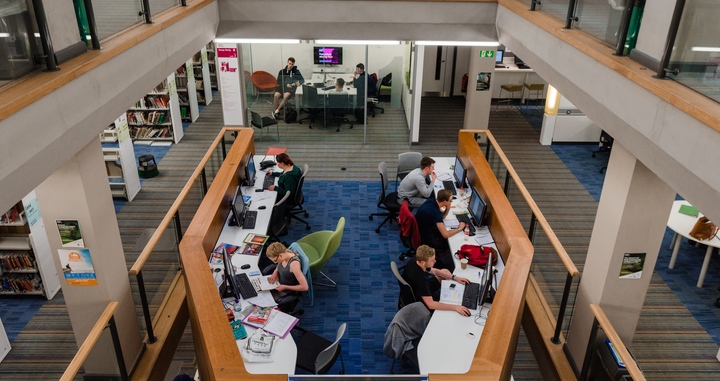
Adsetts library
Adsetts Library is located on our City Campus. It's open 24 hours a day, every day.
Explore the libraryEntry requirements
All students
Normally an undergraduate degree at 2:2 or above, in a related field.
If English is not your first language, you will need an IELTS score of 6.0 with a minimum of 5.5 in all skills, or equivalent.
Additional information for EU/International students
If you are an International or non-UK European student, you can find out more about the country specific qualifications we accept on our international qualifications page.
For details of English language entry requirements (IELTS), please see the information for 'All students'.
Fees and funding
Home students
Our tuition fee for UK students starting part-time study in 2027/28 is £11,490 for the course. The tuition fee displayed above is for the full course. If the full course is more than one year in duration, the fee will be divided into annual payments which will then be rounded. This may mean the total fee you pay is slightly higher than the fee stated above. If you take a break in study or have to re-take part of the course, you may also be charged an additional fee and will be notified of this at the time. Our tuition fee for UK students starting part-time study in 2027/28 are: Year 1: £6,385, Year 2: £5,110.
If you are studying an undergraduate course, postgraduate pre-registration course or postgraduate research course over more than one academic year then your tuition fees may increase in subsequent years in line with Government regulations or UK Research and Innovation (UKRI) published fees. More information can be found in our terms and conditions under student fees regulations.
International students
Our tuition fee for International/EU students starting full-time study in 2027/28 is £19,530 for the course. The tuition fee displayed above is for the full course. If the full course is more than one year in duration, the fee will be divided into annual payments which will then be rounded. This may mean the total fee you pay is slightly higher than the fee stated above. If you take a break in study or have to re-take part of the course, you may also be charged an additional fee and will be notified of this at the time. Our tuition fee for International/EU students starting full-time study in 2027/28 are: Year 1: £10,850 Year 2: £8,680.

Scholarships and financial support
Find information on scholarships, bursaries and postgraduate student loans.
International scholarships up to £3000 ›
Alumni scholarships up to £2000 ›
Postgraduate loans for UK students ›
Additional course costs
The links below allow you to view estimated general course additional costs, as well as costs associated with key activities on specific courses. These are estimates and are intended only as an indication of potential additional expenses. Actual costs can vary greatly depending on the choices you make during your course.
General course additional costs
Additional costs for School of Engineering and Built Environment (PDF, 253.6KB)Legal information
Any offer of a place to study is subject to your acceptance of the University’s Terms and Conditions and Student Regulations.