
Everything you need to know...
-
Tuition fees
Home: £11,490 for the course
International/EU: £19,530 for the course -
Course duration
2 Years
-
Study location
-
Start date
September 2027
Course summary
- Identify key planning issues at a global, national and local scale.
- Adapt the course to meet your academic interests and career aspirations.
- Gain core knowledge and skills for contemporary planning practice.
- Learn with academic and professional practitioners.
- Study a course accredited by the Royal Town Planning Institute (RTPI).
You’ll explore the environmental, social and economic aspects of planning – developing your own interests to create a personalised professional profile. We offer an adaptable approach to learning and assessment, with a range of specialisms including environmental planning, urban design & development, planning for housing, historic environment, transport & infrastructure, economic development and health.
Top 10 in the UK
We’re top 10 in the UK for research impact in Planning (Research Excellence Framework 2021).
Accredited by

Royal Town Planning Institute (RTPI)
This course is accredited by the Royal Town Planning Institute and the Royal Institution of Chartered Surveyors.
How you learn
Graduate View

'This course has developed my professional skills, while helping me to connect everyday practice with urban planning theory. It's increased my awareness of contemporary planning issues, making me more effective in my work as a planning officer.'
Honor Whitfield, MSc Urban Planning student
The course explores the relationship between theoretical and practical knowledge and skills. You’ll develop as an independent, critical and reflective learner through a range of professionally-focused learning experiences. You’ll learn through face-to-face experiences and our virtual learning platform. This online engagement and interaction isn’t only a tool for your current learning – it also ensures you develop the ICT skills and knowledge to operate and engage as a contemporary planning professional.
Your course can span either two or three years with the third year focussing on your dissertation if you take this route.
You learn through
- virtual field work
- case studies
- real-life planning scenarios
- seminars and workshops
- individual and group tasks and discussions
- directed reading
- gateway talks
- lectures
- a personal academic adviser
Applied learning
Live projects
University-wide support is provided for you to enhance and develop your skills in this area. We base your learning experiences around coursework assessment that reflects many aspects of contemporary practice – including planning policy reviews, consideration of professional practice and ethics, comparative studies, design critiques and practice-based research.
You can also undertake independent masters-level research focusing on contemporary practice – developing your research and project management skills, as well as your knowledge and skills within a specialist area of planning.
We offer an optional Professional Project elective module where you can identify a client and develop a self-directed professional project. Here your learning takes place in a professional environment with ongoing support from our tutors – enabling you to develop your project management and consultancy skills.
Networking opportunities
With links to professional practice and visiting speakers – as well as work-based learning and a mix of full and part-time learners – the course provides a number of opportunities for you to develop your networking skills.
Your course leader

Robert Stevens
Senior Lecturer in Planning and Geography, Course Leader MSc in Urban PlanningRobert is a senior lecturer in Geography and Planning at Sheffield Hallam. He has a cross-disciplinary academic background in Economics, Political Science, Geography … Read more
Modules
Important notice: The structure of this course is periodically reviewed and enhanced to provide the best possible learning experience for our students and ensure ongoing compliance with any professional, statutory and regulatory body standards. Module structure, content, delivery and assessment may change, but we expect the focus of the course and the learning outcomes to remain as described above. Following any changes, updated module information will be published on this page.
Year 1
Compulsory modules
This module establishes the philosophical foundations of planning, institutional frameworks, and the theory-practice interface. This provides knowledge of the evolution of planning thought and the contexts in which planning operates, aligning with SBS guidance on understanding planning’s socio-economic, legal and political underpinnings. This module also introduces, in reference to the RTPI’s concept of education critical appreciation of planning as both an art and a science.
You’ll study topics such as:
- History of planning and key contemporary issues
- The interface between theory and applied practice across different contexts and scale, ie national, regional and local
- An overview of the legal, bureaucratic and ethical frameworks for planning
- Provides the starting point for professional development, e.g RTPI membership and signposting preparation for the APC
This module covers planning policy and related strategic matters, at multiple scales from local to national, emphasising strategic policy making (including devolution and LGR). This reflects the SBS emphasis on planning as a tool for delivering sustainable, inclusive places and addressing global challenges like climate change.
You’ll study topics such as:
- Sustainable development
- Economic development
- Transport, housing, and climate change responses
- Critical thinking and creative skills
Final year
Compulsory modules
This module aims to explore and critique the role of planners plays in sustainable place making through planning processes and how these interface and integrate with wider design and development processes. It equips you to operate within complex team and multi-disciplinary environments to negotiate for creative and effective place making.
You’ll study topics such as:
- Characteristics of sustainable places including social, environmental and economic
- Characteristics of positive placemaking and exploration of place making and design principles
- An exploration and critique of the planning and development process from both the public and private perspectives
- Site and context analysis
- Site appraisal and financial viability
- Community perspectives and gains including - stakeholder and community engagement and management
- Identifying opportunity, overcoming constraints and cultivating creativity
- Presenting planning proposals
This module aims to explore and critique the role and effectiveness of policy and policy concepts and implementation at a strategic scale, including the comparison and transferability between international contexts.
Module content:
- An international and comparative approach to exploring the role of planning policy conceptually and in practice (considering challenges of trade-offs, working across different scales)
- Comparative methods and analysis; Comparative planning- Using and critiquing comparative approaches to understanding and comparing planning responses in practice
- An international approach to exploring contemporary policy challenges and resolving specific planning conflicts (e.g. Sustainable transport; Sustainable economic development and employment; Planning for local and regional housing; SDGs, EIA; BNG; Planning for sustainable agriculture/ horticulture)
- Focus on infrastructure/housing/economic development and the balance with environmental protection/responses to climate change
- Comparative policy evaluation: different approaches and standpoints to assessing and understanding change
- International field trip.
This module develops independent research capabilities and specialist knowledge via an applied investigation of contemporary planning challenges. By requiring in-depth study in a chosen area, it satisfies the expectation that students gain specialist, in-depth knowledge in addition to core learning. It also reinforces the importance of research and evidence-based evaluation in planning practice.
You’ll study topics such as:
- Using academic and practice literature in research
- Developing a practice based research project
- Applying theory to practice in applied research
- Research methodology: designing a research strategy
- Research methods
- Research ethics and designing and implementing ethical research projects
- Project management
Future careers
Planners are employed across a range of private consultancies and public sector roles. They contribute to wider policy development, campaign bodies and pressure groups.
A planning qualification can open opportunities in:
- strategic planning and policy development
- regeneration
- development implementation and management
- environmental protection
- infrastructure planning
- transport and accessibility planning
- housing planning, development and delivery
- economic development
- health planning
- heritage and historic environment
- waste, energy and minerals planning
Equipment and facilities
On this course, you work with:
- a virtual learning environment
- specialist ICT support
Where will I study?
You study at City Campus through a structured mix of lectures, seminars and practical sessions as well as access to digital and online resources to support your learning.
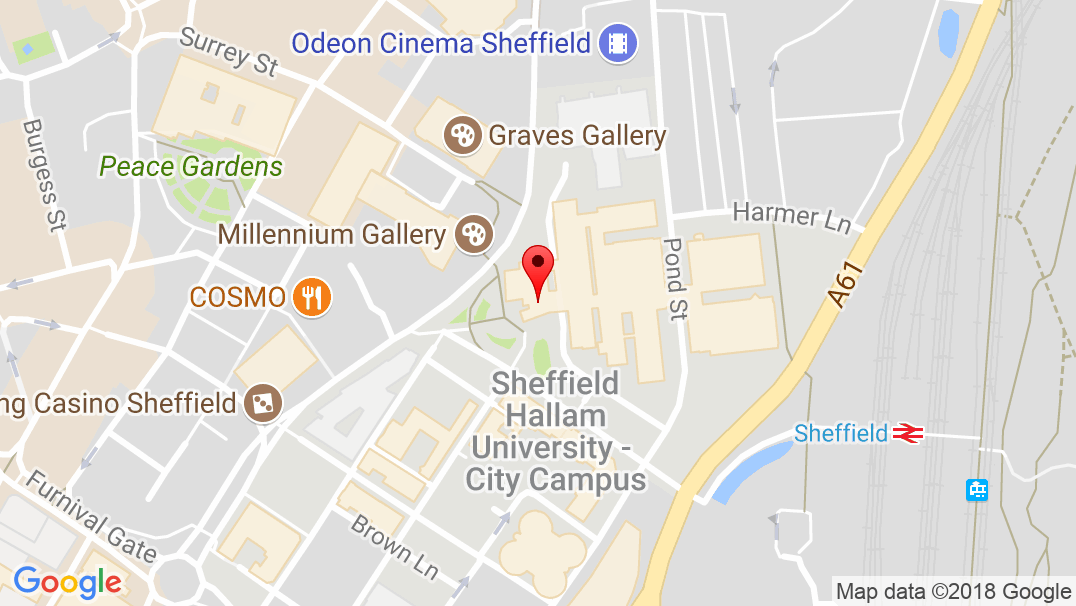
City Campus
City Campus is located in the heart of Sheffield, within minutes of the train and bus stations.
City Campus map | City Campus tour
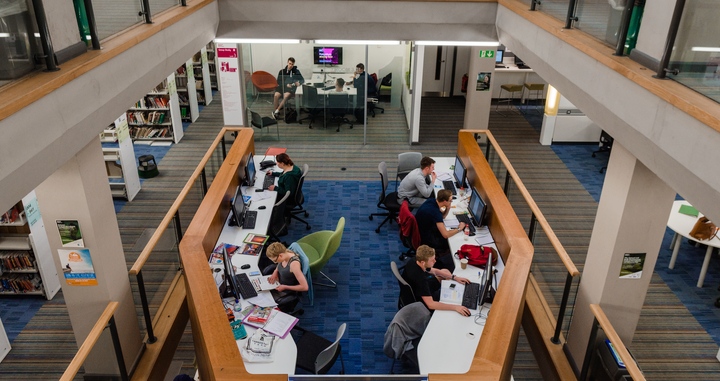
Adsetts library
Adsetts Library is located on our City Campus. It's open 24 hours a day, every day.
Explore the libraryExplore Redmires
Explore Redmires
Study in the new Redmires building – home to law, social sciences and architecture at Sheffield Hallam University.
Entry requirements
All students
Normally you must meet our general entry requirements and have a minimum of a 2:2 degree. For the part-time course, we may consider you without a degree if you have extensive relevant experience, and subject to the approval of the course leader and the Royal Town Planning Institute.
International qualifications that are equivalent to UK qualifications are acceptable. You may also be able to claim credit points which can reduce the amount of time it takes to complete your qualification at Sheffield Hallam. Find out more
If English is not your first language you typically need an IELTS 6.0 score with a minimum of 5.5 in all skills or equivalent.
Additional information for EU/International students
If you are an International or non-UK European student, you can find out more about the country specific qualifications we accept on our international qualifications page.
For details of English language entry requirements (IELTS), please see the information for 'All students'.
Fees and funding
Home students
Our tuition fee for UK students starting part-time study in 2027/28 is £11,490 for the course. The tuition fee displayed above is for the full course. If the full course is more than one year in duration, the fee will be divided into annual payments which will then be rounded. This may mean the total fee you pay is slightly higher than the fee stated above. If you take a break in study or have to re-take part of the course, you may also be charged an additional fee and will be notified of this at the time. Our tuition fee for UK students starting part-time study in 2027/28 are: Year 1: £3,830 Year 2: £7,660.
If you are studying an undergraduate course, postgraduate pre-registration course or postgraduate research course over more than one academic year then your tuition fees may increase in subsequent years in line with Government regulations or UK Research and Innovation (UKRI) published fees. More information can be found in our terms and conditions under student fees regulations.
International students
This course is not eligible for full-time Student visa sponsorship. International/EU students may apply for part-time Student visa sponsorship on an individual basis. Please contact Admissions for further advice. Our tuition fee for International/EU students starting part-time study in 2027/28 is £19,530 for the course. The tuition fee displayed above is for the full course. If the full course is more than one year in duration, the fee will be divided into annual payments which will then be rounded. This may mean the total fee you pay is slightly higher than the fee stated above. If you take a break in study or have to re-take part of the course, you may also be charged an additional fee and will be notified of this at the time. Our tuition fee for International/EU students starting part-time study in 2027/28 are: Year 1: £6,510 Year 2: £13,020.

Scholarships and financial support
Find information on scholarships, bursaries and postgraduate student loans.
International scholarships up to £3000 ›
Alumni scholarships up to £2000 ›
Postgraduate loans for UK students ›
Additional course costs
The links below allow you to view estimated general course additional costs, as well as costs associated with key activities on specific courses. These are estimates and are intended only as an indication of potential additional expenses. Actual costs can vary greatly depending on the choices you make during your course.
General course additional costs
Additional costs for Sheffield Institute of Social Sciences (PDF, 251.6KB)Legal information
Any offer of a place to study is subject to your acceptance of the University’s Terms and Conditions and Student Regulations.

Come to an open day
Find out more at our postgraduate open days. Book now for your place.