
Everything you need to know...
-
Tuition fees
Home: £11,490 for the course
International/EU: £19,530 for the course -
Course duration
2 Years
-
Study location
-
Start date
September 2027
Course summary
- Gain an advanced understanding of human psychological development.
- Develop research skills applicable to real-world psychological challenges.
- Study psychological theories and methods, such as cognitive and social development.
- Balance on-campus lectures with flexible independent study.
This BPS-accredited conversion course provides a solid foundation in core areas of psychology, with a particular focus on developmental contexts. You’ll explore how humans grow mentally, socially and emotionally, from childhood through to later life. Upon successful completion of the course, you’ll be eligible for the Graduate Basis for Chartered Membership (GBC), which is the first step towards becoming a Chartered Psychologist.
Accredited by

British Psychological Society (BPS)
This course is accredited by the British Psychological Society (BPS) and confers eligibility for the Graduate Basis for Chartered Membership (GBC), provided you achieve an overall mark of at least 50 per cent and pass your dissertation. This is the first step towards becoming a Chartered Psychologist.
How you learn
The course is designed with flexibility in mind, allowing you to balance your studies with existing commitments. You can choose to study full-time, attending two days a week for one year. Or you can study part-time, attending one day a week, which is ideal for professionals looking to advance their career.
You’ll be taught by lecturers who are experts in developmental psychology and allied areas. They’ll guide you through a flexible, blended learning experience that combines on-campus teaching with online learning.
You learn through:
- lectures and seminars
- workshops
- online learning and Virtual Learning Environments (VLE)
- presentations
- independent study
- discussion boards and research forums
- online support
Throughout the course, you’ll be assessed through various methods, including essays, research proposals, presentations, case studies, applied writing, and writing for publication. This approach ensures your learning is applied and practical, preparing you for real-world challenges in psychology.
Key themes
As a BPS-accredited course, we’ll cover all core areas of psychology – including biological, cognitive, social psychology and individual differences – all through the lens of developmental psychology. You’ll also develop a strong foundation in both quantitative and qualitative research methods. The modules are designed to complement each other, allowing you to consolidate your learning within broad and cohesive conceptual and methodological frameworks.
In trimester one, you'll develop key skills such as critical analysis, communication, ethical practice, and an understanding of research, alongside a number of core BPS areas. You’ll expand these foundations in trimester two when you go on to study quantitative and qualitative research methods in more detail. Then in trimester three you’ll complete your final research project.
In addition to skills development and the core BPS requirements, you’ll also cover a non-core area each semester, such as exploring how childhood attachment can influence relationships throughout the lifespan, and the theory and practice of counselling and psychotherapy.
Course support
You’ll be supported in your learning journey towards highly skilled employment through a number of key areas. These include:
- access to dedicated student support advisers including academic, employability and personal advisers
- online resources and Skills Centre for assignment help
- access to Technical Operations, Resources and Services (TORS), supporting your own independent research
Applied learning
Lectures on the course are primarily focused on core knowledge and theoretical content – while seminars and workshops provide the opportunity for you to apply understanding through discussion and practical-based activities. You’ll complete a large-scale research project under the supervision of a member of staff, which allows you to put your psychological knowledge and research skills into practice.
You may be offered the opportunity to assist with undergraduate teaching and/or staff research projects (subject to availability). This will especially suit those interested in a career in academia. You’ll also have many other opportunities for volunteering within the university and through other organisations.
Networking opportunities
The course helps you make the necessary links between the skills you’re developing and those required by professionals in psychology. To help we offer sessions that promote reflective skills, as well as more fundamental employability skills such as identifying the kind of jobs that the course opens up to you.
Your course leader

Modules
Important notice: The structure of this course is periodically reviewed and enhanced to provide the best possible learning experience for our students and ensure ongoing compliance with any professional, statutory and regulatory body standards. Module structure, content, delivery and assessment may change, but we expect the focus of the course and the learning outcomes to remain as described above. Following any changes, updated module information will be published on this page.
Year 1
Compulsory modules
This module aims to introduce you to the core area of cognitive psychology from a developmental viewpoint. Cognitive development will be considered across the lifespan, from infancy to adulthood.
You will study topics such as:
- The development of thinking, reasoning and problem solving
- Memory development and decline
- Language and literacy
- Social cognition
This module aims to introduce you to the core areas of psychobiology as well as taking a developmental approach to current issues ranging from infancy across the lifespan.
You’ll study topics such as:
- Psychobiological underpinnings: introduction to key approaches, methods and concepts in psychobiology
- Atypical development
- Reward mechanisms
- Adolescent brain development and behaviour
- Psychobiological approaches and mechanisms related to neurodevelopment, neurophysiology, behavioural genetics and development and evolutionary developmental psychobiology
This module addresses the BPS core curriculum training in the fundamentals of quantitative statistics. This is a laboratory-based module designed to give you the skills necessary for understanding and utilising research methodologies and analyses. You will be introduced to methods for summarising and describing patterns in data, and how best to communicate these in tables and graphs. You will learn how to assess if these patterns in your data are significant and also how to determine if they are meaningful. You will also learn to communicate findings from your own research activities in the conventional format of laboratory report, the basic template of journal articles.
You’ll study topics such as:
- Descriptive statistics and parametric assumptions
- P-values, effect sizes, and confidence intervals
- Correlation and regression
- T-test and ANOVA
This module aims to develop a critical integration of core theoretical, methodological and applied aspects of attachment theory. In this module, you will explore the behavioural, cognitive and experiential components of attachment theory, drawing on a wide range of applied contexts to examine the role of attachment theory in contemporary relationship science.
You’ll study topics such as:
- Attachment Theory: core theoretical concepts, methodology and research
- The Strange Situation and the Adult Attachment Interview
- Applications of Attachment Theory (e.g., grief, separation and loss, psychopathology, counselling and therapy, caregiving, school psychology, romantic relationships, forensic psychology, the law, social policy and social work, fostering and adoption)
This module aim is to introduce you to qualitative research in psychology. The module covers a range of qualitative research methods, some of which you may use for qualitative research projects.
The module will familiarise you with the theoretical context as well as the key principles of each of the methods covered. The module will also consider design issues and ethical considerations in relation to qualitative research, and will consider the empirical applications of each method covered. The module is designed to equip you with the knowledge and skills to conduct and write up qualitative data analysis in applied settings and to enable you to think reflexively about qualitative research.
You’ll study topics such as:
- Philosophical underpinnings
- Data collection (e.g., interviews, focus groups, observation, online methods
- Reflexivity
- Ethical considerations in relation to qualitative psychology
- Transcribing and analysing qualitative data
- Thematic Analysis
- Interpretative Phenomenological Analysis
- Discourse Analysis
- Real world applications of qualitative methods
Final year
Compulsory modules
The module aims to increase your awareness across a range of developmental psychology topics. We will highlight the challenges involved and insights gained from critically evaluating and applying appropriate methods in research and professional settings.
You’ll study topics such as:
- Typical and atypical development across the lifespan
- Attachment and social relations
- Research with babies
- Emotional development
- Autism
- Alternative Education methods
- Cognitive and language development
This module develops your critical understanding of the theory, evidence, measurement, and research methodology of core topic areas within the domain of differential psychology (otherwise known as personality and individual differences). Where appropriate the content will be discussed relative to development across the lifespan.
You will study topics such as:
- Child temperament and development.
- Theories of personality.
- Intelligence.
- Perspectives on differential development, mental health and clinical psychology.
- Psychometric testing and diagnostic measures.
This module aims to develop your critical understanding of the theory, evidence, measurement and research methodology of core areas of social psychology, approached from a developmental perspective. We will look at social psychological theories that can be drawn upon to understand aspects of our development over our lifespan from birth to death.
You’ll study topics such as:
- Attribution
- Gender
- Prejudice
- Relationships
- Communication
- Behaviour change
This module aims to increase your understanding of research, with a mainly developmental focus. We will focus on practical skills and help you to develop an understanding of some of the key techniques used when conducting research. As such, the module will cover the main quantitative and qualitative approaches, in general, but also how to conduct ethical research, critically evaluate research papers, and how to develop appropriate research question/design appropriate studies to address those questions.
You’ll study topics such as:
- Introduction to qualitative research methods
- Introduction to quantitative research methods
- Lab-based studies
- Research in schools/field-based research
- Participatory (collaborative) research
- Developing research questions
- British Psychological Society ethics
This module aims to increase your understanding of research, with a mainly developmental focus. The module focuses on practical applications of your knowledge and will encompass both quantitative and qualitative approaches and outline how to conduct such research ethically. You will be asked to critically evaluate research papers and be supported to develop an appropriate research question and design a study that answers this question.
You’ll study topics such as:
- Quantitative and qualitative research methods and analysis
- Lab-based studies
- Questionnaire/survey-based studies
- British Psychological Society ethics
This module aim is to introduce you to a broad-based knowledge of core approaches to counselling and psychotherapy, including contemporary ‘third-wave’ approaches. Through the module, you will become familiarised with the general theoretical context for each of the models, as well as the main therapeutic principles within each theoretical approach. The module will also consider the applications and empirical based evidence for the success of each approach.
The module is designed to explore how different approaches in counselling and psychotherapy can be used to provide an insight into different presenting issues, drawing on a range of theories and therapeutic practices to develop understanding.
You’ll study topics such as:
- Psychodynamic/Psychoanalytic approaches
- Cognitive Behavioural Approaches
- Person-centred/Humanistic approaches
- Contemporary perspectives e.g. mindfulness
Future careers
This MSc is an ideal career progression route and conversion course, equipping you with the core academic and subject-specific skills you’ll need to access postgraduate training courses for a career in psychology.
This course provides Continuing Professional Development for individuals employed in areas working with specific age groups, and prepares you for a career in:
- education settings, such as teaching and SEN
- academia, such as a PhD in psychology and related disciplines
- doctorate roles in clinical or educational psychology
- research work within academic settings
Equipment and facilities
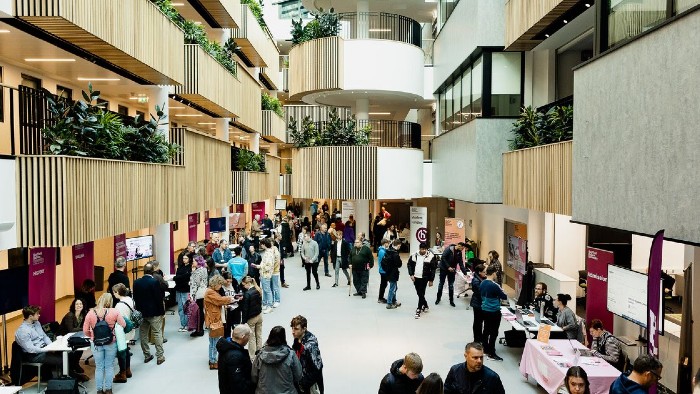
The new City Campus offers a flexible and contemporary teaching and learning environment to encourage both staff-student contact and peer-to-peer engagement.
We also have a dedicated Technical Operations, Resources and Services (TORS) team who provide numerous resources to our students as well as access to laboratories for experimental research.
You’ll also use learning environments and digital and online resources to support your learning.
You’ll have access to our specialist research facilities, such as:
- an observation suite
- an eye-tracking laboratory
- a BioPac psychophysics laboratory
- a low-level vision laboratory
- a food laboratory
- electroencephalography (EEG) equipment
- transcranial direct-current stimulation (tDCS)
Where will I study?
You study at City Campus through a structured mix of lectures, seminars and practical sessions as well as access to digital and online resources to support your learning.
City Campus
City Campus is located in the heart of Sheffield, within minutes of the train and bus stations.
City Campus map | City Campus tour


Adsetts library
Adsetts Library is located on our City Campus. It's open 24 hours a day, every day.
Explore the libraryExplore Redmires
Explore Redmires
Study in the new Redmires building – home to law, social sciences and architecture at Sheffield Hallam University.
Entry requirements
All students
A 2:2 degree or above or equivalent in any subject.
We may consider graduates with relevant work experience.
If you do not have these qualifications, or you are unsure whether you have the equivalent, please contact us. You may also be able to claim credit points which can reduce the amount of time it takes to complete your qualification at Sheffield Hallam. Find out more
International students
Typically you need qualifications equivalent to the above, and if English is not your first language you must have an IELTS score of 6.5 overall with a minimum 6.0 in writing and a minimum of 5.5 in all other skills. For equivalencies see our English language entry requirements web page.
If you do not have these qualifications, or you are unsure whether you have the equivalent, please contact us.
Additional information for EU/International students
If you are an International or non-UK European student, you can find out more about the country specific qualifications we accept on our international qualifications page.
For details of English language entry requirements (IELTS), please see the information for 'All students'.
Fees and funding
Home students
Our tuition fee for UK students starting part-time study in 2027/28 is £11,490 for the course. The tuition fee displayed above is for the full course. If the full course is more than one year in duration, the fee will be divided into annual payments which will then be rounded. This may mean the total fee you pay is slightly higher than the fee stated above. If you take a break in study or have to re-take part of the course, you may also be charged an additional fee and will be notified of this at the time. Our tuition fee for UK students starting part-time study in 2027/28are: Year 1: £7,660 Year 2: £3,830.
If you are studying an undergraduate course, postgraduate pre-registration course or postgraduate research course over more than one academic year then your tuition fees may increase in subsequent years in line with Government regulations or UK Research and Innovation (UKRI) published fees. More information can be found in our terms and conditions under student fees regulations.
International students
This course is not eligible for full-time Student visa sponsorship. International/EU students may apply for part-time Student visa sponsorship on an individual basis. Please contact Admissions for further advice. Our tuition fee for International/EU students starting part-time study in 2027/28 is £19,530 for the course. The tuition fee displayed above is for the full course. If the full course is more than one year in duration, the fee will be divided into annual payments which will then be rounded. This may mean the total fee you pay is slightly higher than the fee stated above. If you take a break in study or have to re-take part of the course, you may also be charged an additional fee and will be notified of this at the time. Our tuition fee for International/EU students starting part-time study in 2027/28 are: Year 1: £13,020 Year 2: £6,510.

Scholarships and financial support
Find information on scholarships, bursaries and postgraduate student loans.
International scholarships up to £3000 ›
Alumni scholarships up to £2000 ›
Postgraduate loans for UK students ›
Additional course costs
The links below allow you to view estimated general course additional costs, as well as costs associated with key activities on specific courses. These are estimates and are intended only as an indication of potential additional expenses. Actual costs can vary greatly depending on the choices you make during your course.
General course additional costs
Additional costs for Sheffield Institute of Social Sciences (PDF, 251.6KB)Legal information
Any offer of a place to study is subject to your acceptance of the University’s Terms and Conditions and Student Regulations.

Come to an open day
Find out more at our postgraduate open days. Book now for your place.