
Everything you need to know...
-
Tuition fees
Home: £11,490 for the course
International/EU: £19,530 for the course -
Course duration
1 Year
-
Study location
-
Start date
September 2027
Course summary
- Study flexibly with one fixed day of campus attendance.
- Build a solid foundation in the science of human behaviour.
- Gain expertise in core psychological theories and methods.
- Develop independent research skills with practical, hands-on experience.
- Debate contemporary psychology with critical appraisal and evaluation of evidence.
This BSP-accredited conversion course is ideal whether you're new to psychology or returning to study, supporting both your personal and professional development. You’ll study essential psychological disciplines such as biological, developmental, cognitive and social psychology, along with personality, individual differences and research methods. You’ll also build essential skills in communication, evidence evaluation, data analysis, project management and report writing.
Upon successful completion, you’ll gain expertise across various psychological domains and become eligible for Graduate Basis for Chartered Membership (GBC) of the British Psychological Society – the first step towards becoming a chartered psychologist.
Accredited by

This course is accredited by the British Psychological Society (BPS) and confers eligibility for the Graduate Basis for Chartered Membership (GBC), provided you achieve an overall mark of at least 50 per cent and pass your dissertation. This is the first step towards becoming a Chartered Psychologist.

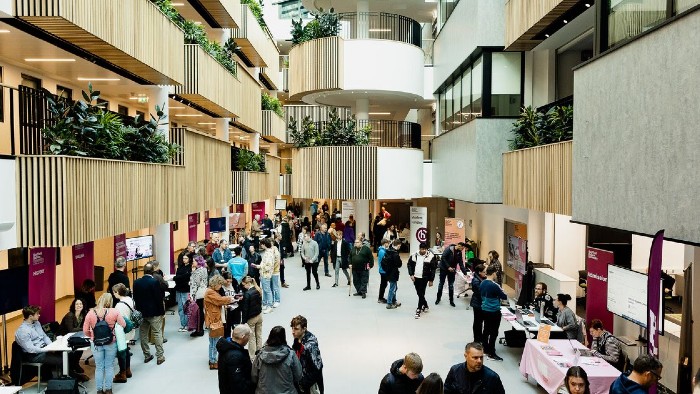
Come to an open day
Find out more at our postgraduate open days. Book now for your place.
How you learn
The MSc Psychology is structured for flexibility, allowing you to balance work or personal commitments by attending classes one day per week (full-time for one year, part-time for two years) alongside online learning. It’s a balanced programme that’s both practical and impactful, helping you succeed and easing your progression into a psychology career.
This course provides a vibrant and challenging learning environment. You’ll gain foundational psychological knowledge while developing your ability to critically analyse problems, handle data and undertake independent research.
You learn through:
- lectures, seminars and tutorials
- workshops
- independent study
- online resources
Assessments include written assignments to evaluate your theoretical knowledge and analytical skills, and presentations to assess your adaptability and communication skills.
Key themes
The course modules have been designed to make sure your learning experiences are applied and problem-based. Through activities based on real-world and research-informed scenarios, you’ll develop the skills to apply psychological knowledge and principles across a variety of professional settings.
New modules, such as ‘Academic Skills Development’, will help you think and write in an academic style, strengthening your ability to communicate effectively in psychology. The ‘Research Methods Essentials’ module will equip you with both qualitative and quantitative methodologies, crucial for conducting psychological research. Additionally, the ‘Employability Skills for Success’ module will familiarise you with various psychology professions, preparing you to take the next steps toward a successful career.
Course support
You’ll be supported in your learning journey towards highly skilled, graduate-level employment through a number of key areas. These include:
- access to dedicated student support advisers including academic, employability and personal advisers
- online resources and Skills Centre for assignment help
- access to Technical Operation Resources and Services (TORS) supports you in conducting independent research
Applied learning
The course emphasises applied learning, equipping you with vital transferable skills for success in diverse psychology careers. It broadens your horizons by enhancing critical thinking, scientific literacy, data interpretation, communication and problem-solving abilities. Through hands-on engagement with research studies, synthesis of scientific literature, and real-world psychological challenges, you’ll develop the essential skills to thrive in various professional avenues in psychology
Lectures on the course are primarily focused on core knowledge and theoretical content – while seminars and workshops provide the opportunity for you to apply understanding through discussion and practical-based activities. You’ll complete a large-scale research project under the supervision of a member of staff, putting the psychological knowledge and research skills you've honed over the course into practice.
You’ll also develop the skills to use relevant software – for example, specialist software used to organise, store and analyse qualitative and quantitative data, and used to create online surveys.
Networking Opportunities
Throughout the course you’ll interact with the course team, including academic staff with subject expertise, practitioners and guest lecturers – all helping you build professional connections and enhance your employability.
Course leaders and tutors

Olga Daneyko
Course Leader MSc Psychology and Senior Lecturer in PsychologyStaff profile for Olga Daneyko, Senior lecturer in Psychology at Sheffield Hallam University
Modules
Important notice: The structure of this course is periodically reviewed and enhanced to provide the best possible learning experience for our students and ensure ongoing compliance with any professional, statutory and regulatory body standards. Module structure, content, delivery and assessment may change, but we expect the focus of the course and the learning outcomes to remain as described above. Following any changes, updated module information will be published on this page.
Final year
Compulsory modules
This module focuses on enhancing essential skills for academic success. You will explore critical areas such as academic writing and critical thinking. You will learn how to navigate academic resources like Turnitin to prevent plagiarism, manage your time effectively, develop organisational skills, become self-directed learners, and engage in scholarly discussions. The module includes lecture sessions, interactive sessions, formative assessments, and feedback mechanisms to aid you in your academic journey. By the end of this module you will be able to develop a comprehensive literature review for a chosen research project topic.
You will study topics such as:
- Academic Writing Essentials
- Turnitin and Library source
- Critical Thinking and Writing
- Effective Time Management
- Self-Directed Learning
- Scholarly Discussions & Communication
- Formative Assessments & Feedback
- Literature Review Strategies
This module will introduce you to the core area of Psychobiology. It will allow you to develop a critical understanding of the biological functions underpinning human behaviour and in-depth awareness of key debates at the forefront of the discipline.
You’ll study topics such as:
- Anatomy of the Central and Peripheral Nervous System
- The neuron
- The action potential
- Synaptic transmission
- Post-Traumatic Stress Disorder
- Eating disorders
- Addiction
- Agnosia
- Optic Ataxia
This module will introduce you to the core area of Cognitive Psychology. It will allow you to develop a critical understanding of cognitive processes which underpin behaviour and in-depth awareness of key debates at the forefront of the discipline.
You’ll study topics such as:
- Memory
- Language production
- Language comprehension
- Visual perception
- Cognition and emotion
- Object recognition
- Attention
This module allows you to become familiar with different psychology career paths and to sharpen the essential skills employers seek, empowering you to thrive in your chosen area. Through a combination of engaging taught sessions, and interactive workshops. The module is designed to optimise your academic journey and guide you towards your professional goals.
You will study topics such as:
- Psychology in practice (e.g., clinical, forensic, counselling etc)
- Psychology in the workplace
- Career planning and goal setting
- Effective communication of skills and experiences
- Job search and application strategies
This module develops your critical understanding of the theory, evidence, measurement and research methodology of core topic areas within the domain of differential psychology (or Individual Differences).
You’ll study topics such as:
- Temperament
- Personality
- Intelligence
- Adult attachment
- Psychometric testing and diagnostic tools
This module aims to increase your awareness across a range of developmental psychology topics. It will highlight the challenges involved and insights gained from critically evaluating and applying appropriate methods in research and professional settings.
You’ll study topics such as:
- Patterns of development across the lifespan
- Attachment and social relations
- Research with babies
- Emotional development
- Autism
- Alternative Education methods
- Cognitive and language development
This module will introduce you to qualitative research in psychology. The module covers a range of qualitative research methods, some of which you may use for qualitative research projects. The module will familiarise you with the theoretical context as well as the key principles of each of the methods covered. You will also consider design issues and ethical considerations in relation to qualitative research, and the empirical applications of each method covered. The module is designed to equip you to conduct and write up qualitative data analysis in applied settings and to enable you to think reflexively about qualitative research.
You will study topics such as:
- Philosophical underpinnings of qualitative research
- Data collection (e.g., interviews, focus groups, observation, online methods)
- Reflexivity
- Ethical considerations in relation to qualitative psychology
- Transcribing and analysing qualitative data
- Thematic Analysis
- Interpretative Phenomenological Analysis
- Discourse Analysis
- Real world applications of qualitative methods
This module is designed to give you the skills necessary for understanding and utilising research methodologies and analyses. You will be introduced to methods for summarising and describing patterns in data, and how best to communicate these in tables and graphs. You will learn how to interpret research data and to communicate findings according to the conventions of the field.
You’ll study topics such as:
- Descriptive statistics
- P-values, effect sizes, and confidence intervals
- Psychometric properties
- Correlation and regression
- T-test and ANOVA
- Parametric and non-parametric tests
This module will provide you with the essential skills necessary to understand, design, and develop research in psychology. You will gain an understanding of the main qualitative and quantitative research methods, their advantages and disadvantages, and areas of application. You will also gain an understanding of ethical issues related to conducting research in psychology.
You will study topics such as:
- Science of psychology
- Getting started in research
- Research ethics
- Psychological measurements
- Experimental research
- Non experimental research
- Qualitative design
- Presenting Research
This module leads you through the entire process of developing, executing, and analysing an independent research project in psychology, culminating with the presentation of your findings. It focuses on developing a thorough understanding of various research methodologies, ethical considerations, and analytical techniques. You will learn to critically engage with literature, design ethical research within British Psychological Society (BPS) guidelines, manage project timelines effectively, and work collaboratively with supervisors. Through this comprehensive approach, you will gain invaluable skills in conducting and presenting psychological research.
You will study topics such as:
- Research Ethics Standards
- Literature Review and Critical Analysis
- Research Design and Methodology in Psychology
- Supervisory Relationship and Project Management
- Data Analysis and Software Application
- Effective Communication and Presentation Skills
- Advanced Writing Skills in psychology
This module develops critical understanding of perspectives and topics in social psychology and applies theory and research to explore contemporary issues in the field of social psychology. As such it follows the British Psychological Society core curriculum.
You’ll study topics such as:
- History of Social Psychology
- Self and Identity
- Group Dynamics
- Attitudes
- Social Cognition
- Culture
Future careers
Prepare for a career both in psychology and across a wide range of related sectors.
This psychology degree is accredited by the British Psychological Society(BPS) and gives eligibility for the graduate basis for chartered membership (GBC) with the BPS. Qualifying from a BPS-accredited degree is a necessary step if you’d like to pursue postgraduate training to become a chartered psychologist.
The course prepares you to complete professional training in:
- clinical psychology
- educational psychology
- occupational psychology
- health psychology
- forensic psychology
- counselling psychology
- sports psychology
It also prepares you for a career in:
- academia, such as a PhD in psychology and related disciplines
- research and teaching work within academic settings
- local government
- the Civil Service
- education
- counselling
- social work
- personnel and human resources
- marketing and advertising
Equipment and facilities
You’ll have the opportunity to experience our specialist research facilities, such as:
- an observation suite
- an eye-tracking laboratory
- a BioPac psychophysics laboratory
- a low-level vision laboratory
- a food laboratory
- electroencephalography (EEG) equipment
- transcranial direct-current stimulation (tDCS)
Where will I study?
You study at City Campus through a structured mix of lectures, seminars and practical sessions as well as access to digital and online resources to support your learning.
City Campus
City Campus is located in the heart of Sheffield, within minutes of the train and bus stations.
City Campus map | City Campus tour


Adsetts library
Adsetts Library is located on our City Campus. It's open 24 hours a day, every day.
Explore the libraryExplore Redmires
Explore Redmires
Study in the new Redmires building – home to law, social sciences and architecture at Sheffield Hallam University.
Entry requirements
All students
A 2:2 degree or above or equivalent in any subject.
We may consider graduates with relevant work experience.
You may also be able to claim credit points which can reduce the amount of time it takes to complete your qualification at Sheffield Hallam. Find out more
If you do not have these qualifications, or you are unsure whether you have the equivalent, please contact us.
International students
Typically you need qualifications equivalent to a UK undergraduate degree.
If English is not your first language you must have an IELTS score of 6.5 overall with a minimum 6.0 in writing and a minimum of 5.5 in all other skills. For equivalencies see our English language entry requirements web page.
If you do not have these qualifications, or you are unsure whether you have the equivalent, please contact us.
Additional information for EU/International students
If you are an International or non-UK European student, you can find out more about the country specific qualifications we accept on our international qualifications page.
For details of English language entry requirements (IELTS), please see the information for 'All students'.
Fees and funding
Home students
Our tuition fee for UK students starting full-time study in 2027/28 is £11,490 for the course.
If you are studying an undergraduate course, postgraduate pre-registration course or postgraduate research course over more than one academic year then your tuition fees may increase in subsequent years in line with Government regulations or UK Research and Innovation (UKRI) published fees. More information can be found in our terms and conditions under student fees regulations.
International students
Our tuition fee for International/EU students starting full-time study in 2027/28 is £19,530 for the course.

Scholarships and financial support
Find information on scholarships, bursaries and postgraduate student loans.
International scholarships up to £3000 ›
Alumni scholarships up to £2000 ›
Postgraduate loans for UK students ›
Additional course costs
The links below allow you to view estimated general course additional costs, as well as costs associated with key activities on specific courses. These are estimates and are intended only as an indication of potential additional expenses. Actual costs can vary greatly depending on the choices you make during your course.
General course additional costs
Additional costs for Sheffield Institute of Social Sciences (PDF, 250.4KB)Legal information
Any offer of a place to study is subject to your acceptance of the University’s Terms and Conditions and Student Regulations.