
Everything you need to know...
-
Course duration
2 Years
-
Study location
-
Start date
January 2028
Course summary
- Study with a team of qualified radiographers involved in research at a national level.
- Explore cancer causes, progression, and care strategies for effective management.
- Learn to deliver radiotherapy, specialist care and support to people with cancer.
- Develop your communication, research and health promotion skills.
- Understand the impact of cancer and integrated care approaches to meet individual needs.
This challenging and supportive course has been developed in partnership with employers and professional bodies. When you graduate, you’ll be eligible to apply for registration as a therapeutic radiographer with the Health and Care Professions Council (HCPC). You’ll develop your personal and professional skills as an autonomous reflective practitioner, fit for employment in a wide range of health, social care, and voluntary and independent sector environments.
How you learn
While specialising in radiotherapy, you’ll have opportunities to learn with, from and about practitioners from a range of health and social care professions. This offers an in-depth understanding of person-centred care and patient pathways.
You’ll spend a significant time working in a radiotherapy department, with most of your academic study undertaken through distance learning. This means you could locate closer to your practice placement than Hallam if you’d like to study from home, or anywhere you wish! This may help you manage travel and accommodation costs and your home life.
You’ll study at Collegiate Campus for short periods of time to offer support and practical experience including induction to the course and study methods, mandatory training and a range of simulated practice workshops to prepare for and consolidate practice placement learning.
You learn through:
- Distance learning using learning packages, live online lectures and seminars
- Face-to-face seminars and simulated practice workshops in short periods of attendance at university
- Regular live support sessions on digital platforms
- Tutor and self-directed study
- Practice-based learning
- Plenty of contact with tutors, the course leader and academic advisers
Key Themes
You will delve into the intricacies of cancer aetiology, epidemiology, pathology and histology, gaining a deep understanding of the origins, spread and cellular characteristics of cancer. We emphasise health promotion and cancer prevention strategies – equipping you to advocate for proactive measures in healthcare.
You'll also explore anatomy, physiology and oncology across various body systems – examining cancer presentation, diagnosis, progression, staging, and grading.
Understanding treatment modalities used in cancer management is crucial, including insights into radiotherapy technology, its biological effects and safe practices. Additionally, we address the profound physical, psychological and psychosocial impacts of cancer, highlighting personalised care approaches.
Through critical engagement with contemporary evidence-based practice and research, you'll gain insights into practice development, fostering independent learning for ongoing professional growth. You’ll also build your professional attitude, communication skills and ethical awareness – ensuring you're adept at providing personalised care within legal and ethical frameworks.
Course Support
You’ll be supported in your learning journey towards highly skilled, graduate-level employment through a number of key areas, including:
- Access to specialist support services to help with your personal, academic and career development.
- Access to our Skills Centre with one to ones, webinars and online resources, where you can get help with planning and structuring your assignments
- Industry-specific employability activities such as live projects, learning in simulated environments and networking opportunities
- Support during online live module activities, with periods of on-campus activity to get together with your peers and tutors, and to support you through simulated practice
- Tutorials with the teaching team, a personal academic adviser and mentors in practice, as well as regularly schedule post-placement debriefs
Applied learning
Live Projects
Applied learning means that when you do start work, you can dive in and make things happen.
You'll be taught by professionals who are active in their field of practice and research, providing cutting edge, interprofessional practice knowledge and experiences. You’ll also hear from patients who share their experiences of treatment and care.
You’ll develop key research skills and undertake projects to evaluate and develop health services. Previous examples have seen our researchers designing a bra that could make radiotherapy more dignified, encourage exercise and lifestyle changes, and help to better target treatment to the breast for those undergoing breast cancer treatment.
You'll gain real-world skills through simulated practice workshops and practice placements in a radiotherapy department. These learning experiences are designed to help you apply theory to practice, developing critical and ethical approaches to become life-long, competent professionals.
Work Placements
You’ll undertake a range of practice learning experiences, helping you to build your skills, confidence, creativity, resilience, integrity and curiosity. These will take place in different practice learning environments, reflecting the range of interprofessional, collaborative ways in which services are currently delivered. This will include simulated learning and virtual placements alongside real-world experience.
The university will ensure that the practice learning element of your course is compliant with the requirements of the Professional and Statutory Regulatory Body (PSRB) governing the radiotherapy profession.
Networking Opportunities
In addition to the course's in-house expertise, we invite guest lecturers who are leaders in their field.
There are many opportunities to help us spread the word about radiotherapy and the profession of therapeutic radiography – from outreach to schools and colleges, to support at open days and careers fairs, and through participation in the Rad Chat podcast series.
Course leaders and tutors

Modules
Important notice: The structure of this course is periodically reviewed and enhanced to provide the best possible learning experience for our students and ensure ongoing compliance with any professional, statutory and regulatory body standards. Module structure, content, delivery and assessment may change, but we expect the focus of the course and the learning outcomes to remain as described above. Following any changes, updated module information will be published on this page.
Year 1
Compulsory modules
The aim of this module is to enable you to apply knowledge of research theories, including epistemology, and methods in order to critically evaluate research paradigms and evidence for practice. It will enable you to develop a critical understanding of research approaches, principles and processes that underpin research activity in the workplace and address the ethical dilemmas and organisational complexities of undertaking practice-based research.
Indicative content:
- Research paradigms
- Research context
- Research Question Development ·
- Research methods
- Systematic literature review
- Data collection
- Methods of data analysis
- Ethics and research governance Service user involvement in research
- Inclusive perspectives of research
- Proposal development
The aim of this module is to develop your knowledge, understanding and application of anatomy; imaging and radiation science; image interpretation, the formation of cancer and the principles of safe radiotherapy practice.
To enable you to discuss and evaluate the multi-modality approach to the management of cancer, patient assessment, and care.
Indicative content:
Terminology associated with, anatomy, physiology oncology, radiotherapy techniques, patient care, and patient management.
Anatomy and radiographic image interpretation of key body systems.
Fundamental Principles including:
-
Social determinants of health & its impact upon Aetiology (causes) & Epidemiology (incidence & distribution) of Cancer
-
The characteristics of malignant disease (development & spread of Cancer), cancer biology, histology.
-
Cancer prevention & Public Health strategies including Screening for Cancer
-
The continuum of cancer care, Patient Pathway, Factors affecting management decisions
-
Diagnosis, staging & grading of cancer.
-
Cancer management
-
Introduction to treatment modalities
-
Introduction to Radiotherapy treatment techniques
-
Introduction to radiobiology
Fundamentals of Radiotherapy Physics including:
-
Fundamental maths and physics
-
Principles of Radioactivity
-
Interactions with matter and beam characteristics
-
X-ray production
-
Superficial treatment modality
-
The Linear Accelerator
-
Radiation Protection
-
Dose calculations
-
Quality Assurance and Linac Verification
Oncology / Cancer sites
-
Haematological cancers
-
Lymphatic system cancers
-
Skin cancers
-
Management of oncological emergencies
Patient Centred Care including:
-
Introduction to side effects and their management
-
Patient assessment and care planning
-
Communication and patient experience
-
Inclusivity in patient care
Additional skills including:
-
Regulatory and professional legislation & guidance
-
Professionalism - understanding professionalism and professional development both within the university and in clinical practice.
-
Literature searching and referencing.
-
Appraisal of evidence-based practice
-
Academic writing skills
Module Aim:
:
The aim of this module is to enable you to demonstrate an appropriate level of competent, accurate and safe practice for a range of clinical skills as well as professional attitudes and behaviours expected within the boundaries of legal, ethical and professional frameworks as required by the Health and Care Professions Council.
Indicative content:
-
Effective and efficient communication skills with staff, service users and carers.
-
Application of theory to practice including knowledge of surface and radiographic anatomy.
-
Varied experiences in placement to aid skill development for qualification.
-
Recording of objectives and reflections on placements.
-
Acting on feedback for skill development
-
Working within departmental treatment protocols, IR(ME)R, SCoR code of conduct and HCPC standards.
To develop your knowledge & understanding of oncology and the multi-modality approach to patient management of a range of cancer sites.
To enable you to evaluate technology and equipment used, and appraise approaches to radiotherapy planning, delivery and verification.
To develop your ability to critically appraise the research evidence base that underpins the decision-making process for the management of oncology patients.
Indicative content
Technology, equipment & radiation science including:
Pre-treatment Imaging including computerised tomography (CT), Magnetic resonance Imaging (MRI), ultrasound (US), Positron emission tomography (PET) & Single-photon emission computed tomography, (SPECT)
- Image handling and fusion
- Beam characteristics
- Radiobiology – dose & fractionation
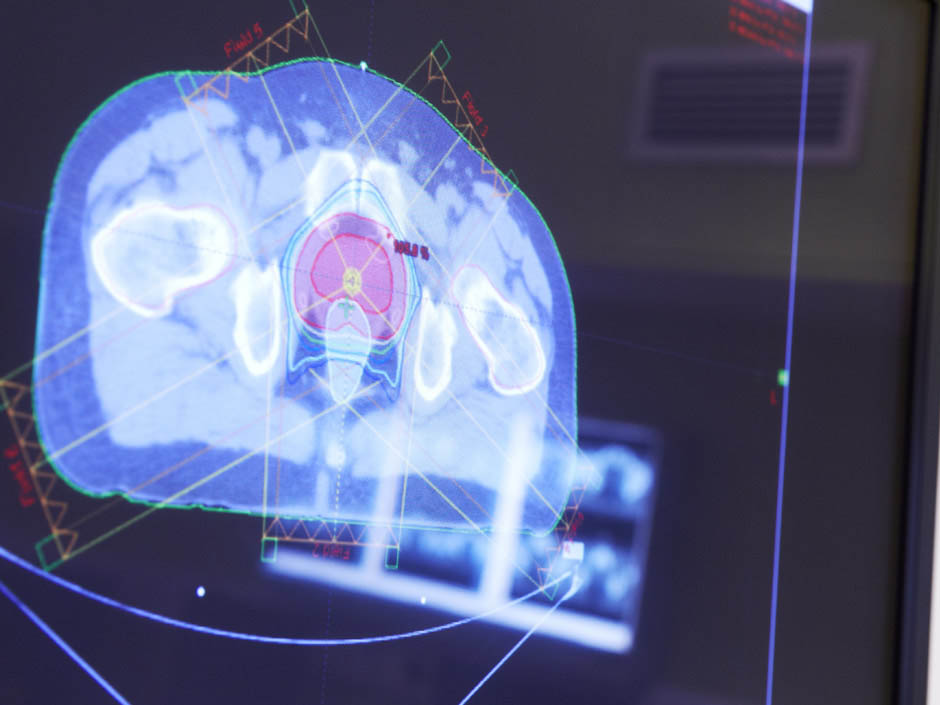
- Radiotherapy Planning Practice
Site specific approaches to methods of radiotherapy delivery e.g.
- Volumetric modulated arc therapy
- Intensity Modulated Radiotherapy (IMRT)
- Intensity modulated-arc therapy (IMAT)
- Volumetric modulated arc radiotherapy (VMAT or Arc Therapy)
- Stereotactic ablative radiotherapy (SABR), Stereotactic Radio-Surgery (SRS)
Site specific approaches to methods positioning and verification of accuracy & reproducibility e.g.
Principles of Image Guided Radiotherapy (IGRT), Surface Guided Radiotherapy (SGRT) & Deep inspiration breath hold (DIBH),
Oncology & patient care including
- Breast
- Urology Prostate/Bladder/Kidney
- Mid & Lower digestive system
- Pancreas & Liver
- Male Reproductive System
- Lung
- Approaches to assessment, treatment planning and evaluation, and how to optimise these to achieve effective integrated, person-centred service delivery.
Additional skills:
- Regulatory and professional legislation & guidance
- Professionalism - understanding professionalism and professional development both within the university and in clinical practice.
- Critical reflection- application of reflective practice within personal, academic, and professional development
- Appraisal of evidence-based practice
- Academic writing skills
- Personal resilience
- Utilisation of professional knowledge, skills, and values, applying these within an inter-professional team working across multiple service interfaces.
Final year
Compulsory modules
This module will enable you to develop and conduct an in depth investigation of a topic that challenges and contributes to your area of professional practice. It provides the opportunity to engage in and apply an understanding of research methods and demonstrate your ability to work with relative autonomy in undertaking a sustained, in-depth piece of independent learning, disseminating findings to your professional community
Indicative content:
- Creating and contributing to research and evaluation for practice
- Application of approaches to research, research methods including improvement and evaluation methodologies
- Project planning
- Data Analysis & Interpretation
- Data Management
- Dissemination of findings
- Challenges in applying study outcomes to practice
- Addressing inclusivity in your research process.
This module enables you to demonstrate competent, accurate and safe practice for a range of clinical skills. You’ll also be able to show the professional attitudes and behaviours expected within the boundaries of legal, ethical and professional frameworks, as required by the HCPC.
You’ll apply learning and skills such as:
-
Effective communication skills with staff, service users and carers
-
Applying theory to practice
-
Knowledge of surface and radiographic anatomy
-
Varied experiences to aid skills development for qualification
-
Recording objectives and reflections on placements
-
Acting on feedback for skills development
-
Working within departmental treatment protocols, IR(ME)R, SCoR code of conduct and HCPC standards
The aims of this module are:
To critically reflect and evaluate key components of integrated health and social care required to effectively support service users, carers and their families who have complex health and care needs.
Indicative content
Principles of integrated patient assessment
Evaluation of interprofessional working and integrated care service delivery to deliver person-centred care when managing complex situations.
The continuum of cancer care, Patient Pathway, & Factors affecting management decisions
Empowering and supporting service-users to be involved in decision making & consent
Enhanced, specialist & advanced practitioner roles
Inclusive and personalised care
Health and social inequalities
Patient information needs & effective delivery.
Bone/Sarcoma
Paediatric oncology
Safeguarding
Palliative Care
End of Life care
Oncology Emergencies
Pre-habilitaton & Rehabilitation in the cancer patients pathway
Understanding cancer as a long-term condition
Long term side effects
Survivorship care and living well with and beyond cancer.
Additional skills:
Regulatory and professional legislation & guidance
Utilisation of professional knowledge, skills, and values, applying these within an inter-professional team working across multiple service interfaces.
Recognition of the different perspectives and values within health and social work/care delivery
Solution focused patient-centred approaches to health and social work/care delivery
To develop your knowledge & understanding of oncology and the multi-modality approach to patient management of complex cancer sites.
To enable you to consider the impact of cancer and its management on the patient and their family in order to evaluate the role of relevant information and support strategies that can address their physical and/or psychological needs during radiotherapy and in the long term.
To enable you to evaluate current and emerging/future technology and equipment used, and appraise approaches to radiotherapy planning, delivery, and verification.
The module is primarily delivered via remote learning at a distance to the classroom, using technology to enhance learning, through synchronous or asynchronous activity and learning materials.
With a scheduled period of 1-2 weeks of in-person teaching in trimester 1 using face-to-face seminars, tutorials, demonstrations and practical teaching sessions to apply learning, and prepare for future placement experience using simulated practice in our specialist spaces using technical equipment and simulated practice.
Indicative content:
Technology, equipment & radiation science including:
- Radiotherapy Planning Practice
- Functional Imaging
- Specialist approaches to radiotherapy delivery for example; Stereotactic Radiosurgery, Brachytherapy, Proton therapy
- Image Interpretation and decision making
- Application of Image Guided Radiotherapy
- Radiotherapy errors and incident reporting
- Human Factors
- Technological Advances e.g., Adaptive Radiotherapy, MR Linac etc.
- Dosimetric verification
Oncology & patient care including:
- Female Reproductive system
- Upper Respiratory system
- Upper Digestive system
- Endocrine System
- Central Nervous System
- The physical, psycho-sexual, and psychosocial impact of cancer and its treatment, and the ways in which these might be managed/ minimised.
- Palliative Care & End of Life care
Additional skills:
- Appraisal of evidence-based practice
- Academic writing skills
- Production of professional work for presentation
Future careers
You’ll be an autonomous reflective practitioner who’s fit for employment in a wide range of health, social care, and voluntary and independent sector environments.
By the end of the course, you’ll have demonstrated the requirements that confer eligibility to apply to register as a professional therapeutic radiographer with the Health Care Professional Council (HCPC) – qualified to work in radiotherapy departments throughout the UK and overseas.
Previous graduates have gone on to work in specialist areas including:
- Radiotherapy treatment, planning and delivery
- Patient information, review and support services
- Research
- Teaching
- Management
- Quality assurance
- Equipment design and sales
Equipment and facilities
During the course you’ll work with:
- Our anatomy training equipment
- Virtual Environment Radiotherapy Training (VERT) equipment
- Dedicated treatment planning and verification software
- Specialist radiotherapy apparatus, e.g. immobilisation and patient positioning devices, linear accelerators and pre-treatment imaging, quality assurance and verification equipment
We’ve invested over £100m in new facilities to help you study how and when you want – with support as a distance learning student via the specialist library services. These include access to a wide range of journals and research databases through 24-hour library services.
Where will I study?
You study this course online from any location
Entry requirements
All students
An honours degree recognised in the UK at 2.2 or above in a related healthcare subject or science including psychology, sociology, biology, health sciences, sport sciences, engineering and humanities.
Or
A professional qualification at degree level including teaching, nursing, social work or an allied health profession.
And
GCSE's in
*GCSE Science equivalents
**GCSE Math's equivalents
***GCSE English equivalents
- Science at grade C or 4 or equivalents*
- Maths at grade C or 4 or equivalents**
- English Language or Literature at grade C or 4 or equivalents***
- OCR Science level 2
- Science units gained on a level 3 BTEC or OCR National Diploma or Extended Diploma qualification
- Science credits gained on Access to Higher Education Diplomas (at least 12 credits at level 2 or 6 credits gained at level 3)
- Science equivalency test from www.equivalencytesting.co.uk
- Level 2 Key Skills/ Application of Number/ Grade D at GSCE Maths/ Level 2 Maths credits from an Access course
- Maths equivalency test from www.equivalencytesting.co.uk
- Level 2 Literacy
- Level 2 Key Skills
IELTS
If English is not your first language you will need an IELTS score of 7.0 overall and a minimum of 5.5 in all skills, or a recognised equivalent. Please note that the Health and Care Professions Council (HCPC) require IELTS 7.0 with no element below 6.5 for registration.
Helping your application succeed
Experience
Experience of interacting with members of the public from a range of backgrounds in different settings is essential when applying to a health or social care course. This is so you will have an understanding of the diversity of the population who access health and social care. It is important to be able to understand and explain how your experiences relate to the activities and qualities which are required for the profession at your interview.
Reference
You must provide a reference from a current or recent employer or educational institution with your UCAS application.
Interview
If you are shortlisted, we will invite you to an online interview.
View our interview guidance to ensure you understand the interviews process and how you can prepare for this.
Non-academic entry requirements
Before enrolling you must complete all the professional requirements that are mandatory as part of entry for the course:
Occupational Health Screening
Satisfactory medical clearance, by completion of a health screening assessment, will be a condition of your offer and you cannot enrol on your course without it. This occupational health screening will be provided by the University free of charge and ensures that you meet the medical fitness to train in your profession as per professional and regulatory body requirements and the Higher Education Occupational Practitioners (HEOPs) standards.
As part of this assessment, you are expected to provide all relevant, truthful and accurate information to ensure a safe environment for yourself and patients/service users
If there is any change to your health during your course, you must notify the University immediately so that we that we can undertake an assessment/reassessment to ensure you continue to meet the medical fitness to train in your profession.
Immunisations
All students must comply with the immunisation requirements of the programme in line with the Department of Health (DoH) Green Book standards / current guidelines or equivalent evidence-based standards, which must be met to undertake placements and continue on the course. The NHS updates the list of vaccinations required and these may change over the course of your programme of study.
To remain enrolled, you must complete your full immunisation programme as outlined in the Universities Immunisation Policy.
Self-Declaration
Completion of a Sheffield Hallam University Suitability Self-Declaration form will be condition of your offer and you cannot enrol without completing it. You must fully declare the following information:
- Unfiltered criminal convictions, cautions, reprimands or warnings. This includes convictions considered as ‘spent’ as an Enhanced DBS Criminal record check (required for this course) will show. For further information on unfiltered offences and Disclosing your criminal record please see the Disclosure and Barring Service website and refer to information on Unlock.
- Involvement in disciplinary proceedings during paid or voluntary employment or education establishments.
- Involvement with safeguarding proceedings, social services or related organisations.
- If you have ever been removed from another programme as a result of your behaviour or would have been removed if you had not left the programme.
Disclosure Barring Service (DBS)
Completion of an Enhanced DBS criminal record application will be a condition of your offer. This is a legal requirement for anyone involved in contact with children or vulnerable adults engaging in regulated activity. This check will be provided by the university free of charge. You will need to present valid identity documents as part of the application process. Please refer to the ID checking guidelines for further information.
Positive Disclosures will be reviewed by the Fitness to Practise Operational Group and/or Criminal Records Consultative Panel in conjunction with your Self-Declaration form.
You must inform the University immediately of any changes to your criminal record after your DBS certificate is issued so that we can consider the change and confirm whether you remain suitable to continue your application/studies.
Overseas Criminal Record Check
Applicants who have been resident outside of the UK for 12 months or more (whether continuously or in total) in the last 10 years, while aged 18 or over must provide an overseas criminal record check. Further information on obtaining an overseas criminal record check.
Mandatory Training
Students must complete mandatory training prior to attending placement. Failure to complete this training may result in delayed progression to the next level of study or withdrawal from the course.
Disability support
We strongly recommend that you tell us about any long term health conditions, learning difficulty or disability you may have. This is so we can assess whether we can deliver the course in such a way that you can meet the Health and Care Professions Council standards of proficiency and take part without disadvantage both in University and on placement.
You can contact our University student support staff and explore any issues you may have.
The Disability Disclosure booklet provides information for students on health and social care courses and will help you understand the importance of disclosing your disability at the earliest possible stage. This is so you can be assessed for the support you may require to succeed on the course.
Additional information for EU/International students
This course is not open to international students who require a student visa to study in the UK. If you are an international applicant but do not require a student visa, email our Admissions Team to find out whether you’re eligible to apply.
Fees and funding

Scholarships and financial support
Find information on scholarships, bursaries and postgraduate student loans.
International scholarships up to £3000 ›
Alumni scholarships up to £2000 ›
Postgraduate loans for UK students ›
Additional course costs
The links below allow you to view estimated general course additional costs, as well as costs associated with key activities on specific courses. These are estimates and are intended only as an indication of potential additional expenses. Actual costs can vary greatly depending on the choices you make during your course.
General course additional costs
Additional costs for Health and Social Care (PDF, 371.2KB)Legal information
Any offer of a place to study is subject to your acceptance of the University’s Terms and Conditions and Student Regulations.