
Everything you need to know...
-
Tuition fees
Home: £10,050 per year
International/EU: £18,900 per year -
Course duration
3 / 4 Years
-
Study location
-
Entry requirements
-
Course code
CC06
-
Start date
September 2027
-
Placement year available?
Yes
Course summary
- Learn to prevent, assess, treat and rehabilitate musculoskeletal injuries.
- Complete 250 hours of hands-on learning in real-world sports therapy environments.
- Gain direct experience with a variety of athletes, performance levels and settings.
- Study an accredited course co-designed with The Society of Sports Therapists.
- Qualify for professional registration as a graduate sports therapist.
Our BSc Sports Therapy course combines theory, clinical practice and professional accreditation, developing your skills as a confident and capable sports therapist. You’ll explore the full injury management cycle – from prevention and assessment to treatment and rehabilitation. You’ll graduate with the skills to work independently or as part of a multidisciplinary team.
World top 150 for sport
We’re ranked in the world top 150 universities for sport in the QS World University Rankings 2026. This reflects our strength in sport teaching, research, industry reputation and international outlook.

Come to an open day
Discover our TEF Gold rated teaching and see why students voted Sheffield Hallam a top five university in England at the prestigious Whatuni Student Choice Awards.
Accredited by
Society of Sports Therapists, the
Chartered Institute for the Management of Sport and Physical Activity (CIMSPA)
Sheffield Hallam is a higher education partner of the Chartered Institute for the Management of Sport and Physical Activity (CIMSPA). This course is endorsed against CIMSPA Gym Instructor professional standards, aligning with industry requirements in the sport and physical activity sector. This provides a foundation for learners to gain the professional status of Gym Instructor Practitioner during their studies.
Sheffield Hallam University’s Academy of Sport and Physical Activity was the first higher education institution assessed by the CIMSPA quality assurance framework, achieving the highest three star Enhancing rating, demonstrating best practice and the highest quality of education.
This course is also accredited by The Society of Sports Therapists SST) and on successful completion you be able to practice as a graduate Sports Therapist. As a student member, you'll access job opportunities, professional development opportunities and resources, along with insurance coverage for your applied practice-based learning experiences.
How you learn
You’ll learn through a mix of engaging, inclusive and practical teaching approaches that reflect current professional practice – building your clinical confidence and critical thinking skills. With 250 hours of practice-based learning, you’ll apply your knowledge in real-world sporting environments, building a strong foundation for professional registration and graduate employment.
You’ll be taught by an experienced team of practitioners, educators and researchers, with expertise across sports therapy, rehabilitation and applied science. Many of the teaching staff are active in professional practice or research, bringing real-world insight and knowledge into the classroom.
You learn through:
- lectures, seminars and workshops
- practical sessions in simulated and real-world settings
- online learning via our virtual learning environment
- independent study
- embedded practice-based learning experiences
Assessment methods are designed to reflect professional scenarios and real-world clinical practice. You’ll complete coursework, practical assessments, case studies, reflective logs and exams – all helping to build your competence and confidence in applied sports therapy settings.
Key Themes
This course integrates academic and applied learning across a range of interconnected themes – helping you to prepare you for contemporary practice as a sports therapist.
You’ll build core clinical skills in injury assessment, trauma management and rehabilitation, while exploring the science that underpins human movement, recovery and performance. You’ll develop your ability to think critically and reflectively, enabling you to make informed, ethical decisions in fast-paced environments. You’ll also engage with research-led practice, learning how to identify, evaluate and apply high-quality evidence to guide your clinical work.
As part of your learning, you’ll use specialist technologies and tools that reflect modern sports therapy practice – strengthening your digital capabilities and confidence. Inclusive and diverse learning experiences are embedded across the curriculum, helping you grow into a practitioner who can deliver equitable care to clients from a wide range of backgrounds.
Course-Level Support
You’ll be supported in your learning journey towards highly skilled, graduate-level employment through a number of key areas. These include:
specialist support services to help with your personal, academic and career development
- our Skills Centre for support with one-to-ones, webinars and online resources, where you can get help with planning and structuring your assignments and assessment preparation
- industry-specific employability activities, including work placements, live projects and networking opportunities
- support from course and module leaders, academic advisers and practice-based learning supervisors
- student support and employability advisers to help guide your career planning
- access to central services such as counselling, library resources and IT support
Studying at a university in the top 150 globally for sport looks like…
Take a glimpse into your life as a sport student at Sheffield Hallam and all it has to offer.
Applied learning
Work Placements
You’ll be encouraged and supported to undertake a full-time sandwich placement between your second and third years. This optional year in industry is a great opportunity to deepen your clinical experience, develop professional networks and graduate with an Applied Professional Diploma.
Live Projects
In your final year, you’ll complete 250 hours of mandatory practice-based learning, working directly with athletes and patients in real-world settings. These experiences ensure you meet professional registration requirements and gain the confidence to succeed in sports therapy roles.
Field Trips
You’ll have chances to observe and reflect on therapy practice in different contexts. These field trips help you see how clinical approaches are applied in a range of sporting and healthcare environments.
Networking Opportunities
You’ll benefit from expert guest lectures and employer events that connect you with professionals working in the field. As a student member of The Society of Sports Therapists, you’ll also have access to exclusive CPD workshops, graduate job boards and networking opportunities.
Your course leader

Modules
Module and assessment information for future years is displayed as currently validated and may be liable to change. When selecting electives, your choices will be subject to the core requirements of the course. As a result, selections may be limited to a choice between one of two or more specified electives in some instances.
You will be able to complete a placement year as part of this course. See the modules table below for further information.
Year 1
Compulsory modules
Module Aim
This module will develop your knowledge and understanding of coaching within sport and physical activity as it relates to different environments and populations. Within it, you will develop your coaching skills and reflect on your practice to support your future development as a practitioner.
You’ll study topics such as:
-
The coaching and scientific support processes
-
Evaluation methods
-
Skill acquisition
-
Programming
-
Inclusive practice
-
Use of technology in coaching
-
Self-reflection
-
Leadership and management
-
Careers and the employability landscape
Module Aim
This module will develop your knowledge and understanding of pathology and develop practical skills in the fundamentals of sports therapy assessment.
The module will be delivered through a combination of face-to-face and digital lectures, seminars, practicals, workshops, and laboratories.
Indicative Content
Content of the module is agile and flexible to allow for changing professional situations and contemporary views. However, typical indicative content includes:
An introduction to the Musculoskeletal subjective assessment.
Pathology, Tissue failure, injury and tissue healing.
Osteology and palpation of bony landmarks.
Myology, origin, insertion and action of commonly injured muscles and ligaments.
Clinical assessment of active and passive range of movement.
Clinical assessment of muscle strength.
This module assesses practical competencies recognised by The Society of Sports Therapy and cannot be compensated, you must achieve a grade of at least 40% in all assessment tasks. Additionally, you must have at least 80% attendance of taught sessions to be eligible to sit the assessment.
Module Aim
This module will develop skills, knowledge and understanding of the fundamental sports therapy management techniques and enable you to practically apply basic pitch side first aid, injury management and soft tissue methods to individuals.
The module will be delivered through a combination of face-to-face and digital lectures, seminars, practicals, workshops, and laboratories.
Indicative Content
Content of the module is agile and flexible to allow for changing professional situations and contemporary views. However, typical indicative content includes:
Basic pitch side first aid, including CPR and defibrillation.
Management of acute injuries including ice, heat, compression, protection and optimal loading.
Soft tissue techniques including effleurage, petrissage, compression, vibration, tapotement, friction massage.
Supplementary soft tissue techniques including Proprioceptive Neuromuscular Facilitation, Muscle Energy Techniques, Soft Tissue Release, Specific Soft Tissue Mobilisations, Myofascial Release, Instrument Assisted Massage.
Client Consultation including a subjective assessment to ensure suitability for treatment, contraindications and measurement of patient outcomes.
The medico legal requirements of working as a soft tissue therapist.
This module assesses practical competencies recognised by The Society of Sports Therapy and cannot be compensated, you must achieve a grade of at least 40% in all assessment tasks. Additionally, you must have at least 80% attendance of taught sessions to be eligible to sit the assessment.
Module Aim
This module will develop your knowledge, understanding and practical skills in sport and exercise science. You will explore the fundamental principles of scientific enquiry, collect, interpret and analyse data, and solve fundamental sport science problems using well established scientific methods.
You’ll study topics such as:
- Body systems
- Description of movement
- Responses and adaptations to exercise
- Macro and micro-nutrients
- Stress
- Skill acquisition
- Memory and cognitive function
- Laboratory skills
- Accessing evidence
- Handling and analysing data
Year 2
Compulsory modules
Module Aim
This module will further enhance your knowledge, understanding and practical competencies in undertaking a clinical assessment of a musculoskeletal injury, developing a working hypothesis of a diagnosis and the selection and safe application of appropriate manual therapy techniques as part of a broader management strategy.
The module will be delivered through a combination of face-to-face and digital lectures, seminars, practicals, workshops, and laboratories.
Indicative Content
Content of the module is agile and flexible to allow for changing professional situations and contemporary views. However, typical indicative content includes:
Clinical presentation, typical healing processes and current management approaches to common peripheral and spinal MSK injury.
The subjective assessment including red flags, special questions and clearing tests.
The objective assessment including resisted range of movement, ligament stress tests, special tests and functional tests.
The medico-legal requirements of undertaking a clinical assessment
The use of manual therapy in joint pathology.
Clinical reasoning in a range of contexts.
This module assesses practical competencies recognised by The Society of Sports Therapy and cannot be compensated, you must achieve a grade of at least 40% in all assessment tasks. Additionally, you must have at least 80% attendance of taught sessions to be eligible to sit the assessment.
Module Aim
This module will develop your knowledge and understanding of wellbeing and explore strategies for optimising the health outcomes of individuals and groups
You’ll study topics such as:
- Optimising wellbeing and performance
-
Delivering health and fitness assessment
-
Organisational wellbeing
-
Supporting mental health and managing stress
-
Client centred communication strategies
-
Holistic lifestyle advice and support
-
Behaviour change strategies
-
Basic life support and mental health first aid
-
Reflective practice
-
Work integrated learning
Module Aim
This module will develop your understanding of exercise prescription and training principles in the context of the injured individual. You will develop knowledge and practical skills in the rehabilitation management of musculoskeletal injury.
The module will be delivered through a combination of face-to-face and digital lectures, seminars, practicals, workshops, and laboratories.
Indicative Content
Content of the module is agile and flexible to allow for changing professional situations and contemporary views. However, typical indicative content includes:
Training in the presence of injury.
Tissue mechanics and responses of specific tissue to specific load throughout the healing process.
Principles of rehabilitation and considerations in each stage
Short and long-term goal setting.
Developing rehabilitation programmes
Delivery of individual and group-based rehabilitation.
Return to play/work/recreation decision making.
Psychological responses to injury
Nutritional strategies for rehabilitation
Working as part of a multidisciplinary team.
Supplementary modalities including bracing, assistive devices, taping, strapping and electrotherapeutic modalities.
This module assesses practical competencies recognised by The Society of Sports Therapy and cannot be compensated, you must achieve a grade of at least 40% in all assessment tasks. Additionally, you must have at least 80% attendance of taught sessions to be eligible to sit the assessment.
Elective modules
Module Aim
This module identifies and assesses the potential of alternative physical activities to promote health and wellbeing. It will help you to understand the significance of such activities in relation to wider socio-cultural developments and will challenge assumptions about sport and physical activity as a tool for engagement.
You’ll study topics such as:
- Definitions of alternative physical activities
-
Lifestyle, sport and subcultural identities
-
Theories of nature, risk, and escape
-
Analysis of contemporary developments in policy, education, and practice
Module Aim
This module will develop your awareness and understanding of skill and match analysis in a range of sports. It will develop your ability to use of specialist software to analyse performance in a variety of contexts, developing your applied professional skills.
You’ll study topics such as:
- Sport and games classifications
- Notational analysis of sport performance
- Qualitative and quantitative analysis of sport techniques
- Using specialist software packages to collect technical and tactical aspects
Module Aim
This module develops your knowledge and understanding of the organisation and management of sporting events. It will develop your leadership, time management and communication skills, and explore important concepts and processes required to stage successful and safe sport and physical activity events.
You’ll study topics such as:
- The event planning process
-
Event logistic and risk management
-
Sponsorship, fundraising and financial planning
-
Staff and volunteer management
-
Innovative event PR and marketing
-
Self-reflection and evaluation
Module Aim
This module develops your knowledge and understanding of exercise prescription to support behaviour change in the prevention of non-communicable diseases and develops your communication skills when providing information to clients to support their needs/
You’ll study topics such as:
-
Health indicators
-
Behaviour change
-
Exercise prescription
-
Barriers to physical activity
-
Behaviour-change tools
-
Mental health
-
Pathophysiology of non-communicable disease
-
Moving for health
Module Aim
This module will provide you with knowledge and understanding of how sport and physical activity are being used to achieve positive change within some of society’s biggest challenges. In it you will explore sport for development and evaluate projects and programmes that use sport and physical activity as vehicle for social development.
You’ll study topics such as:
-
History and evolution of sport for development
-
Sport for development organisations and programmes
-
Evaluation of policies and programmes as they relate to sport development
-
Sport for development competencies
Module Aim
This module will develop your knowledge and understanding of the key processes related to developing, managing and building a successful sports club. You will explore strategies to minimise risks, understand the wider importance of sports clubs within sport and physical activity and be creative in designing a variety of programmes to achieve specific goals.
You’ll study topics such as:
- The importance of sports clubs in promoting physical activity and community engagement
-
Introduction to strategic planning
-
Stakeholder identification
-
Membership and recruitment
-
Marketing and promotion
-
Funding and budgeting
Module Aim
This module will develop your knowledge and understanding of facility management within the sport industry. Through use of a bespoke simulation, you will develop your insight, knowledge and skills of sport facility management
You’ll study topics such as:
- Understanding cost behaviour, centring and pricing strategies
-
Services product characteristics including instant perishability
-
Performance measurement and management
-
Benchmarking and service improvement planning
Module Aim
This module will introduce you to innovative technologies used in sport and physical activity and explore how they can be used to improve performance, safety, and health.
You’ll study topics such as:
Content of the module is agile and flexible to allow for changing professional situations and contemporary views. Typical indicative content includes:
-
Use of technology in coaching, officiating, training and performance
-
Implementing technology to improve safety and prevent injury
-
Enhancing spectator experience
-
Data collection, analysis and application
-
Data protection, ethics and privacy
Module Aim
This module will develop your knowledge, understanding and skills related to exercise assessment and monitoring within sport and physical activity, developing your ability to manage, analyse, and interpret exercise data to improve health and performance.
You’ll study topics such as:
-
Needs analysis
-
Assessment of exercise and sport performance
-
Screening and monitoring tools
-
Health assessment tools, techniques, and skills
-
Data management skills and technologies
-
Data analysis, reporting and feedback methods
Year 3
Compulsory modules
Module aim:
The aim of this module is to enhance students’ professional development through the completion of and reflection on meaningful work placement(s).
A work placement will provide students with opportunities to experience the realities of professional employment and experience how their course can be applied within their chosen industry setting. The placement will:
- Allow student to apply the skills, theories and behaviours relevant and in addition to their course
- Enable students to enhance their interpersonal skills in demand by graduate employers – communication, problem-solving, creativity, resilience, team work etc.
- Grow their student network and relationship building skills.
- Provide student with insights into the industry and sector in which their placement occurs
- Help student make informed graduate careers choices.
Indicative Content:
In this module students undertake a sandwich placement (min 24 weeks / min 21 hours per week) which is integrated, assessed and aligned to their studies.
Their personal Placement Academic Supervisor (PAS) will be their key point of contact during their placement and will encourage and support students to reflect on their experience, learning and contribution to the organisation they work for.
To demonstrate gains in professional development, students will be required to share their progress, learning and achievements with their Placement Academic Supervisor and reflect on these for the summative piece of work.
Final year
Compulsory modules
Module Aim
This module provides you with the opportunity to explore occupational settings, enhance your holistic approach to management and develop your autonomy in preparation for qualification as a graduate sports therapist. The module requires you to complete 250 hours of practice-based learning in the sports therapy field.
Indicative Content
Autonomous working development
Leadership and delegation
Professional judgement
Prioritisation, clinical reasoning and decision making
Interdisciplinary working
Holistic approaches to assessment and management.
Adaptation and modification of communication, approaches, behaviour.
Person / client /project centred management
Evaluation of effectiveness of interventions
Critical reflection
Professional Practice & Continuing Professional Development
Module Aim
This module provides you with an opportunity to undertake an in-depth project on a subject appropriate and related to your programme of study.
The module will enable synthesis and application of contextual and theoretical knowledge from taught elements of the programme within an intensive period of personal research and study to enable demonstration of a high degree of critical thinking, originality and independence of enquiry.
Indicative Content
Content of the module is agile and flexible to allow for changing professional situations and contemporary views. However, typical indicative content includes:
- Project planning and design
- Ethics and assessment of risk
- Critical enquiry
- Data analysis and visualisation
- Principles of effective communication
Module Aim
In preparation for practice-based learning, the module will also provide you with the knowledge, understanding and practical application of contemporary assessment, treatment and rehabilitation strategies. The module will build upon basic pitch side first aid, and develop your knowledge, understanding and practical skills in the field of pre-hospital emergency care. You will develop skills in the recognition, assessment and management of acute sports related injury and illness in the pre-hospital emergency setting.
The module will be delivered through a combination of face-to-face and digital lectures, seminars, practicals, workshops, and laboratories.
Indicative Content
Content of the module is agile and flexible to allow for changing professional situations and contemporary views. However, typical indicative content includes:
Clinical Reasoning
Contemporary approaches to Sports Therapy practice
Special populations (female/adolescent/elderly/disability)
Advanced sports therapy techniques.
Working as Pitch side Sports Therapist
Recognising mechanism of injury & using a SAFE approach
Protecting the cervical spine
Assessment and management of an airway issue
Assessment and management of a breathing/inadequate ventilation problem
Assessment and management of a circulatory problem
Recognition and management of an acute neurological injury e.g. spinal and concussion/traumatic brain injury
Recognition and management of other injury and illness including medical emergencies, facial/dental injury, fractures and dislocations.
Medical gases and medicines administered in the pre-hospital trauma setting
Safe handover to definitive care e.g. paramedics
Emergency Action Plans (EAPs)
This module assesses practical competencies recognised by The Society of Sports Therapy and cannot be compensated, you must achieve a grade of at least 40% in all assessment tasks. Additionally, you must have at least 80% attendance of taught sessions to be eligible to sit the assessment.
Elective modules
Module Aim
This module will develop your knowledge and understanding of multi-disciplinary concepts, theories and applied practices aimed at developing talented sport participants.
You’ll study topics such as:
- Critical exploration of talent development journeys
-
Models of talent and athlete development
-
Talent identification, development, retention, transitions, and management
-
Coaching practice within talent development environments
-
Socio-cultural factors influencing athlete behaviours
-
Practice histories of expert performers
-
Multidisciplinary approaches to talent development
Module Aim:
This module will develop your knowledge and understanding of the key concepts, theories and applied practice involved in the education and development of sport coaches.
You’ll study topics such as:
- Approaches to Continued Professional Development
- Creating effective, coach-centred, learning environments aligned to theory
- Principles of andragogical learning experiences
- Programme design and evaluation
- Formal and non-formal learning
- Role of digital learning
- Formal role-related education policies, procedures and approaches
Module Aim
This module will develop your knowledge and understanding of finance and economics in sport as they relate to organisations across the sector (e.g., professional sports clubs, national governing bodies, leagues) and globe
You’ll study topics such as:
- The demand and supply of sport
-
Business characteristics of sports organisations
-
Financial analysis applied to sports organisations
-
Interpretation of financial data
-
Governance and regulation within sport
-
Decision-making and corporate finance in sport
Module Aim
This module will develop the critical enterprise attributes and skills that enable you to identify and capitalise on emerging opportunities within the global sport and physical activity industry.
You’ll study topics such as:
- Creativity and innovation models
-
Opportunity recognition, creation, and evaluation
-
Decision-making and judgement
-
Business types and models
-
Marketing, communication and strategy
-
Entrepreneurial effectiveness and capability
-
Project management
Module Aim
This module will develop your knowledge and understanding of exercise programming to support individuals living with long term health conditions. In it, you will evaluate the pathophysiology of disease and design tailored, evidence-based exercise programmes to meet the needs of clients, ensuring both safety and wellbeing.
You’ll study topics such as:
- Epidemiology and pathophysiology of disease
-
Impact on physical, mental, social wellbeing
-
Long term health conditions
-
Behaviour change
-
Exercise prescription for clinical groups
-
Monitoring and assessment tools
-
Screening and risk assessment
Module Aim
This module will develop your knowledge and understanding of models of health promotion and their impact on the wellbeing of individuals and/or communities. In it you will analyse key health promotion policies and guidance and develop your ability to design evidence-based solutions to promote behaviour change within the population.
You’ll study topics such as:
- Public health policies and strategies
-
Social determinants
-
Population based behaviour change
-
Public health promotion
-
Creating active societies
-
Public health interventions
-
Social marketing
Module Aim
This module will develop your knowledge and understanding of practical delivery activity within a variety of teaching and coaching environments, exploring new and innovative approaches, and developing your skills to engage participants with sport and physical activity.
You’ll study topics such as:
- Innovative approaches to sport and physical activity delivery
-
Planning, delivering, and evaluating inclusive activity
-
Adapting sport and physical activity to suit the needs of participants
Module Aim
This module will develop your knowledge and understanding of the strategic management of major sport events. You will explore the impact of events and develop proposals to meet the expectations of key stakeholders and logistical requirements needed for success.
You’ll study topics such as:
- The event planning process
- Bidding to stage sport events
- Project management, marketing and staging of sport events
- Impact and legacy of events
Module Aim
This module will explore topical issues in nutrition for sport and physical activity and develop your knowledge and skills as a sport and exercise nutritionist. In it you will evaluate the use of dietary practices, sports foods and nutritional supplements and provide evidence-based recommendations for a range of scenarios.
You’ll study topics such as:
- Effect of training on the metabolism of nutrients
-
Energetic demands of sport performance and exercise
-
Ergogenic aids and supplements
-
Relative energy deficit effects on health and performance
-
Fluid and electrolyte loss and replacement
-
Diets for performance exercise and health
-
Disordered eating and eating disorders in sport and health
Module Aim
This module will develop your knowledge and understanding of advanced tactical analysis informed by theory and data in groups including youth players, elite athletes, referees and coaches.
The module will be delivered through a combination of face-to-face and digital lectures, workshops, and practicals.
Indicative Content
Content of the module is agile and flexible to allow for changing professional situations and contemporary views. However, typical indicative content includes:
-
The role of performance analysis in team sports
-
Notational analysis methods
-
Contemporary theories of tactics, strategy, and decision-making
-
Principles of feedback using video and statistical data
-
Theories and applications of practice and intervention design
Module Aim
This module will develop your knowledge and understanding of exercise programming and develop your ability to plan and prescribe training programmes in a range of sport and physical activity populations.
Indicative Content
Content of the module is agile and flexible to allow for changing professional situations and contemporary views. However, typical indicative content includes:
-
Exercise modes and methods
-
Training principles and variables and their manipulation
-
Exercise programming theories, methods and applications
-
Periodisation theories, methods and applications
-
Dose-response relationships in exercise prescription
-
Exercise and training prescription for sport and physical activity populations
Module Aim
This module will develop your knowledge and understanding of sport and exercise psychology across a range of contexts and seeks to develop your understanding of how psychology can be applied to sports performers and exercisers.
The module will be delivered through a combination of face-to-face and digital lectures, workshops, and practicals.
Indicative Content
Content of the module is agile and flexible to allow for changing professional situations and contemporary views. Typical indicative content includes:
-
Coaching psychology
-
Working as a sport and exercise psychologist
-
Needs analysis
-
Physical activity promotion
-
Motivation in sport, physical activity, and physical education
-
Psychological skills
Module Aim
The aim of this module is to provide a critical understanding of the complex relationship between sport and related media and cultural industries. It will provide you with the opportunity to demonstrate your understanding of the practical and ethical realities of sport and media operations.
Indicative Content
Content of the module is agile and flexible to allow for changing professional situations and contemporary views. However, typical indicative content includes:
- The relationship between sport and cultural industries
- Branding and marketing of sport and major sport events
- Working within media operations
- Professional practice/etiquette
- Gatekeeping and censorship
- Communication and political influences
Module Aim
The aim of this module is to provide you with an understanding of how contemporary brands appeal to a range of individuals, communities, and cultures. By analysing these processes, the module will help you find innovative ways of selling products, goods, and services in an increasingly complex world.
You’ll study topics such as:
- The shift from needs to culture(s).
- The consumption of sport in everyday life
- Sport as a social and aesthetic space
- The ‘prosumption’ of sport
- Selling technology
- Cause-related marketing
Module Aim
This module will develop your knowledge and understanding of data analytics and how advanced techniques can be used to explore data to help answer real world questions in a range of sports settings.
The module will be delivered through a combination of face-to-face and digital lectures, seminars and workshops.
Indicative Content
Content of the module is agile and flexible to allow for changing professional situations and contemporary views. However, typical indicative content includes:
-
Data management and storage
-
Data mining
-
Statistical approaches to data analysis
-
Data visualisation
-
Introduction to Sports Data Analytics including case studies
-
Data analytics tools
-
Data Sharing
Module Aim
The aim of this module is to provide an understanding of the ways in which sport journalism can inform and shape public knowledge and opinion. The module will apply a range of sociological and cultural theories to the shifting relationship between sport and journalism.
Indicative Content
Content of the module is agile and flexible to allow for changing professional situations and contemporary views. However, typical indicative content includes:
-
The role of sport journalism in a global society
-
Print journalism, broadcasting and social media
-
Sport news journalism, inequality and power
-
Determinants of the sport agenda of news organisations
-
Legal and ethical issues
-
The Language of sport journalism
Module Aim
This module will develop your knowledge and understanding of educational delivery in a variety of teaching settings, including classroom, indoor and outdoor practical environments.
The module will be delivered through a combination of face-to-face and digital lectures and seminars.
Indicative Content
Content of the module is agile and flexible to allow for changing professional situations and contemporary views. However, typical indicative content includes:
-
Approaches within teaching and education
-
Creating interactive resources for teaching
-
Producing creative lessons using pedagogical theories
-
Lesson framework and support strategies
-
Key stages and the progression within education
-
Education policies and practices
Future careers
This course prepares you for a career in:
- sports therapy in amateur, professional or international sport
- private practice and rehabilitation clinics
- NHS roles such as rehabilitation assistant or musculoskeletal (MSK) therapist
- community health and wellbeing services
- the armed forces and emergency services
- performing arts support
- education and academia
- clinical and applied research
Employability
95% of UK graduates are in work or further study 15 months after graduating (2023/24 Graduate Outcomes Survey).

All in on your career
We promise you’ll be ready to launch your career. With employer connections, hands-on learning and lifelong career support, we’ll help make your ambition a reality.
Equipment and facilities
As a BSc Sports Therapy student, you’ll learn in facilities that mirror real clinical environments and support hands-on, practical learning. You’ll have access to sport-specific training facilities at the English Institute of Sport and Sheffield Hallam University Sports Park, as well as:
- sports therapy treatment and assessment rooms
- the Advanced Wellbeing Research Centre
- physiology and biomechanics laboratories
- a bespoke strength and conditioning laboratory
- a performance analysis suite with cutting-edge analysis tools
- sport consultation and clinical rooms
In these industry-standard facilities you’ll practise with professional equipment, collaborate with athletes and coaches, and develop your clinical expertise with the latest tools and research in sports therapy.
Sports facilities tour
Take a look around Sheffield Hallam University's sports facilities with Wellbeing, Sport and Physical Activity Officer Ellie.
Where will I study?
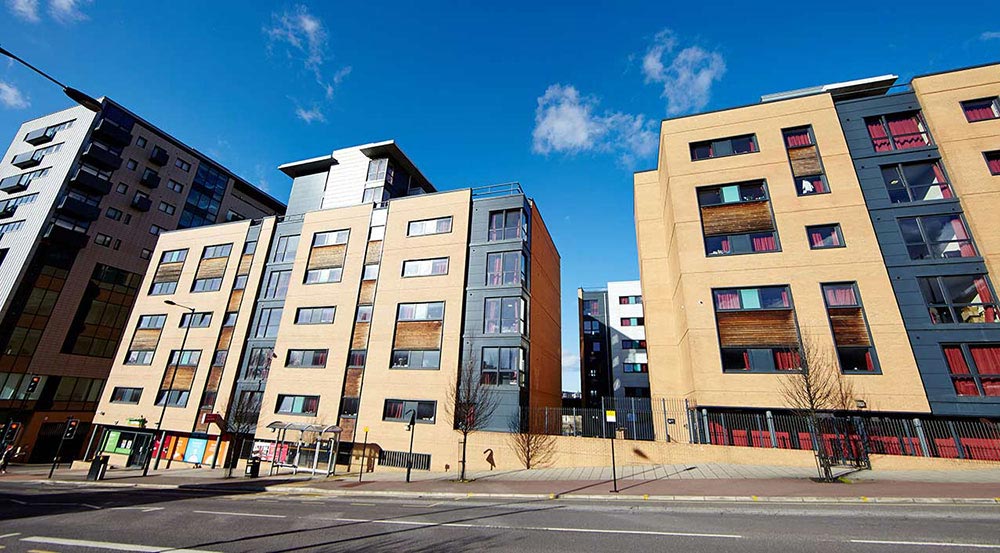
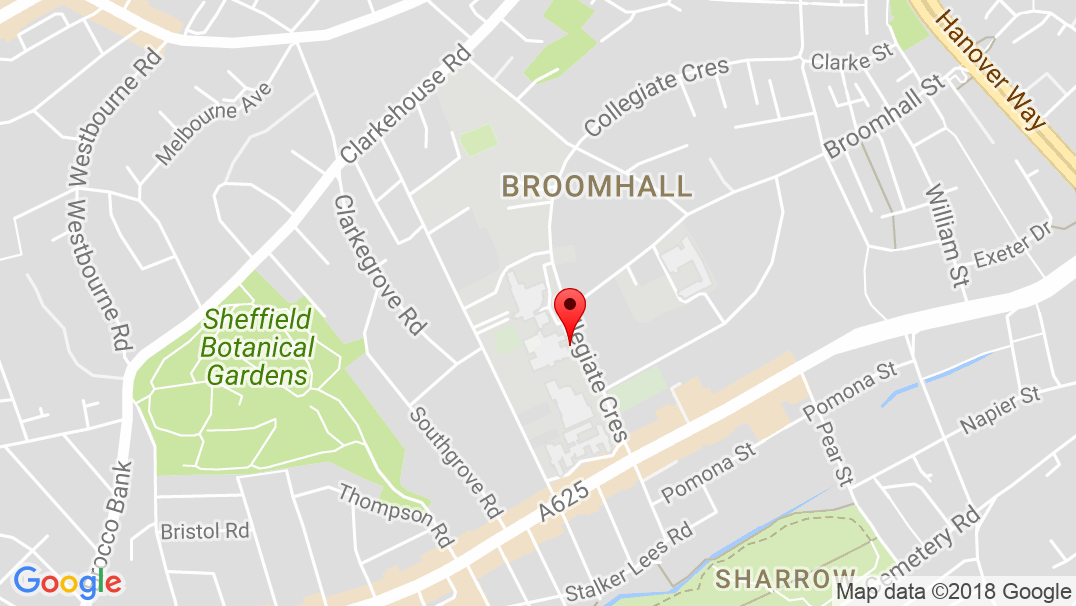
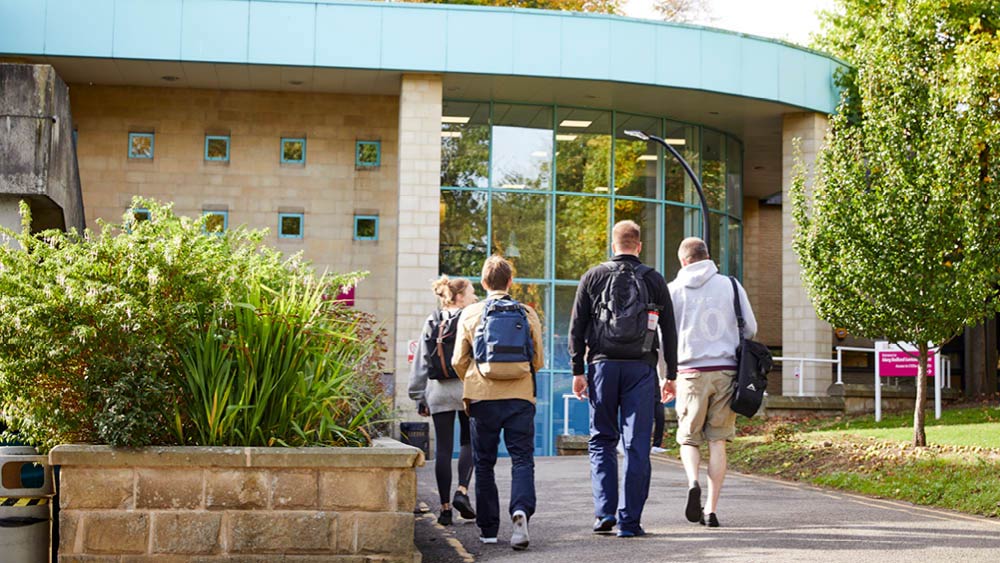
You study at Collegiate Campus through a structured mix of lectures, seminars and practical sessions as well as access to digital and online resources to support your learning.
Collegiate campus
Collegiate Campus can be found just off Ecclesall Road, a bustling student district.
Collegiate Campus map | Campus facilities
Collegiate library
Collegiate Library can be found just off Ecclesall Road. It's open 24 hours a day, every day.
Learn moreEntry requirements
All students
UCAS points
- Standard offer: 112 UCAS points
- Contextual offer: 96 UCAS points
We make contextual offers to local applicants, applicants living in low participation areas and applicants with specific personal circumstances. Check your eligibility for a contextual offer.
From at least two A levels or equivalent BTEC National qualifications including Physical Education, Sports Studies or a science subject (such as Applied Science, Biology, Chemistry, Physics, Maths, or Psychology). We do not accept General Studies. For example:
- BBC at A Level including relevant subject(s).
- DMM in BTEC Extended Diploma in a relevant subject(s).
- Merit overall in a Health or Science T level qualification.
- A combination of qualifications including relevant subject(s) which may include AS levels or EPQ.
You can find information on making sense of UCAS tariff points here and use the UCAS tariff calculator to work out your points.
GCSE
- English Language or Literature at grade C or 4 or equivalents*
- Maths at grade C or 4 or equivalents*
• Approved Access to HE Diploma in a sport science or science-based course. Normally we require 15 of the level 3 credits to be graded at distinction level with 6 of these distinctions from science units.
You also need to demonstrate an ability to
- study academic subjects at degree level
- debate topics and issues
- draw on conclusions from written material
- study independently as well as a member of a group
- use computers and technology associated with contemporary teaching, learning and assessment methods
- successfully complete a range of assignments including researched essays and practical examinations
This is normally achieved by completing academic study at level three or above in the last four years.
* GCSE English and mathematics equivalent
- equivalency test from www.equivalencytesting.co.uk
If English is not your first language you will need an IELTS score of 6.0 with a minimum of 5.5 in all skills or equivalent.
We strongly recommend that you tell us about any long term health conditions or disabilities you may have. This is so we can assess whether we can deliver the course in such a way that you can meet the course requirements and take part without disadvantage. You can contact our University student support staff on 0114 225 3964 (voice and Minicom) and explore any issues you may have.
Additional information for EU/International students
If you are an International or non-UK European student, you can find out more about the country specific qualifications we accept on our international qualifications page.
For details of English language entry requirements (IELTS), please see the information for 'All students'.
Fees and funding
Home students
Our tuition fee for UK students on full-time undergraduate courses in 2027/28 is £10,050 per year (capped at a maximum of 20% of this during your placement year). These fees are regulated by the UK government and therefore subject to change in future years.
If you are studying an undergraduate course, postgraduate pre-registration course or postgraduate research course over more than one academic year then your tuition fees may increase in subsequent years in line with Government regulations or UK Research and Innovation (UKRI) published fees. More information can be found in our terms and conditions under student fees regulations.
International students
Our tuition fee for International/EU students starting full-time study in 2027/28 is £18,900 per year (capped at a maximum of 20% of this during your placement year)

Financial support for home/EU students
How tuition fees work, student loans and other financial support available.
Additional course costs
The links below allow you to view estimated general course additional costs, as well as costs associated with key activities on specific courses. These are estimates and are intended only as an indication of potential additional expenses. Actual costs can vary greatly depending on the choices you make during your course.
General course additional costs
Additional costs for Sport and Physical Activity (PDF, 246.6KB)Legal information
Any offer of a place to study is subject to your acceptance of the University’s Terms and Conditions and Student Regulations.