
Everything you need to know...
-
Tuition fees
Home: £11,490 for the course
International/EU: £19,530 for the course -
Course duration
2 Years
-
Study location
-
Start date
September 2027
Course summary
- Reflect on how autism affects the way in which people experience the world and analyse these experiences in the context of wider disability debates.
- Learn to identify and challenge the societal barriers encountered by autistic people.
- Critically reflect upon developing practice, research, and policy that work towards social justice, inclusion and equality.
MA Autism gives students a specialist and critical education in theory, research and practice related to autism. The course provides academic, professional, and personal development opportunities for those concerned with both the practice and experience of living and/or working with autistic individuals across all ages.

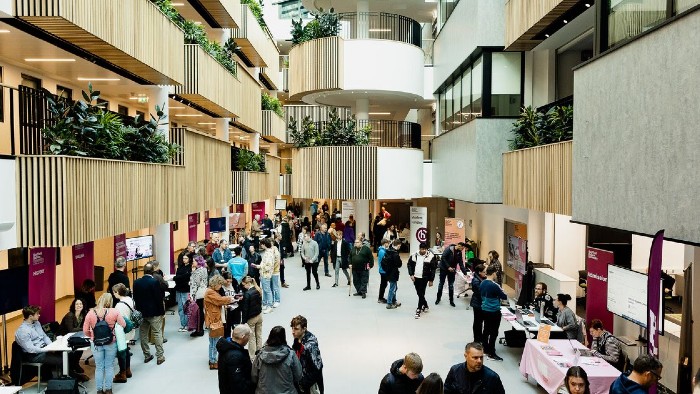
Come to an open day
Find out more at our postgraduate open days. Book now for your place.
How you learn
You experience and engage in a variety of learning activities as you progress through the course. We have designed a balanced range of activities to recognise the diverse range of experience and expertise of our students.
You learn through
- tutor-led seminars
- workshops
- participant-led activities
- group and peer discussion
- self-directed study
- independent reading.
- You take part in both face-to-face and online learning throughout your studies.
Be the teacher who inspires: teacher training at Sheffield Hallam
Study at the Sheffield Institute of Education—a national centre of excellence and one of the UK’s largest providers of teacher training.
Applied learning
Applied learning is the ethos at the heart of all Sheffield Hallam courses, meaning that you are given the opportunity to put your study into practice.
You'll be taught by professionals who are active in their field - so you'll get cutting edge, industry focused knowledge of your subject. You'll gain real-world skills through placements, workshops and live projects, often getting the opportunity to work with big global brands.
Work experience is also embedded into every year of the course, so you polish your workplace skills alongside building a solid knowledge of your subject. Applied learning means that when you do start work, you can dive in and make things happen.
Your course leader

Modules
Important notice: The structure of this course is periodically reviewed and enhanced to provide the best possible learning experience for our students and ensure ongoing compliance with any professional, statutory and regulatory body standards. Module structure, content, delivery and assessment may change, but we expect the focus of the course and the learning outcomes to remain as described above. Following any changes, updated module information will be published on this page. .
Year 1
Compulsory modules
This module reflects on how challenging behaviour is conceptualised, experienced and responded to in relation to Autism and to consider the role of communication within this process.
Module Content:
-
Identify and evaluate different conceptualisations of challenging behaviour and the ways these may impact upon the experiences of autistic people, their families and carers.
-
Consider current policy and other 'drivers' to analyse how these might create the cultures and environments in which behaviours and communications are created and played out
-
Critique of theory, research and practice to explore the relationship between challenging behaviour and communication, evaluating to what extent these might be interdependent.
-
Develop a personal engagement framework relating to the ethics of autism research and practice
-
Apply learning to current practice within nationally and internationally.
-
Students will be able to engage with learning in one or more of the following ways - in person lectures and seminars, remote learning, supervision and independent study.
This module explores strategy, policy, legislation and practice in relation to the impact on autistic people within a personal and/or professional context.
You’ll study topics such as:
- Examine autism drivers such as theory, research, strategy, policy or legislation that direct autism practice
- Critically analyse the impact of autism drivers and practices for autistic people
- Critically analyse your own practice and/or experience
- Identify the impact of your own learning for future organisational or personal development activities
- Place your personal and/or professional learning within a local, national or international context
- Engage with learning in one or more of the following ways - in-person lectures and seminars, remote learning, supervision and independent study
This module reflects on dominant and emergent theories of autism and their impact on autistic people and their families. You will reflect on theories, concepts of autism and disability from a social justice, inclusion and equality perspective within a professional and/or personal context.
You’ll study topics such as:
- Critique dominant and emerging cognitive theories of autism and evaluate the impact of these theories on autistic people, their families and carers
- Analyse the application of theory within your personal and/or professional context
- Situate your knowledge within autism culture and history, inclusion and disability debates including intersectional and international positions.
- Examine and critique autism concepts and terminology and the underlying values and beliefs
- Engage with a range of information sources to examine a variety of theoretical perspectives.
- Engage with learning in one or more of the following ways - in person lectures and seminars, remote learning, supervision and independent study.
Final year
Compulsory modules
This module prepares you to pursue an individual negotiated study of professional or personal significance by developing their knowledge and understanding of social research practices.
You’ll study topics such as:
- Identifying key literature sources.
- Critiquing papers and analysing discourses
- Evaluating research in relation to the implicit values and assumptions.
- Taking account of the contested nature of knowledge, research paradigms and philosophies.
- Valuing personal/professional experiences.
- Research methods
- Ethical considerations: identifying dilemmas in relation to ethical issues
- Evaluating empirical research studies in relation to own study intentions
- Students will be able to engage with learning in one or more of the following ways - in person lectures and seminars, remote learning, supervision and independent study.
This module supports students to undertake an original piece of research related to their own professional or personal interests. The module aims to deepen participants' understanding of research concepts, tools and applications.
You’ll study topics such as:
- Positionality in social research
- Developing meaningful research questions
- Data Collection and analysis
- Writing a critical literature review
- Completing the ethical review process
- Relating findings to literature and other evidence
- Disseminating findings and implementing recommendations.
- Students will be able to engage with learning in one or more of the following ways - in person lectures and seminars, remote learning, supervision and independent study.
Future careers
The course provides a relevant qualification for anyone holding or intending to hold a position related to autism. As this is a part-time course, students are often studying alongside their own career progression. Graduates often go on to progress in their organisation or take on further responsibility as the result of their studies and acquired skills.
Where will I study?
You study at City Campus through a structured mix of lectures, seminars and practical sessions as well as access to digital and online resources to support your learning.
City Campus
City Campus is located in the heart of Sheffield, within minutes of the train and bus stations.
City Campus map | City Campus tour


Adsetts library
Adsetts Library is located on our City Campus. It's open 24 hours a day, every day.
Explore the libraryEntry requirements
All students
Typically a degree or equivalent and an interest in the autism spectrum.
If English is not your first language, you need an overall IELTS score of 6.5 with 6.5 in reading and 6.5 in writing.
We may invite you to take part in a face to face or telephone interview to ensure your spoken language skills meet the requirements for working with learners in an educational setting or context.
If you do not have such academic qualifications we may consider your application individually, based on your personal, professional and work experience, and other formal qualifications. You may also be able to claim credit points which can reduce the amount of time it takes to complete your qualification at Sheffield Hallam. Find out more
Additional information for EU/International students
If you are an International or non-UK European student, you can find out more about the country specific qualifications we accept on our international qualifications page.
For details of English language entry requirements (IELTS), please see the information for 'All students'.
Fees and funding
Home students
Our tuition fee for UK students starting part time study in 2027/28 is £11,490 for the course. The tuition fee displayed above is for the full course. If the full course is more than one year in duration, the fee will be divided into annual payments which will then be rounded. This may mean the total fee you pay is slightly higher than the fee stated above. If you take a break in study or have to re-take part of the course, you may also be charged an additional fee and will be notified of this at the time. Our tuition fee for UK students starting part-time study in 2027/28 is £5,745 per year.
If you are studying an undergraduate course, postgraduate pre-registration course or postgraduate research course over more than one academic year then your tuition fees may increase in subsequent years in line with Government regulations or UK Research and Innovation (UKRI) published fees. More information can be found in our terms and conditions under student fees regulations.
International students
This course is not eligible for part-time Student visa sponsorship. Our tuition fee for International/EU students starting part-time study in 2027/28 is £19,530 for the course. The tuition fee displayed above is for the full course. If the full course is more than one year in duration, the fee will be divided into annual payments which will then be rounded. This may mean the total fee you pay is slightly higher than the fee stated above. If you take a break in study or have to re-take part of the course, you may also be charged an additional fee and will be notified of this at the time. Our tuition fee for International/EU students starting part-time study in 2027/28 is £9,765 per year.

Scholarships and financial support
Find information on scholarships, bursaries and postgraduate student loans.
International scholarships up to £3000 ›
Alumni scholarships up to £2000 ›
Postgraduate loans for UK students ›
Additional course costs
The links below allow you to view estimated general course additional costs, as well as costs associated with key activities on specific courses. These are estimates and are intended only as an indication of potential additional expenses. Actual costs can vary greatly depending on the choices you make during your course.
General course additional costs
Additional costs for Sheffield Institute of Education (PDF, 252.3KB)Legal information
Any offer of a place to study is subject to your acceptance of the University’s Terms and Conditions and Student Regulations.