Everything you need to know...
-
Tuition fees
Home: £10,050 per year
International/EU: £18,900 per year -
Course duration
3 / 4 Years
-
Study location
-
Entry requirements
-
Course code
C600
-
Start date
September 2027
-
Placement year available?
Yes
Course summary
- Investigate the scientific methodologies and theories of sport and exercise science
- Promote exercise, inclusion and positive behaviours for better overall health
- Enhance your practical and lab skills in physiology, psychology, biomechanics and nutrition
- Work with renowned sports organisations and elite clubs to enhance athletic performance
- Stand out by applying your learning to work experience opportunities and live projects
Join us to enhance your scientific and analytical understanding of sport and exercise – ultimately aiming to improve both performance and health.
You’ll explore a wide range of captivating topics – from anatomy and biomechanics to physiology, psychology and nutrition.
World top 150 for sport
We’re ranked in the world top 150 universities for sport in the QS World University Rankings 2026. This reflects our strength in sport teaching, research, industry reputation and international outlook.

Come to an open day
Discover our TEF Gold rated teaching and see why students voted Sheffield Hallam a top five university in England at the prestigious Whatuni Student Choice Awards.
Accredited by
Chartered Institute for the Management of Sport and Physical Activity (CIMSPA)
Sheffield Hallam is a higher education partner of the Chartered Institute for the Management of Sport and Physical Activity (CIMSPA). This course is endorsed against CIMSPA Gym Instructor professional standards, aligning with industry requirements in the sport and physical activity sector. This provides a foundation for learners to gain the professional status of Gym Instructor Practitioner during their studies.
Sheffield Hallam University’s Academy of Sport and Physical Activity was the first higher education institution assessed by the CIMSPA quality assurance framework, achieving the highest three star Enhancing rating, demonstrating best practice and the highest quality of education.
How you learn
Throughout the course, you will acquire knowledge about how the body responds to and adapts to exercise. You’ll learn through teaching, working and doing – learning strategies to optimise sports performance and understanding techniques that promote positive behavioural changes for better overall health.
You’ll learn from accomplished staff who are actively engaged in research across all levels of sport. Because Sheffield is home to sports clubs in every major sport in the UK, you will benefit from our fantastic local ties with elite clubs and organisations. From football to ice hockey, basketball to rugby, Sheffield offers a diverse sporting landscape.
You learn through:
- Lectures, seminars and workshops
- A virtual learning environment (VLE)
- Work-based learning experiences
- Placements
- Field trips
- Practical activities in both simulated and in-situ environments
- Independent study
- Research opportunities
Key themes
You’ll explore theoretical, philosophical and practical aspects of sport and exercise science, offering insights into graduate roles in sports, physical activity and other professional settings. You’ll study topics like physiology, biomechanics, psychology, nutrition, coaching and physical activity – as well as key skills in digital capability and critical thinking.
This degree is aligned to the jobs market and growth in the sector. Performance analysis, strength and conditioning are all areas with growing career opportunities, so you will gain in-depth knowledge in these areas.
With flexible course pathways and assessments, you’re able to customise your studies based on your future career aspirations. Then in your final year, you can really focus on where your passions take you. Build your learning around your aspirations.
Course support
The course is designed to help you demonstrate your learning outcomes – with authentic assessment activities relating to real-world scenarios, your specific goals and your skills development.
Throughout your studies, support will be available through various individuals who will enable you to reach your potential through academic, professional and personal development.
These support roles include:
- Course and Module Leaders
- Your Academic Adviser
- Your Student Support Adviser
- Your Employability Adviser
- Central services like counselling, Library and IT
Studying at a university in the top 150 globally for sport looks like…
Take a glimpse into your life as a sport student at Sheffield Hallam and all it has to offer.
Applied learning
Work placements
There’s a mandatory short placement at the end of your second year. Completing up to 200 hours, you will be learning while you work and preparing to progress into employment after you graduate
Previous examples of placements have been taken at British Diving, Sheffield Eagles, Sheffield United, Sheffield Wednesday and Basketball England.
You’ll also have the opportunity to undertake a year-long work placement (24 weeks minimum) or multiple placements between your second and final years. This gives you further valuable work experience to prepare you for your future career and allows you to graduate with an Applied Professional Diploma to add to your CV.
Field trips
On field trips you will be able to understand how your learning is applied first-hand to real-world situations, gaining valuable insight into working practice.
Networking opportunities
Your employability is enhanced by the involvement of employers and industry partners – from the real-world projects you complete to the opportunities to build networks at careers fairs and workshops.
We invite specialist industry experts to deliver guest lectures and share context-specific examples of the knowledge, skills and behaviours you will need. And our ties to various sporting organisations and facilities both locally and nationally will give you superb opportunities to gain industry connections as you prepare for your career.
We have previously provided the opportunity to attend conferences e.g. the CASES student conference, where students can present their work and network with students, applied scientists and academics from around the world.
Hear from a Sport and Exercise Science graduate

"This course enabled me to explore my passion, build confidence and step straight into a career working with athletes as a personal trainer and sport scientist.
I graduated as a confident practitioner with a CIMSPA Graduate Award and Personal Trainer qualification. Through internships, leading as a strength and conditioning coach, volunteering at international events and completing a placement in Australia, I gained real-world experience that set me apart.”
Alfie Barrett, BSc Sport and Exercise Science
Your course leader

Alan Ruddock
Associate Professor of Sport Physiology and PerformanceAlan is an accredited sport and exercise scientist and Fellow of the British Association of Sport and Exercise Sciences; Senior Fellow of the Higher Education Academ … Read more

Matthew Debney
Senior LecturerSenior Lecturer in the School Of Sport and Physical Activity. BSc (Hons) Sport and Exercise Science Level 4 Lead. Member of the School Recruitment, Marketing and Com … Read more
Modules
Important notice: The structure of this course is periodically reviewed and enhanced to provide the best possible learning experience for our students and ensure ongoing compliance with any professional, statutory and regulatory body standards. Module structure, content, delivery and assessment may change, but we expect the focus of the course and the learning outcomes to remain as described above. Following any changes, updated module information will be published on this page.
You will be able to complete a placement year as part of this course. See the modules table below for further information.
Year 1
Compulsory modules
Module Aim
This module will develop your knowledge and understanding of coaching within sport and physical activity as it relates to different environments and populations. Within it, you will develop your coaching skills and reflect on your practice to support your future development as a practitioner.
You’ll study topics such as:
-
The coaching and scientific support processes
-
Evaluation methods
-
Skill acquisition
-
Programming
-
Inclusive practice
-
Use of technology in coaching
-
Self-reflection
-
Leadership and management
-
Careers and the employability landscape
This module will develop your knowledge and understanding of the science of exercise and health and further your understanding of the principles of scientific enquiry through the collection, analysis and interpretation of scientific data.
You’ll study topics such as:
- Morphology/body composition
-
Sedentary behaviour
-
Causes of movement
-
Motivation/behaviour change
-
Epidemiology and pathology
-
Movement dysfunction
-
Data presentation/visualisation
-
Clinical laboratory/field-based skills
Module Aim
This module will develop your knowledge, understanding and practical skills in sport and exercise science. You will explore the fundamental principles of scientific enquiry, collect, interpret and analyse data, and solve fundamental sport science problems using well established scientific methods.
You’ll study topics such as:
- Body systems
- Description of movement
- Responses and adaptations to exercise
- Macro and micro-nutrients
- Stress
- Skill acquisition
- Memory and cognitive function
- Laboratory skills
- Accessing evidence
- Handling and analysing data
Module Aim
This module will introduce you to important and key issues and stakeholders in sport and physical activity and their potential impact on individuals and communities.
You’ll study topics such as:
-
Benefits of an active lifestyle
-
Physical Activity recommendations
-
Participation
-
Health inequalities
-
Sport for Good
-
Policy
-
Social value
-
Inclusion
Year 2
Compulsory modules
Module Aim
This module develops your knowledge and understanding of how sport science disciplines and scientific support strategies solve important challenges within sport and physical activity. It will support you to apply scientific knowledge and improve your practical and analytical skills as an applied sport and exercise practitioner.
You’ll study topics such as:
- Needs analysis
-
Determinants of performance
-
Training demands
-
Responses to environmental constraints
-
Fatigue
-
Resilience/Burnout
-
Reliability and validity of measurement
-
Sources of bias
-
Research design
-
Qualitative and quantitative approaches to analysis
Module Aim
In this module you will explore multidisciplinary approaches to providing scientific support, You will develop and use practical skills to generate relevant data and enhance your analytical skills to explain different and complex situations, and how scientific disciplines can work synergistically to solve important problems.
You’ll study topics such as:
-
Load management
-
Overreaching/overtraining
-
Stress
-
Dietary analysis
-
Developing research questions
-
Qualitative and quantitative analysis
-
Multidisciplinary approaches
Module Aim
This module will develop your knowledge and understanding of wellbeing and explore strategies for optimising the health outcomes of individuals and groups
You’ll study topics such as:
- Optimising wellbeing and performance
-
Delivering health and fitness assessment
-
Organisational wellbeing
-
Supporting mental health and managing stress
-
Client centred communication strategies
-
Holistic lifestyle advice and support
-
Behaviour change strategies
-
Basic life support and mental health first aid
-
Reflective practice
-
Work integrated learning
Year 3
Compulsory modules
Module aim:
The aim of this module is to enhance students’ professional development through the completion of and reflection on meaningful work placement(s).
A work placement will provide students with opportunities to experience the realities of professional employment and experience how their course can be applied within their chosen industry setting. The placement will:
- Allow student to apply the skills, theories and behaviours relevant and in addition to their course
- Enable students to enhance their interpersonal skills in demand by graduate employers – communication, problem-solving, creativity, resilience, team work etc.
- Grow their student network and relationship building skills.
- Provide student with insights into the industry and sector in which their placement occurs
- Help student make informed graduate careers choices.
Indicative Content:
In this module students undertake a sandwich placement (min 24 weeks / min 21 hours per week) which is integrated, assessed and aligned to their studies.
Their personal Placement Academic Supervisor (PAS) will be their key point of contact during their placement and will encourage and support students to reflect on their experience, learning and contribution to the organisation they work for.
To demonstrate gains in professional development, students will be required to share their progress, learning and achievements with their Placement Academic Supervisor and reflect on these for the summative piece of work.
Final year
Compulsory modules
This module provides you with an opportunity to undertake an in-depth project on a subject appropriate and related to your programme of study.
The module will enable synthesis and application of contextual and theoretical knowledge from taught elements of the programme within an intensive period of personal research and study to enable demonstration of a high degree of critical thinking, originality and independence of enquiry.
Module Aim
This module will develop your knowledge and understanding of interdisciplinary practice within sport and exercise disciplines to meet the needs of real-world challenges. You will further develop the practitioner and communication skills required to translate scientific outcomes into practical recommendations for applied practice.
You’ll study topics such as:
-
Codes of conduct and ethical integrity
-
Interdisciplinary models and reflective practice
-
Communicating with discipline specific experts
-
Coordinating scientific projects
-
Intervention design
-
Data collection and analysis
Future careers
This course prepares you for a career in:
- Applied sport and exercise science
- Sports science support
- Strength and conditioning
- Physical activity coordination
- Sports nutrition
- Performance analysis
- Health advisory positions
- Exercise referral
- Sports development
- Personal training
- Research and further study
Previous graduates of this course have gone on to work for:
- The UK Sports Institute
- Higher education and further education institutions
- Governing bodies and federations of sport
- Professional sports teams
- The National Health Service
- Primary and secondary education establishments
You’ll enhance your professional standing, as this degree aligns with the standards set by the Chartered Institute for the Management of Sport and Physical Activity (CIMSPA) for Gym Instructors and working with individuals with long-term conditions.
Employability
95% of UK graduates are in work or further study 15 months after graduating (2023/24 Graduate Outcomes Survey).

All in on your career
We promise you’ll be ready to launch your career. With employer connections, hands-on learning and lifelong career support, we’ll help make your ambition a reality.
Equipment and facilities
Students have access to world-leading facilities and equipment to explore physical activity, sport and health, and help develop their practical skills. Our sport-specific training facilities and research laboratories include:
- The UK Sports Institute
- The Sheffield Hallam University Sports Park
- Physiology and biomechanics lab
- A strength and conditioning teaching lab
- A physical activity suite
- A performance analysis suite
- An environmental chamber
- Sport psychology consultation rooms
Our laboratory is registered by the Chartered Association of Sport and Exercise Sciences (CASES), reflecting the professional standard of our sport and exercise science facilities.
360 tour - sports teaching spaces and facilities
Sports facilities tour
Take a look around Sheffield Hallam University's sports facilities with Wellbeing, Sport and Physical Activity Officer Ellie.
Where will I study?
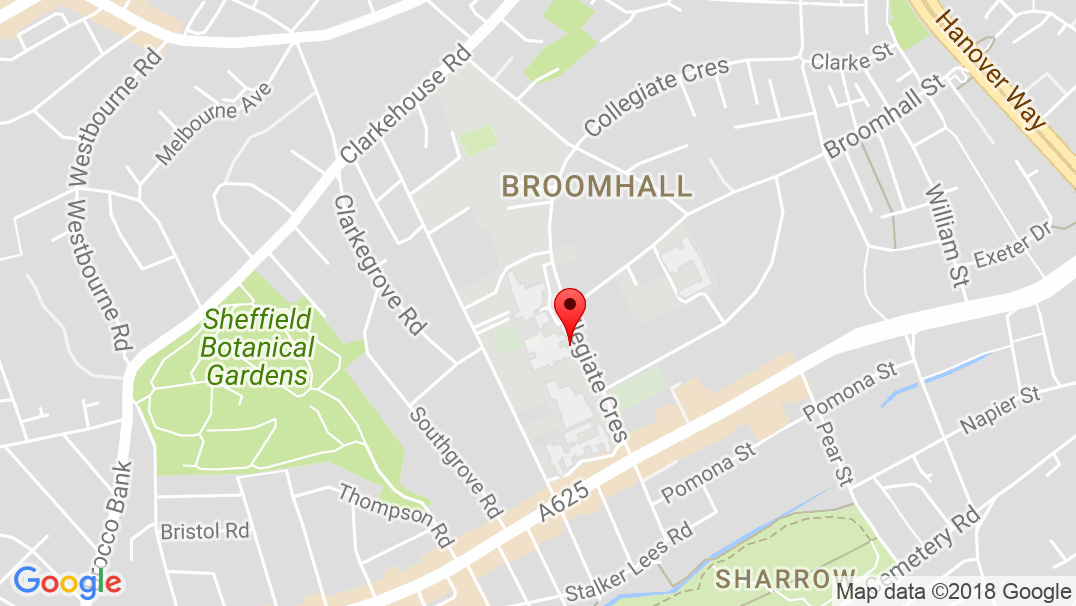
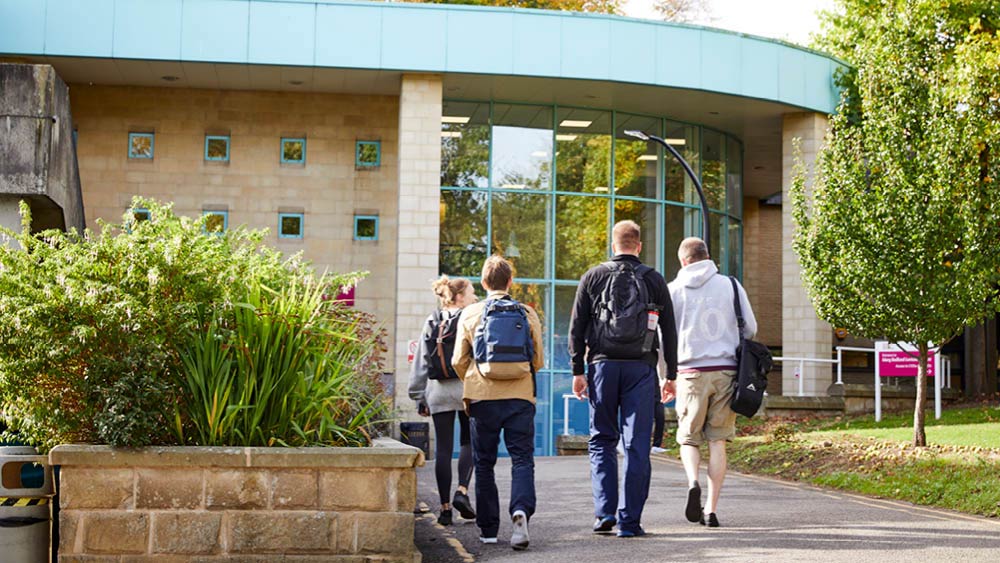
You study at Collegiate Campus through a structured mix of lectures, seminars and practical sessions as well as access to digital and online resources to support your learning.
Collegiate campus
Collegiate Campus can be found just off Ecclesall Road, a bustling student district.
Collegiate Campus map | Campus facilities
Collegiate library
Collegiate Library can be found just off Ecclesall Road. It's open 24 hours a day, every day.
Learn moreEntry requirements
All students
UCAS points
- Standard offer: 112 UCAS points
- Contextual offer: 96 UCAS points
We make contextual offers to local applicants, applicants living in low participation areas and applicants with specific personal circumstances. Check your eligibility for a contextual offer.
From at least two A levels or equivalent BTEC National qualifications one of which must be in Physical Education, Sport Studies or a science subject (such as Applied Science, Biology, Chemistry, Physics, Mathematics or Psychology). We do not accept General Studies. For example:
- BBC at A Level including relevant subject(s).
- DMM in BTEC Extended Diploma in a relevant subject(s).
- Merit overall from a Health or Science T level qualification.
- A combination of qualifications including relevant subject(s) which may include AS levels or EPQ.
GCSE
- English Language or Literature at grade C or 4 or equivalents*
- Maths at grade C or 4 or equivalents*
You can find information on making sense of UCAS tariff points here and use the UCAS tariff calculator to work out your points.
• Access - an approved Access to HE Diploma in a sport science or science-based course. Normally we require 15 of the level 3 credits to be graded at distinction level with 6 of these distinctions from science units.
You also need to demonstrate an ability to
- study academic subjects at degree level
- debate topics and issues
- draw on conclusions from written material
- study independently as well as a member of a group
- use computers and technology associated with contemporary teaching, learning and assessment methods
- successfully complete a range of assignments including researched essays and practical examinations
This is normally achieved by completing academic study at level three or above in the last four years.
* GCSE English and mathematics equivalent
• equivalency test from www.equivalencytesting.co.uk
If English is not your first language you will need an IELTS score of 6.0 with a minimum of 5.5 in all skills or equivalent.
We strongly recommend that you tell us about any long term health conditions or disabilities you may have. This is so we can assess whether we can deliver the course in such a way that you can meet the course requirements and take part without disadvantage. You can contact our University student support staff and explore any issues you may have.
Additional information for EU/International students
If you are an International or non-UK European student, you can find out more about the country specific qualifications we accept on our international qualifications page.
For details of English language entry requirements (IELTS), please see the information for 'All students'.
Fees and funding
Home students
Our tuition fee for UK students on full-time undergraduate courses in 2027/28 is £10,050 per year (capped at a maximum of 20% of this during your placement year). These fees are regulated by the UK government and therefore subject to change in future years.
If you are studying an undergraduate course, postgraduate pre-registration course or postgraduate research course over more than one academic year then your tuition fees may increase in subsequent years in line with Government regulations or UK Research and Innovation (UKRI) published fees. More information can be found in our terms and conditions under student fees regulations.
International students
Our tuition fee for International/EU students starting full-time study in 2027/28 is £18,900 per year (capped at a maximum of 20% of this during your placement year)

Financing your studies
Explore tuition fees, student loans, scholarships and financial support available, including up to £2,100 a year towards living costs for eligible students.
Explore fees and funding ›
Discover cost-of-living support ›
Find scholarships and bursaries ›
Additional course costs
The links below allow you to view estimated general course additional costs, as well as costs associated with key activities on specific courses. These are estimates and are intended only as an indication of potential additional expenses. Actual costs can vary greatly depending on the choices you make during your course.
General course additional costs
Additional costs for Sport and Physical Activity (PDF, 246.6KB)Legal information
Any offer of a place to study is subject to your acceptance of the University’s Terms and Conditions and Student Regulations.