Sheffield Hallam University is highly committed to do its part towards addressing the climate emergency.
Our aim is to develop an ambitious whole-of-institution strategy for climate action – includes campus, teaching, research, civic, leadership & governance
We are committed to reducing waste volumes and increasing recycling rates across all our operations. We are a zero waste to landfill university. Any material that cannot be recycled locally is incinerated and returned to our city centre buildings as heat.
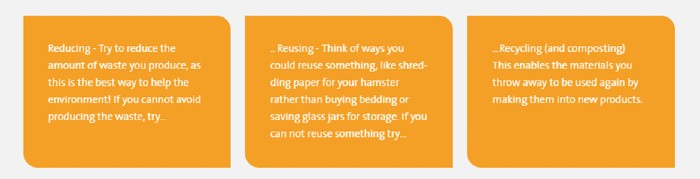
Within our Campus Management Climate Action Policy we have a made a commitment to "Continue to embed the waste hierarchy (prevent, reduce, reuse, recycle) across the estate through facilities and services whilst including the encouragement of sustainable behaviour and reducing embedded carbon emissions associated with the disposal of waste."
Our measures and targets
2018/19 Scope 3 Baseline
- 706.5 tonnes produced (30% recycled/ recovered)
2023/24 Most recent completed footprint
- 2,699 kg CO2e
81.79% reduction (22.62% projected)
- 423.7 tonnes produced (25.45% recycled/ recovered)
40.02% reduction (22.62% projected)
Target to halve scope 3 emissions by 2030.
As with water, the production and disposal of waste is a relatively small proportion of the University’s scope 3 footprint, however, the disposal of approximately 423 tonnes of waste (2023/24) per year is a potentially significant local environmental impact as identified through the University’s ISO system.
The University has overachieved previous waste targets historically and put in place many waste management procedures and controls including behaviour change campaigns, provision of segregated streams and diversion of all waste from landfill. This is an area of current regulatory change i.e. ‘Simpler Recycling’ roll out to businesses, requiring the separation of food and glass. It is felt that a move away from data driven targets with a focus on achieving high level objectives instead, would have a greater positive influence on the environmental impacts of waste management and any improvement in waste practices would have a positive impact on the Scope 3 emissions. In addition to applying procurement actions as outlined in this plan, which would reduce waste produced, centralised recycling stations are becoming standard across campus to support and comply with changing waste legislation, which should improve both segregation rates and waste produced, as well as reducing scope 3 emissions embedded within the waste management process.
Objectives
For 2025/26 the key objective is:
- To fully implement the ‘Simpler Recycling’ regulation across all buildings on Campuses, to increase reuse / recycling against general waste by ensuring that information and guidance is clear and easy to follow, whilst continuing to measure the impact of our Scope 3 waste emissions.
How to recycle at SHU
Recycling on campus is easy as we have one green bin for all of recyclable materials. The items that you can recycle in these bins are as follows:
- cardboard
- paper
- clean plastic bottles
- clean tins and cans
The University also has coffee cup recycling pod stations located in Chef Hallam Central, Atrium Level 5, The Granary and Adsetts Centre catering outlets where you can recycle single-use coffee cups.
Materials that are not listed above can be disposed of in our grey general waste bins to be incinerated for heat. You can learn more about the energy recovery facility and process here.
Recycling in Sheffield
Visit the Veolia website to find your nearest recycling bank site in Sheffield. For all your waste and recycling services please visit the Sheffield City Council website.
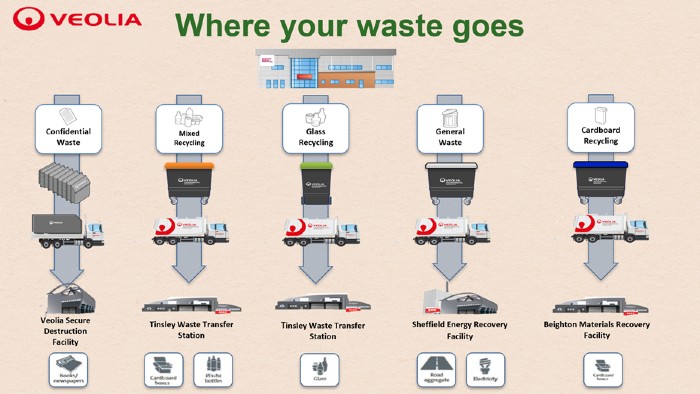
What happens to the University’s waste?
SHU has always strived to ‘Do The Right Thing’ with regards to our waste and has avoided sending waste to landfill for many years, you may be interested to find out what happens with our waste when it leaves us: