
Everything you need to know...
-
Tuition fees
Home: £11,490 for the course
International/EU: £19,530 for the course -
Course duration
1 Year
-
Study location
-
Start date
September 2027
January 2028
Course summary
- Develop transferable skills for national and international business.
- Benefit from relevant work experience opportunities.
- Study global developments in systems, regulations, accounting and finance practices.
- Undertake real-world learning to gain immediate value to your present and potential employers.
The course is designed to meet the growing demand for highly skilled and intellectual professionals in finance and accounting. You’ll develop your ability to research, appraise and critically evaluate current issues in the world of accountancy – plus how they impact our society. There’s also a work experience option you can undertake before your dissertation.
Accredited by

Association to Advance Collegiate Schools of Business (AACSB)
Sheffield Business School is accredited by the Association to Advance Collegiate Schools of Business (AACSB). This internationally recognised accreditation places us among the top business schools globally.
Employability
94% of our postgraduate students are in work or further study 15 months after graduating (2023/24 Graduate Outcomes Survey)
How you learn
Many of our staff have industry experience and/or are research active.
Through a combination of teaching methods you’ll develop in-depth knowledge and a range of skills. You’lll implement theories and techniques, problem-solving activities, research and teamwork – taking an active approach to learning and self-development.
You learn through:
- lectures
- tutorials
- IT sessions
- regular formative feedback
- teamwork and group-based learning
- practice-based applied learning
- authentic learning experiences
- engagement with guest lectures
- discussions
- self-managed study
Follow our Sheffield Business School Instagram to see real student life, course experiences, events and what it is like to study here.
Key Themes
You’ll study corporate finance and data analytics, international corporate reporting and governance, sustainability and strategic management accounting, and international auditing and professional ethics.
You’ll develop your understanding of how and when to apply your subject knowledge – using appropriate techniques, technologies, project management practices and methodologies for problem-solving and research.
We’ll further develop your understanding by introducing you to real-life case studies, business problem scenarios and projects. You’ll work independently and in small teams to identify solutions and produce reports, presentations and recommendations. These experiences will help prepare you for a career in banking and finance, all within a supportive learning environment.
At the final stage of the master’s degree, you’ll undertake a dissertation or an applied business project – applying all your knowledge and skills to successfully fulfil your research objectives.
Course Support
You’ll be supported in your learning journey towards highly skilled, graduate-level employment through a number of key areas. These include:
- Access to specialist support services to help with your personal, academic and career development
- Access to our Skills Centre with one-to-ones, webinars and online resources
- First-class facilities with state-of-the-art equipment
- Industry-specific employability activities such as live projects, learning in simulated environments and networking opportunities
- Opportunities to secure work experience through a competitive process as part of your course, with access to relevant adverts and support in applications and the selection process.
Applied learning
You’ll develop your employability skills throughout the course, using real-life scenarios and business problems.
‘Knowledge applied’ is the underlying design principle for all our courses and modules. All modules on your course adopt forefront research, updated regulations and standards. Teaching and assessment activities use real-life case studies and business problem scenarios – underlined by a combination of complex regulatory, political, economic, social and environmental factors – all helping to prepare you for a career in accounting and finance.
Live projects
Your research project could be a dissertation – where you carry out an in-depth research enquiry to address existing gaps in knowledge. Or you could undertake an applied business project – an extensive research project to produce insights, solutions and recommendations for a specific client.
As part of this capstone project, you’ll apply all the knowledge and skills you’ve developed throughout the course, while also developing new ones. From the initial stage of generating research ideas to the final stage of writing up your dissertation or applied business project report, you’ll be guided by the module team and a dedicated project supervisor.
Networking opportunities
You’ll have numerous opportunities for career planning and development – from career fairs and workshops to employer presentations, field visits and professional careers advice. All these opportunities can enhance your confidence and skills development – and your employability as a result.
The team delivering the course has strong links with the Association of Chartered Certified Accountants (ACCA), the Chartered Institute of Management Accountants (CIMA) and the Association of Corporate Treasurers (ACT)
Your course leader

Usman Amjad
Lecturer, Level Leader - PG AccountingUsman Amjad, Lecturer and Level Leader for PG Accounting
Modules studied may differ depending on when you start your course.
Modules
Important notice: The structure of this course is periodically reviewed and enhanced to provide the best possible learning experience for our students and ensure ongoing compliance with any professional, statutory and regulatory body standards. Module structure, content, delivery and assessment may change, but we expect the focus of the course and the learning outcomes to remain as described above. Following any changes, updated module information will be published on this page.
Modules studied may differ depending on when you start your course.
Final year
Compulsory modules
This module equips learners with advanced knowledge of corporate finance and data analytics, focusing on strategic value creation. You will learn to integrate financial theory with analytical techniques to support executive-level decision-making in complex business environments.
You’ll study topics such as:
- Portfolio Theory and Capital Asset Pricing Model
- Advanced sources of finance (e.g. leases and convertibles)
- Financing strategy and capital structure
- Dividend policy and theory
- The valuation of companies, overseas projects and foreign direct investment
- Risk and investment appraisal techniques
- Data analysis techniques to identify trends
- The possibility of false-positive results in data and their consequences
- Introduction to a data science approach
This module explores the role of audit and assurance in both UK and international frameworks. You will learn the importance of ethical standards and regulatory compliance. You will also learn to evaluate audit processes and uphold professional integrity.
You’ll study topics such as:
- The regulatory framework of audit and assurance
- Ethical issues including IESBA Code for Ethics in Professional Accountants
- The role of internal audit in corporate governance
- The individual stages of the risk-based approach to audit
- Internal control and test of control
- Substantive procedures
- Computer-based audit techniques
- Audit reporting
- Auditor liability
This module critically examines corporate reporting and governance, exploring the development and impact of reporting standards, stakeholder engagement, and ethical considerations in a global context. You will gain analytical skills to evaluate reporting practices and governance structures.
You’ll study topics such as:
- The Annual Report and Accounts: financial reporting
- Research and enquiry techniques related to financial reporting
- International Financial Reporting Standards
- The Annual Report and Accounts: narrative reporting
- Research and enquiry techniques related to narrative reporting
- The UK Corporate Governance Code
- International corporate governance
- Ethical issues in corporate reporting and society
This module explores how management accounting supports strategic and sustainability-driven decisions across organisations.
You’ll study topics such as:
- Strategic management theories and practices
- Links between environment, strategy and accounting
- Organisational accountability and decision-making
- Sustainability accounting tools and techniques
- Strategic management accounting and control systems
- Application of tools in real-world contexts
Elective modules
This module develops your consultancy skills through a live project with a real client. You’ll investigate a specific organisational issue, apply research methods, and deliver practical insights. Alongside the project, you’ll reflect on its broader relevance to professional practice.
You’ll study topics such as:
- Defining project scope with your client
- Applying relevant theoretical frameworks
- Choosing appropriate research methods
- Addressing ethical research considerations
- Conducting a focused literature review
- Analysing and interpreting research data
- Drawing evidence-based conclusions
- Communicating findings clearly and professionally
- Managing your project effectively
- Reflecting on consultancy in professional practice
This module strengthens your critical research skills as you explore a current issue within your discipline. You’ll design and carry out an independent research project, generating insights that contribute to both academic knowledge and professional practice.
You’ll study topics such as:
- Defining your research question and focus
- Applying theoretical frameworks effectively
- Selecting appropriate research methods
- Addressing ethical research considerations
- Conducting a structured literature review
- Analysing and interpreting research data
- Drawing meaningful, evidence-based conclusions
- Managing your dissertation timeline
- Writing clearly and persuasively
- Reflecting on research in professional contexts
Future careers
This course prepares you for a career in:
- accounting
- finance
- auditing
- business consulting
Previous graduates of this course have gone on to work for:
- PWC
- KPMG
- Deloitte
- EY
- Shell
- HSBC
- Barclays
- Chinatrust Commercial Bank
Equipment and facilities
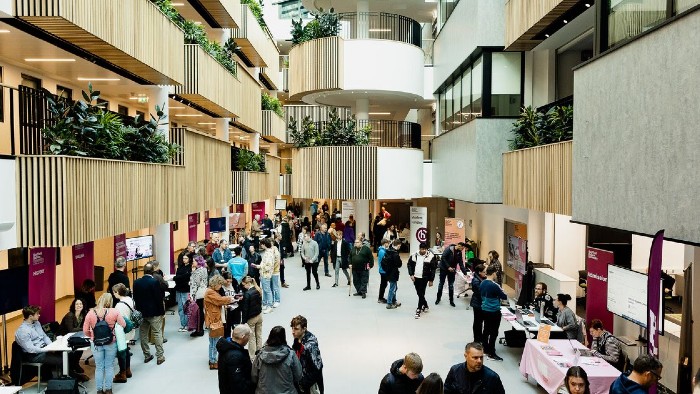
On campus, our new state-of-the-art Sheffield Business School will be your home, offering dedicated spaces to collaborate with peers, staff, industry partners, and the wider business community through our Business Hub.
On this course, you’ll have access to:
- Our virtual learning environment - Blackboard sites
- Updated office software
- Xerox (Accounting Software)
- Bloomberg terminals - a financial software platform that allows you to access global market and financial data in real-time, providing you with a real-world learning experience from the classroom
- Industry-standard Financial Trading Floor, allowing students to analyse, trade, and manage risks in a simulated environment that mirrors professional investment banks
- Physical and online library with databases and digital books, journals, newspapers, and magazines
Where will I study?
You study at City Campus through a structured mix of lectures, seminars and practical sessions as well as access to digital and online resources to support your learning.
City Campus
City Campus is located in the heart of Sheffield, within minutes of the train and bus stations.
City Campus map | City Campus tour

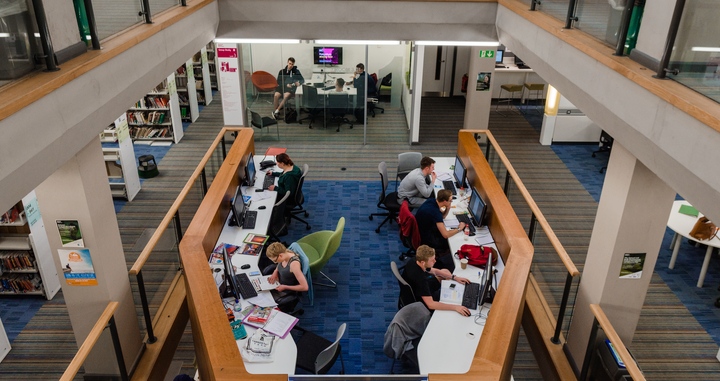
Adsetts library
Adsetts Library is located on our City Campus. It's open 24 hours a day, every day.
Explore the libraryExplore Langsett
Explore Langsett
Make your move in our brand-new building at Sheffield Business School. Find a welcoming community where you can experience state-of-the-art facilities and gold-rated teaching.
Entry requirements
All students
Normally one of the following in a relevant subject*
• a good honours degree
• a recognised postgraduate qualification
• an equivalent recognised professional qualification
* Relevant subjects include • accounting • banking • economics • finance • financial services.
If you do not have such academic qualifications we may consider your application individually, based on your personal, professional and work experience, and other formal qualifications. You may also be able to claim credit points which can reduce the amount of time it takes to complete your qualification at Sheffield Hallam. Find out more
Overseas applicants from countries whose first language is not English must normally produce evidence of competence in English. An IELTS score of 6.0 with 5.5 in all skills, is the standard for non-native speakers of English.
Additional information for EU/International students
If you are an International or non-UK European student, you can find out more about the country specific qualifications we accept on our international qualifications page.
For details of English language entry requirements (IELTS), please see the information for 'All students'.
Fees and funding
Home students
Our tuition fee for UK students starting full-time study in 2027/28 is £11,490 for the course.
If you are studying an undergraduate course, postgraduate pre-registration course or postgraduate research course over more than one academic year then your tuition fees may increase in subsequent years in line with Government regulations or UK Research and Innovation (UKRI) published fees. More information can be found in our terms and conditions under student fees regulations.
International students
Our tuition fee for International/EU students starting full-time study in 2027/28 is £19,530 for the course.

Scholarships and financial support
Find information on scholarships, bursaries and postgraduate student loans.
International scholarships up to £3000 ›
Alumni scholarships up to £2000 ›
Postgraduate loans for UK students ›
Additional course costs
The links below allow you to view estimated general course additional costs, as well as costs associated with key activities on specific courses. These are estimates and are intended only as an indication of potential additional expenses. Actual costs can vary greatly depending on the choices you make during your course.
General course additional costs
Additional costs for Sheffield Business School (PDF, 256.9KB)Legal information
Any offer of a place to study is subject to your acceptance of the University’s Terms and Conditions and Student Regulations.
Get future, business and life ready.
Make Sheffield Business School your home. Learn in our brand new building with state of the art facilities, gold rated teaching, hands on industry partnerships and an experience ranked 5* by QS Top Universities. Build your skills, confidence and connections for the future. Make your move.

Come to an open day
Find out more at our postgraduate open days. Book now for your place.