
Everything you need to know...
-
Tuition fees
Home: £18,010 for the course
International/EU: £24,260 for the course -
Course duration
2 Years
-
Study location
-
Start date
January 2028
Course summary
- Develop core professional knowledge and practical skills to enable person-centred art therapy practice
- Participate in art-making to learn about client-centred approaches in psychotherapy
- Develop a professional belief in the positive impact of art therapy on health and wellbeing in complex care settings.
This full time Masters-level Art Psychotherapy Practice course provides you with specialist training, qualifications and opportunities to help you embark on a diverse and exciting career. Allowing study over a longer period which supports students with other responsibilities.
Learn directly from HCPC-registered art therapists, engaging with real-world practice throughout. Our staff integrate art-making into theory and experiential teaching.
Come to an open day
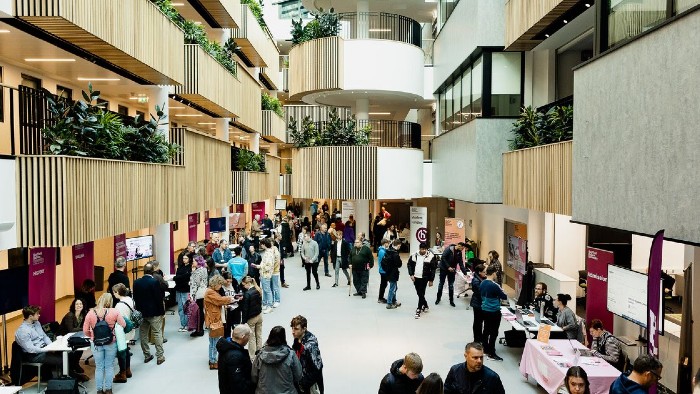
Find out more at our postgraduate open days. Book now for your place.
Accredited by

Health and Care Professions Council, the (HCPC)
This course is accredited by Sheffield Hallam University and approved by the HCPC.
How you learn
The course is designed to promote a critical and proactive approach to learning, which will enable you to become an effective and autonomous practitioner. There is a mixed mode of experiential and theoretical learning and teaching adopted in this programme. You are expected to engage fully in the learning process and in some of the modules you will learn with, from and about students from other health and social care courses in the School of Health and Social Care as part of the integrated curricula. This approach will ensure you have strong roots in your chosen profession of art therapy.
This approach will ensure you have a strong identity as an art therapist but are also able to deliver person centred care with an understanding of service integration and working within a multidisciplinary team to support the person's journey through health and care services.
The focus of the integrated curricula will prepare you for working in an integrated working environment with multidisciplinary teams and organisations working effectively together to enhance the quality of care to the service user. These attributes will enhance employability not only for graduate employment, but will support career progression to senior positions within the NHS, social care, third sector, education and private organisations.
A detailed induction programme aims to facilitate students’ transition into studying at Masters level and introduces students to a range of support mechanisms to which they have access within the art therapy team and across the University.
You will experience a blended approach to learning and teaching both on campus and in practice placements including:
You learn through
- art-making in fully-equipped learning spaces
- a mix of individual and group sessions
- experiential creative groups
- workshops
- placements
- field trips where available, such as visits to talks and exhibitions
- practice-based learning
Alongside art-making you’ll learn about client-centred approaches in psychotherapy – enabling you to use models to adapt to different service settings. You’ll experience an integrated placement, which runs throughout the course. You’ll also have access to specialist support services to help with your personal, academic and career development.
Key themes
The course offers a structured progression of academic and practice experience. You will develop a critical, evidenced based and proactive approach to learning, enabling transition into an effective and autonomous therapist. The course will reflect the cultural diversity within healthcare and practice, identifying global perspectives of health and inequality through a range of inclusive learning and teaching approaches to delivery of content.
The teaching is based around the development of the key transferable skills you need to become a qualified art psychotherapist. The course is designed to promote independent structured learning leading to autonomous practice upon qualification.
Employability and associated skills form a continual feature throughout this programme. There is a firm belief that employability is important throughout the engagement on the course but in the final year the modules have a strong focus on the transition to practise.
Along with practice learning experience, these key modules will help you to maximise learning, skill acquisition, and professional and behavioural attributes required for employment The focus of integrated curricula will prepare you for working in an integrated working environment with multidisciplinary teams and organisations working effectively together to enhance the quality of care to the service user.
These attributes will enhance employability not only for graduate employment, but will support career progression to senior positions within the NHS, social care, third sector, education and private organisations.
Course support
You will be supported in your learning journey towards a professional practice in a sector that you want to work in. These include:
- Access to specialist support services to help with your personal, academic and career development.
- Access to our Skills Centre with one to ones, webinars and online resources, where you can get help with planning and structuring your assignments.
- Practice based learning in placement settings that meet your development aspirations.
Applied learning
Your placement is an essential and valuable part of your course – key to the development of your skills and personal resilience as an art therapist. Placements are integrated throughout the full-time route over two days a week. They’re provided across different sectors and onsite placement mentors will support you. Alongside placement you will be part of a student supervision group with a HCPC registered art therapist. Both Individual and group supervision will facilitate learning through reflection on practice with peer support.
Practice placement learning provides preparation and practice in a variety of settings (NHS, third sector, education) Practice placements provide an opportunity to initially observe but then apply, analyse and reflect on art therapy approaches then discuss with experienced art therapists, and members of the wider interprofessional team.
This gives you valuable work experience to prepare you for your future career and allows you to graduate with applied professional knowledge of art therapy and practice experience skills to add to your CV.
To complement your learning experiences, you have access to various support activities, resources, employer events and opportunities from your Careers & Employability Team to ensure you make the most of your work experience opportunities during your Masters degree.
Work Placements
Placement is an integral part of the course and this is integrated throughout both the part-time and full-time routes. Placements are usually located in a setting that is within manageable distance from your where you live. You will have a 2 day per week placement (Full time students) or a 1 to 1.5 days per week placement (Part time students). Placement starts towards the end of April in year one for full-time and part-time students begin placement at the beginning of year 2.
Modules
Important notice: The structure of this course is periodically reviewed and enhanced to provide the best possible learning experience for our students and ensure ongoing compliance with any professional, statutory and regulatory body standards. Module structure, content, delivery and assessment may change, but we expect the focus of the course and the learning outcomes to remain as described above. Following any changes, updated module information will be published on this page.
Year 1
Compulsory modules
This module focuses on the central role of the therapeutic relationship in art therapy/art psychotherapy. You will develop personal reflection and professional reflexivity relevant to client work and group collaboration. The module integrates experiential learning with theoretical understanding.
On this module you will:
- Experience and evaluate art-making as a psychotherapeutic process expressing perception, feeling, and thought.
- Explore interpersonal and intrapersonal dynamics within individual, group, and organisational settings.
- Understand the interwoven relationship between theory and practice in therapeutic contexts.
You’ll study topics such as:
- Psychological Impact of Art-Making
- Understanding how creative processes affect emotional and psychological states.
- Reflexive practice and Experiential Learning
- Using self-awareness and critical reflection to inform therapeutic engagement.
- Boundary Setting
- Establishing and maintaining professional and therapeutic boundaries.
- Visual Image Making with Different Media
- Engaging with diverse materials to support client expression.
- Relationships in Therapy
- Examining dynamics within the therapeutic relationship, including trust and containment.
Placements are a core component of the training programme, providing a minimum of 85 days (637.5 hours) of practice-based learning and at least 100 hours of face-to-face art therapy with service users individually or in groups. You may complete two placements to achieve the days required. In the first placement, you will apply theoretical and practical learning from modules such as Theoretical Approaches to Art Therapy, Contextualising Art Therapy practice, and Creative Studios. You will engage in inter-professional collaboration, contribute to multi-disciplinary team discussions, and use a client-centred approach to co-create formulations that guide therapeutic goals. Communication is adapted to support co-production and promote equality. Regular supervision supports your clinical development and enhances your reflective practice and self-awareness. The module promotes professionalism in line with HCPC standards, requiring adherence to mandatory training and organisational policies. A mid-point placement review supports your critical reflection, identifying your strengths and areas for development, with action plans used to guide ongoing professional growth and help you develop a confident professional identity.
The aim of this module is to enable you to apply knowledge of research theories, including epistemology, and methods in order to critically evaluate research paradigms and evidence for practice. It will enable you to develop a critical understanding of research approaches, principles and processes that underpin research activity in the workplace and address the ethical dilemmas and organisational complexities of undertaking practice-based research.
Indicative content:
- Research paradigms
- Research context
- Research Question Development ·
- Research methods
- Systematic literature review
- Data collection
- Methods of data analysis
- Ethics and research governance Service user involvement in research
- Inclusive perspectives of research
- Proposal development
This module offers a critical overview of the theories underpinning art therapy/art psychotherapy practice, while examining the broader social, political, economic, and organisational contexts in which therapy occurs. It integrates psychological theory with the knowledge and skills required to meet HCPC Standards of Proficiency (2023) and Conduct, Performance and Ethics (2016). You will apply and adapt theory ethically within supervised placements, considering service users’ lived experiences and diverse settings.
You will:
- Explore and apply art therapy theory to meet varied client needs
- Adapt and articulate therapeutic approaches across practice contexts
- Advocate for the therapeutic value of art and communicate this to professionals
You’ll study topics such as:
- Psychotherapeutic theories and the therapeutic relationship
- Ethical practice and trauma-informed approaches
- Developmental and diagnostic models
- Imagination, play, and symbolism in art therapy
- Theories of practice and assessment
- Practical therapeutic skills
- Public health, lifestyle, and the bio-psychosocial model
- Professionalism, policy, and inclusive healthcare practice
Final year
Compulsory modules
Placement B enables you to build on your experience within a health, social care, or other setting, developing your skills and confidence as art therapy practitioners. Through direct work with service users, you will strengthen professional practice, contribute to the wider team, and develop your professional identity. For part-time students, this 2nd placement begins in January of your third and final year, with a minimum commitment of one day per week. It may take place in a new organisation or continue in the same setting as Placement A. Each placement day mirrors a standard working day, beginning with induction and gradually progressing to a small caseload. Time is also dedicated to reflective practice, supervision, note-writing, and team communication. Placements are reviewed at the mid-point and are approved and quality assured by the Faculty, meeting professional accreditation requirements.
This module will enable you to develop and conduct an in depth investigation of a topic that challenges and contributes to your area of professional practice. It provides the opportunity to engage in and apply an understanding of research methods and demonstrate your ability to work with relative autonomy in undertaking a sustained, in-depth piece of independent learning, disseminating findings to your professional community
Indicative content:
- Creating and contributing to research and evaluation for practice
- Application of approaches to research, research methods including improvement and evaluation methodologies
- Project planning
- Data Analysis & Interpretation
- Data Management
- Dissemination of findings
- Challenges in applying study outcomes to practice
- Addressing inclusivity in your research process.
This module enables you to critically reflect on and evaluate the key components of integrated health and social care required to effectively support service users, carers and their families who have complex health and care needs.
You’ll learn through content linked to the case studies which are used to frame the module. This will include specific interventions related to physical and psycho-social challenges in addressing complex needs of patients with acute and long term conditions across a range of delivery settings in which you will work with other disciplines. Other elements of content will address the following:
- Co-morbidity
- Policy and legislation
- Care pathways
- Clinical reasoning
- Integrated care and advanced practitioner roles
- Leadership
This module develops your knowledge and understanding of art therapy practice in meeting contemporary mental health challenges.
You will use both conventional study and experiential learning to study the following topics:
- Adapting art therapy to different contexts: e.g., health, education, community, social care
- Combining mental health and art therapy research for work alongside clients with different experiences: e.g. a psychosis diagnosis, trauma, or health inequalities
- Service-user movements and socio-economic stressors on services and colleagues
- The development of your cultural knowledge for practice (including using popular culture, mixed media, stories, etc.)
- The development of approaches to individual and group therapy is consolidated using supervision groups
Future careers
This course prepares you for a career in:
- Hospital and community NHS services for adults, children and families
- Working with physical, mental health issues and learning disabilities
- Educational art therapy in schools
- Bereavement support
- Art Therapy research
- Social enterprises and charities
- Services for children and young people, and families
- A range of community and social service settings
- Third sector services
- Mental Health preventative work
Previous graduates of this course work for:
- Sheffield Health and Social Care NHS Trust
- Other UK NHS Trusts
- Spectrum People, Wakefield
- Ashgate Hospice Care, Chesterfield
- Psychotherapy Manchester CIC
- Brantwood School, Sheffield
- Private practices
Successful completion of this programme will enable you to work with people across the widening range of wellness spectrum and through the lifespan. As well as working within established traditional statutory services, Art therapists are working within a variety of settings focusing on enabling individuals and communities to engage with art in a therapeutic way, to establish ways of living that are personally meaningful, sustainable and which support people's aspirations.
Equipment and facilities
The teaching spaces are equipped with a variety of creative supplies, including art materials and facilities for digital art making. There’s also access to support a range of art-making through alternative means – such as clay sculpture, photography or clay animation.
On this course you could have opportunities to work with
- Creative art spaces
- Reflexive art making
- Environmental art
We'll also notify you about relevant online events and digital gallery exhibitions.
We're investing £250 million in new facilities over the next five years. This means students have access to new, innovative, and flexible spaces to study and relax in, making their student experience even better.
Learn more about your department
Health and Social Care Facilities Tour
Learn what it's like to study health and social care at our Collegiate Campus from our adult nursing student Alex.
Where will I study?
You study at Collegiate Campus through a structured mix of lectures, seminars and practical sessions as well as access to digital and online resources to support your learning.
Collegiate campus
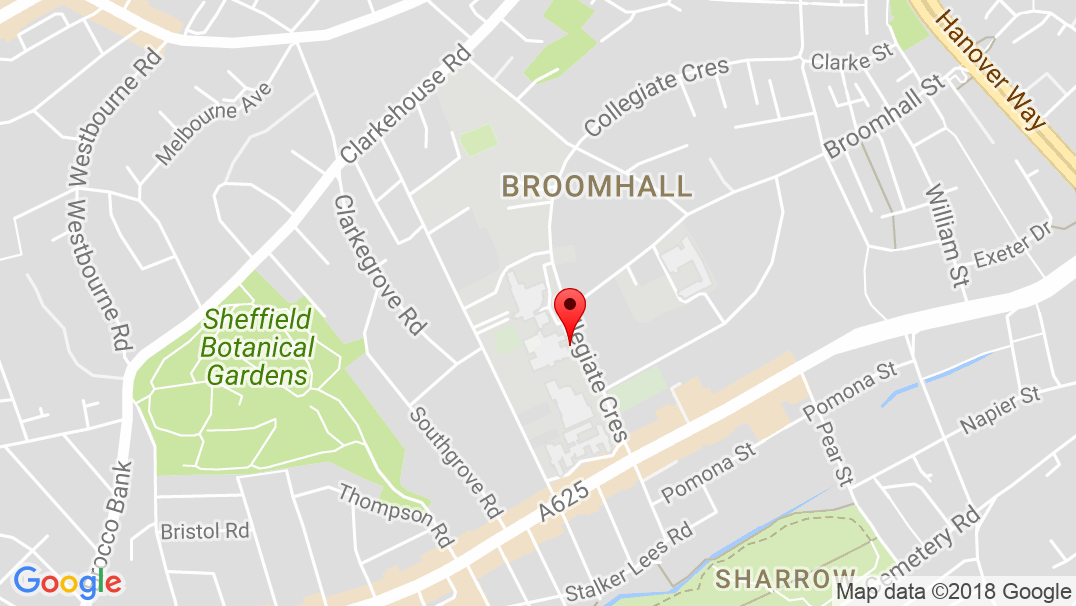
Collegiate Campus can be found just off Ecclesall Road, a bustling student district.
Collegiate Campus map | Campus facilities
Collegiate library
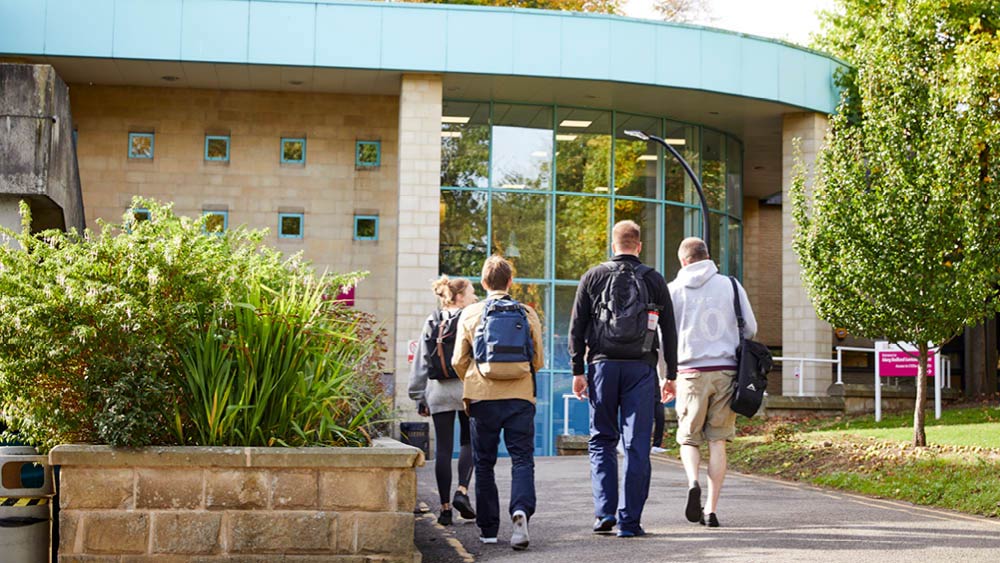
Collegiate Library can be found just off Ecclesall Road. It's open 24 hours a day, every day.
Learn moreEntry requirements
All students
To apply for the course, you must normally have a degree (2:2 or above) in a relevant area, such as Fine Art, Arts Therapies, Humanities, Psychology or Social Sciences.
Whatever degree you have, all applicants are expected to have a portfolio of current art work at the time of application that demonstrates a continuing interest in art making. You will be asked to submit examples of artwork as part of the application process once your initial application has been reviewed.
Applications from professionals working in caring professions such as Social Workers, Nurses and Teachers, are also welcome.
All applicants need to show evidence of relevant experience in a related field. We are specifically looking for relational skills that are transferable to the role of therapist and support of vulnerable service user. You will need a minimum of 1 year's full time experience in relational work. Or the equivalent of 1 year full time over a longer period.
If English is not your first language you will need an IELTS score of 7.0 overall and a minimum of 6.0 in all skills, or a recognised equivalent. Please note that the Health & Care Professions Council (HCPC) require IELTS 7.0 with no element below 6.5 for registration.
Helping your application succeed
Experience
Experience of interacting with members of the public from a range of backgrounds in different settings is essential when applying to a health or social care course. This is so you will have an understanding of the diversity of the population who access health and social care. It is important to be able to understand and explain how your experiences relate to the activities and qualities which are required for the profession at your interview.
Reference
You must provide a reference from a current or recent employer or educational institution with your UCAS application.
Interview
If you are shortlisted, we will invite you to an online interview.
View our interview guidance to ensure you understand the interviews process and how you can prepare for this.
Non-academic entry requirements
Before enrolling you must complete all the professional requirements that are mandatory as part of entry for the course:
Occupational Health Screening
Satisfactory medical clearance, by completion of a health screening assessment, will be a condition of your offer and you cannot enrol on your course without it. This occupational health screening will be provided by the University free of charge and ensures that you meet the medical fitness to train in your profession as per professional and regulatory body requirements and the Higher Education Occupational Practitioners (HEOPs) standards.
As part of this assessment, you are expected to provide all relevant, truthful and accurate information to ensure a safe environment for yourself and patients/service users
If there is any change to your health during your course, you must notify the University immediately so that we that we can undertake an assessment/reassessment to ensure you continue to meet the medical fitness to train in your profession.
Immunisations
All students must comply with the immunisation requirements of the programme in line with the Department of Health (DoH) Green Book standards / current guidelines or equivalent evidence-based standards, which must be met to undertake placements and continue on the course. The NHS updates the list of vaccinations required and these may change over the course of your programme of study.
To remain enrolled, you must complete your full immunisation programme as outlined in the Universities Immunisation Policy.
Self-Declaration
Completion of a Sheffield Hallam University Suitability Self-Declaration form will be condition of your offer and you cannot enrol without completing it. You must fully declare the following information:
- Unfiltered criminal convictions, cautions, reprimands or warnings. This includes convictions considered as ‘spent’ as an Enhanced DBS Criminal record check (required for this course) will show. For further information on unfiltered offences and Disclosing your criminal record please see the Disclosure and Barring Service website and refer to information on Unlock.
- Involvement in disciplinary proceedings during paid or voluntary employment or education establishments.
- Involvement with safeguarding proceedings, social services or related organisations.
- If you have ever been removed from another programme as a result of your behaviour or would have been removed if you had not left the programme.
Disclosure Barring Service (DBS)
Completion of an Enhanced DBS criminal record application will be a condition of your offer. This is a legal requirement for anyone involved in contact with children or vulnerable adults engaging in regulated activity. This check will be provided by the university free of charge. You will need to present valid identity documents as part of the application process. Please refer to the ID checking guidelines for further information.
Positive Disclosures will be reviewed by the Fitness to Practise Operational Group and/or Criminal Records Consultative Panel in conjunction with your Self-Declaration form.
You must inform the University immediately of any changes to your criminal record after your DBS certificate is issued so that we can consider the change and confirm whether you remain suitable to continue your application/studies.
Overseas Criminal Record Check
Applicants who have been resident outside of the UK for 12 months or more (whether continuously or in total) in the last 10 years, while aged 18 or over must provide an overseas criminal record check. Further information on obtaining an overseas criminal record check.
Mandatory Training
Students must complete mandatory training prior to attending placement. Failure to complete this training may result in delayed progression to the next level of study or withdrawal from the course.
Disability support
We strongly recommend that you tell us about any long term health conditions, learning difficulty or disability you may have. This is so we can assess whether we can deliver the course in such a way that you can meet the Health and Care Professions Council standards of proficiency and take part without disadvantage both in University and on placement.
You can contact our University student support staff and explore any issues you may have.
The Disability Disclosure booklet provides information for students on health and social care courses and will help you understand the importance of disclosing your disability at the earliest possible stage. This is so you can be assessed for the support you may require to succeed on the course.
Additional information for EU/International students
If you are an International or non-UK European student, you can find out more about the country specific qualifications we accept on our international qualifications page.
For details of English language entry requirements (IELTS), please see the information for 'All students'.
Fees and funding
Home students
Our tuition fee for UK students starting full-time study in 2027/28 is £18,010 for the course. Whether you are studying the full time route (2 years) or the part time route (3 years) the fee’s are divided equally between your years of study.
If you are studying an undergraduate course, postgraduate pre-registration course or postgraduate research course over more than one academic year then your tuition fees may increase in subsequent years in line with Government regulations or UK Research and Innovation (UKRI) published fees. More information can be found in our terms and conditions under student fees regulations.
International students
Our tuition fee for International/EU students starting full-time postgraduate study in 2027/28 is £24,260 for the course. The tuition fee displayed above is for the full course. If the full course is more than one year in duration, the fee will be divided into annual payments which will then be rounded. This may mean the total fee you pay is slightly higher than the fee stated above. If you take a break in study or have to re-take part of the course, you may also be charged an additional fee and will be notified of this at the time. For information the tuition fee per year for the course in 2027/28 is £12,130.

Scholarships and financial support
Find information on scholarships, bursaries and postgraduate student loans.
International scholarships up to £3000 ›
Alumni scholarships up to £2000 ›
Postgraduate loans for UK students ›
Additional course costs
The links below allow you to view estimated general course additional costs, as well as costs associated with key activities on specific courses. These are estimates and are intended only as an indication of potential additional expenses. Actual costs can vary greatly depending on the choices you make during your course.
General course additional costs
Additional costs for Health and Social Care (PDF, 371.2KB)Legal information
Any offer of a place to study is subject to your acceptance of the University’s Terms and Conditions and Student Regulations.