
Everything you need to know...
-
Tuition fees
Home: £11,490 for the course
International/EU: £19,530 for the course -
Course duration
1 Year
-
Study location
-
Start date
September 2027
Course summary
- Gain practical skills to tackle global human rights challenges.
- Explore key topics like climate justice, refugee rights and gender equality.
- Engage in applied projects through real-world opportunities.
- Learn from leading practitioners and interdisciplinary experts.
This masters equips you to advance human rights and social justice globally. Delivered by the Institute of Law and Justice and supported by the renowned Helena Kennedy Centre for International Justice, we’ll combine rigorous academic learning with real-world application. When you graduate you’ll be well-prepared for roles in advocacy, policymaking, NGOs and global organisations.
Come to an open day
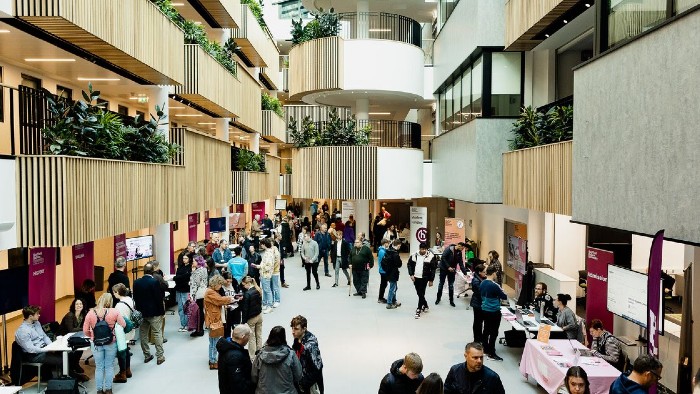
Find out more at our postgraduate open days. Book now for your place.
How you learn
Our MA in Global Human Rights and Social Justice in Practice blends academic theory with practical application, focusing on ethical and inclusive practices informed by the latest research and industry developments. You’ll explore critical topics – from environmental sustainability to forced migration – while developing practical expertise through hands-on projects and applied learning opportunities.
We use a dynamic and interactive approach to teaching and learning, designed to help you develop both critical thinking skills and practical expertise. The course blends theory with hands-on learning and real-world human rights dilemmas – from case-based learning, simulations and advocacy exercises to applied research opportunities through our Justice Hubs.
Our teaching philosophy emphasises active, experiential and reflective learning, preparing you to work in diverse and evolving professional environments.
You learn through:
- in-person teaching
- remote learning for added flexibility
- case studies and group projects simulating real-world scenarios
- guest lectures from global experts, activists and policymakers
- student-led presentations to develop communication and advocacy skills
- independent research
- applied learning through practical in-module activities
- written coursework
- a dissertation or final project
Key themes
The course offers a comprehensive exploration of human rights, beginning with the foundations of human rights and progressing to contemporary issues in global human rights and social justice. You'll delve into critical topics such as gender, equality and discrimination – as well as the pressing challenges surrounding refugee rights and forced migration.
The curriculum also emphasises the importance of environmental rights, sustainability and climate justice, reflecting the growing global focus on these interconnected areas. Additionally, the intersection of global health and human rights is a key area of study, providing insights into how health policies and practices impact human rights worldwide.
To put theory into practice, you’ll undertake an applied project or dissertation, allowing you to focus on a topic that resonates with your interests and aspirations.
Our teaching philosophy is rooted in active, collaborative and reflective learning. This approach enhances your critical thinking skills while applying your knowledge to tackle complex human rights challenges in real-world contexts, ensuring your learning experience is both meaningful and impactful.
Course support
You’ll be supported in your learning journey towards highly skilled, graduate-level employment through a number of key areas. These include:
- access to a dedicated academic adviser for personalised guidance
- regular formative feedback to support your progress
- detailed feedback on summative assessments
- career advice and networking opportunities through the Careers & Employability Service
Applied learning
Live Projects
You’ll work on real-world human rights projects through the Helena Kennedy Centre for International Justice and the Justice Hubs. These initiatives allow you to collaborate with experts, advocacy groups and external partners to make a tangible impact.
The sorts of projects the Centre works on include gender-based violence, global health, environmental rights and sustainability, as well as working with refugees.
Networking Opportunities
Engage with a network of key professionals, researchers and industry leaders. Attend careers events, guest lectures, seminars and speaker events delivered by practitioners who are shaping the future of human rights. These opportunities provide valuable industry insights and help you build connections.
Your course leader

Madhumita Pandey
Senior Lecturer in Criminology and Gender Justice Hub LeadDr Madhumita Pandey Senior Lecturer in Criminology Internationalisation Lead Sheffield Hallam University staff profile.
Modules
Module and assessment information for future years is displayed as currently validated and may be liable to change. When selecting electives, your choices will be subject to the core requirements of the course. As a result, selections may be limited to a choice between one of two or more specified electives in some instances.
Final year
Compulsory modules
This module introduces you to pressing contemporary issues in human rights and social justice, including topics such as refugee rights, gender justice, environmental rights, and global health rights. Through a combination of theoretical and practical approaches, you will develop an understanding of these topics and their relevance to human rights.
You’ll study topics such as:
- Students will explore the legal, policy and ethical frameworks that underpin each issue
- Examine the challenges that hinder the full and effective implementation of laws and policies
- Analyse the current policies and practices in these areas and consider potential solutions to advance the protection and promotion of human rights globally
This module provides students with foundational knowledge of human rights so participants can navigate UN treaty systems, their development and their domestic implementation.
The module ensures all students on the degree can accurately identify when HRs legal obligations exist and limitations that may affect their implementation. This knowledge is essential for the rest of the degree.
Seminars adopt a combined lecture/student-centred approach where students present readings and cases to help further their understanding.
You’ll study topics such as:
- International Human Rights Law principles
- Treaty law
- Evolution of human rights law
- Exceptions and limitations to implementation
- Thematic application and controversies
Elective modules
This module is designed to provide you with an opportunity to apply the knowledge and skills gained throughout the course to a practical, real-world issue in the field of human rights and/or social justice. Through this module, students will develop a critical understanding of human rights and social justice issues, engage with stakeholders, and design and implement a project aimed at promoting and protecting human rights/social justice.
You’ll study topics such as:
- Identifying a human rights issue
- Designing a project and project management skills
- Implementation of the project in collaboration with either a Justice Hub or external organisation
- Evaluation and Reflection: Upon completing the project, students will evaluate its impact and effectiveness. They will reflect on the lessons learned and identify opportunities for future work
- Development of transferable skills such as stakeholder engagement, teamwork, and professional communication to enhance employability in human rights and social justice sectors
This module offers students the opportunity to conduct independent research on a topic related to their chosen field of study. Students will be expected to undertake a thorough literature review, critically analyse relevant legal frameworks and theories, and apply appropriate research methodologies to gather and analyse data.
The module aims to develop students' research and analytical skills, as well as their ability to communicate their findings effectively. Students will receive guidance and support from their academic supervisors throughout the process and will be expected to produce a high-quality dissertation.
The module aims to provide knowledge and skills on applying human rights, environmental rights and principles to the human interference with nature, climate and planet, with particular attention to the disproportionate effects of climate change on ecosystems and human rights, thus enabling students to critically assess climate and environmental action by state and non-state actors and to contribute to climate and environmental advocacy.
You’ll study topics such as:
- Environmental rights and principles
- Sustainability and human rights
- Human rights and climate change, including international frameworks, sustainable development, strategic litigation, and impact on vulnerable groups
- Comparative cross-jurisdictional approaches to human rights, climate change and the environment
Module Aim:
This module will equip students with knowledge of human rights relevant to achieving gender equality and eliminating discrimination and women. Specific thematic issues will be explored to identify the development of particular rights, challenges that hinder their full and effective implementation, and help students develop recommendations for their advancement.
Indicative content:
-
International Human Rights Law principles and subsequent instruments
-
Human Rights Act and/or domestic implementation of equality principles
-
Contemporary thematic issues affecting women's equality will also be examined, such as sexual and reproductive health rights, violence against women and girls, and access to justice
This module will equip students with a general knowledge of global health governance and human rights and good practices in human rights-based approaches to healthcare policies.
You’ll study topics such as:
- Global Health governance and politics
- The Right to Health in International Law, Regional systems and, national constitutions
- Human Rights and Public Health Emergencies: Rights limitations, Global Health Security and epidemics/pandemics
- Global Health and Non-communicable Diseases
- Access to health and strategic litigation
- Access to drugs, intellectual property and the right to science
- Global Health and international cooperation
- Global Health and migrants
This module explores contemporary refugee related issues through the prism of the right to refugee family reunion and wider family migration. The module keeps pace with new developments in policy, practice and legislation and encourage detailed debates on related matters such as hostile environment and how human rights relates to international protection.
You’ll study topics such as:
- Analysis of international and domestic instruments pertaining to refugee protection
- A critique of a wide range of media portrayal of refugees
- The application process for refugee family reunion and the toll it takes on all parties involved in it
- Live case studies
Future careers
This course prepares you for a career in:
- human rights organisations
- policy or development work
- non-governmental organisations (NGOs)
- local and central government services
- research and development organisations
- further studies and academia
Aligned with the UN Capability Framework, this degree equips you with the tools needed to succeed in the competitive job market and make a meaningful impact in human rights advocacy and policymaking.
Equipment and facilities
You’ll have access to modern, well-equipped teaching spaces and state-of-the-art facilities. Our £100m investment includes 24-hour libraries and student-designed study spaces to support your learning.
On this course, you’ll benefit from:
- Blackboard, our Virtual Learning Environment (VLE) for flexible and remote learning
- the renowned Helena Kennedy Centre for International Justice and the Justice Hubs, collaborating on impactful projects
- Hallam Facilities Online, including Study Skills, Library Gateway, and student support services
Our facilities are designed to enhance your learning experience and ensure your success in this field.
Where will I study?
You study at City Campus through a structured mix of lectures, seminars and practical sessions as well as access to digital and online resources to support your learning.
City Campus
City Campus is located in the heart of Sheffield, within minutes of the train and bus stations.
City Campus map | City Campus tour


Adsetts library
Adsetts Library is located on our City Campus. It's open 24 hours a day, every day.
Explore the libraryExplore Redmires
Explore Redmires
Study in the new Redmires building – home to law, social sciences and architecture at Sheffield Hallam University.
Entry requirements
All students
A 2:2 or above in a degree in a relevant subject that includes learning related to human rights, for example from a legal, social science or international relations degree OR at least three years relevant professional experience.
If English is not your first language you will need an IELTS 6.5 score with a minimum of 6.0 in writing and 5.5 in all other skill areas or equivalent.
If you do not have such academic qualifications we may consider your application individually, based on your personal, professional and work experience, and other formal qualifications. You may also be able to claim credit points which can reduce the amount of time it takes to complete your qualification at Sheffield Hallam. Find out more
Additional information for EU/International students
If you are an International or non-UK European student, you can find out more about the country specific qualifications we accept on our international qualifications page.
For details of English language entry requirements (IELTS), please see the information for 'All students'.
Fees and funding
Home students
Our tuition fee for UK students starting full-time study in 2027/28 is £11,490 for the course. The tuition fee displayed above is for the full course. If the full course is more than one year in duration, the fee will be divided into annual payments which will then be rounded. This may mean the total fee you pay is slightly higher than the fee stated above. If you take a break in study or have to re-take part of the course, you may also be charged an additional fee and will be notified of this at the time.
If you are studying an undergraduate course, postgraduate pre-registration course or postgraduate research course over more than one academic year then your tuition fees may increase in subsequent years in line with Government regulations or UK Research and Innovation (UKRI) published fees. More information can be found in our terms and conditions under student fees regulations.
International students
Our tuition fee for International/EU students starting full-time study in 2027/28 is £19,530 for the course. The tuition fee displayed above is for the full course. If the full course is more than one year in duration, the fee will be divided into annual payments which will then be rounded. This may mean the total fee you pay is slightly higher than the fee stated above. If you take a break in study or have to re-take part of the course, you may also be charged an additional fee and will be notified of this at the time.

Scholarships and financial support
Find information on scholarships, bursaries and postgraduate student loans.
International scholarships up to £3000 ›
Alumni scholarships up to £2000 ›
Postgraduate loans for UK students ›
Additional course costs
The links below allow you to view estimated general course additional costs, as well as costs associated with key activities on specific courses. These are estimates and are intended only as an indication of potential additional expenses. Actual costs can vary greatly depending on the choices you make during your course.
General course additional costs
Additional costs for Sheffield Institute of Law and Justice (PDF, 243.7KB)Legal information
Any offer of a place to study is subject to your acceptance of the University’s Terms and Conditions and Student Regulations.