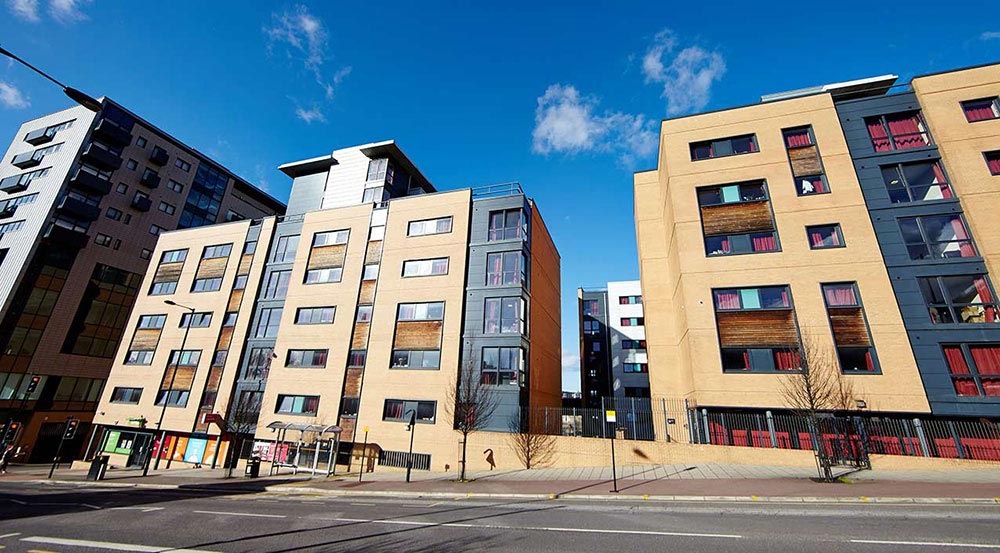
Everything you need to know...
-
Tuition fees
Home: £10,050 per year
International/EU: £18,900 per year -
Course duration
4 / 5 Years
-
Study location
-
Entry requirements
-
Course code
BB07
-
Start date
September 2027
-
Placement year available?
Yes
Course summary
Want to explore the frontiers of physics and contribute to real scientific discoveries?
From black holes to the Higgs Boson, you’ll study a range of classical and modern physics, using mathematical and analytical tools to solve the problems you encounter. The skills you’ll develop are some of the most versatile of any subject, preparing you to excel in the world of physics and beyond.
- Be a physicist from day one, using key principles to solve real-world problems.
- Gain research experience across a variety of experimental and investigative projects.
- Specialise in anything from astro to particle physics.
- Use physics creatively to discover new things.
- Apply theory to hands-on experiments, placements, projects and modelling.
This integrated Masters degree runs parallel to the BSc (Honours) Physics course and gives you an extra year to develop specialist knowledge. You’ll enhance your research experience, while gaining advanced technical and professional skills to increase your future job prospects.
More ways to study this course
If you don't meet the entry requirements for this course, or you’d like extra preparation before starting degree-level study, we recommend you join our integrated foundation course.
Employability
95% of UK graduates are in work or further study 15 months after graduating (2023/24 Graduate Outcomes Survey).

Come to an open day
Discover our TEF Gold rated teaching and see why students voted Sheffield Hallam a top five university in England at the prestigious Whatuni Student Choice Awards.
How you learn
This Physics degree connects theory to real-world applications and dives into ongoing research and industry trends. You learn through lectures, tutorials and sessions to prepare for assessments. Through hands-on lab experience, real-world projects, modelling, simulation and teamwork, you’ll gain transferable skills for physics-related careers.
Develop practical physics skills
On this course you can gain real-world physics experience from year one. You could:
- explore tsunami modelling, supernova shockwaves and frictionless transport
- identify cutting-edge techniques to examine crack penetration in industrial concrete
- research physics alongside companies like Mott MacDonald, Glass Technology Services and EE Ingleton Engineering
- use material research techniques to find fraudulent artefacts in museum collections
- develop materials suitable for 3D printing in microkelvin environments
Find out more in the practical learning section below.
Key topics
The course covers an extensive range of topics – including quantum physics, atomic structure, astrophysics, cosmology, nuclear and particle physics, thermodynamics and statistical mechanics, and advanced computational physics.
During the course, you’ll jump into atomic, nuclear and particle physics – exploring the universe through astrophysics, the infinitesimal, quantum physics and the structure of matter. You’ll also hone your skills in Python programming and research, collaborating with second and final-year students. We’ll then explore quantum tunnelling, dark matter and how to apply electromagnetism, special relativity and thermodynamics to real-world problems.
In your final year, you’ll explore advanced topics in physics and undertake an independent research project.
Learn from the latest research
Our dedicated teaching team has extensive knowledge and expertise in their respective fields, providing exceptional support and guidance throughout your academic journey. Our dynamic teaching connects you with cutting-edge research and industry innovation. You’ll also complete a year-long research project – such as examining the topology of black holes, how superfast magnetic switching materials can treat cancer, or gathering data on nuclear transitions at the European Organization for Nuclear Research (CERN).
Assessments that boost your CV
You’ll be assessed in ways that prepare you for your future career, with evidence you can take into interviews. Throughout the course you’ll prove you can:
- use x-ray diffraction and a scanning electron microscope
- design, build and characterise a telescope to analyse variabilities in stellar objects
- apply knowledge, creativity, design and critical analysis to real-world projects
- run a research project in a current area of physics
- gather data at external research institutes
Supporting your career
We’ll support you with personal, academic and career development services, such as:
- Skills Centre one-to-ones and online resources, where you can get help with planning and structuring your assignments
- digital skills, career readiness and graduate attributes
- finding, applying and interviewing for work experience opportunities
- live projects, learning in simulated environments and networking opportunities
Applied learning
Industry projects
Our physics course prioritises the practical application of knowledge and provides opportunities for you to interact with real research and industry projects. These projects support you in applying for a year-in-industry work placement, and help you understand how physics is used in commercial settings.
You’ll have the chance to collaborate on live projects that involve real-world physics challenges from industry partners. In previous years students have collaborated with companies such as Mott MacDonald, identifying cutting-edge techniques to examine crack penetration in industrial concrete, and Chase Cryogenics, supporting their development of materials suitable for 3D printing in micro kelvin environments.
Placements and work experience
You’ll have the opportunity to arrange a year-long work placement after the second year of this course. This gives you valuable work experience to prepare you for your future career – and allows you to graduate with an Applied Professional Diploma to add to your CV.
We’ve designed your course to give you the knowledge and confidence to secure and succeed in your placement. You’ll have access to various support activities, resources and employer events from your Careers & Employability Team – helping you make the most of your work experience opportunities.
Previous students have secured placements at businesses such as Rutherford Appleton Laboratories, HSBC, Covance, the RAF and Babcock International.
Field trips
You’ll go on field trips and site visits to understand how your academic experience is used in professional settings, from local observatories right through to visiting CERN in Switzerland.
Competitions
You’ll have the opportunity to put your skills into practice through student competitions. You could join Hallam Rocketry to develop a liquid rocket engine for the Race2Space National Propulsion Competition and take part in national and international competitions to design, build and launch rockets.
Employer and industry connections
We host networking events and platforms where you can connect with physics professionals, expand your professional network and explore potential career paths. Guest speakers from industry and academia across Europe deliver engaging lectures – from the physics of dragonfly wings to how to improve the performance of cloud storage data centres.
You’ll have the opportunity to attend scheduled events across the academic year and meet industry partners, employers, researchers and alumni. You'll also have the chance to attend alumni presentations where you can gain insights from previous students before you graduate.
Your course leader

Alex Crombie
Senior Lecturer in PhysicsAlex Crombie MPhys, MInstP holds degrees in physics and electronics. He teaches Professional Practice across all three years of the Physics course, along with Optics … Read more
Modules
Important notice: The structure of this course is periodically reviewed and enhanced to provide the best possible learning experience for our students and ensure ongoing compliance with any professional, statutory and regulatory body standards. Module structure, content, delivery and assessment may change, but we expect the focus of the course and the learning outcomes to remain as described above. Following any changes, updated module information will be published on this page. .
You will be able to complete a placement year as part of this course. See the modules table below for further information.
Year 1
Compulsory modules
Prepare to embark on a fascinating journey! This module traces the electrifying path from classical wave theory to mind-bending quantum mechanics along the way you will have to master the mathematics behind this journey, from cracking the code of Ordinary Differential Equations, through to using this to model quantum behaviour.
Then dive into the heart of matter with condensed matter physics, exploring interatomic forces, crystal structures, and the secrets of bulk properties. As you surf the waves of oscillations, you'll discover the profound connections between sound, mechanics, and quantum mysteries. Plus, develop practical research skills in our labs, where investigations await.
You’ll study topics such as:
-
The mathematical arts through differential equations, vector calculus, and linear algebra
-
The mysteries of condensed matter, from interatomic forces to thermal properties
-
The journey from sound waves to quantum wave mechanics, bridging classic and quantum worlds
-
Acquiring essential lab skills, including scientific conventions, ethical standards, error management, and hands-on investigations
-
Embarking on an exciting academic adventure, blending mathematics, condensed matter, quantum physics, and practical lab experiences
In this module, delve deep into the enigmatic realms of atomic and nuclear processes. Explore the heart of matter, unravelling atomic structures, radioactive mysteries, and nuclear reactions.
You’ll study topics such as:
-
The links between mathematics and programming, calculus, linear algebra, and mathematical functions
-
The atomic universe with insights into fundamental models, the periodic table, and nuclear models
-
Nuclear reactions, decay processes, and cutting-edge detection techniques
-
The Standard Model and beyond – how the strong, weak and nuclear forces give rise to the world as we experience it
You will be taught using lectures, tutorials and practical computer sessions.
This module helps you to discover the varied career prospects that await physics graduates. To give you the skills to be able to fulfil that outcome, we engage in student led projects alongside industrial partners where you will be required to use the entirety of your physics knowledge to be successful. We to dive deep into the skills essential for a successful career in physics and focus on learning strategies for securing coveted industrial placements. This module is your gateway to a dynamic future in physics.
You’ll study topics such as:
-
The process of research, from identifying a problem through to delivering its solution.
-
Essential professional skills for a successful career in physics.
-
Developing proficiency in project management, a crucial skill in the world of physics and beyond.
-
Engaging in open-ended projects in collaboration with industrial partners, gaining valuable practical experience.
-
How to go about acquiring an industrial placement including the skills need to find them and then successfully apply.
This module explores the captivating realm of astronomy and cosmology. You will embark on a journey through the vast universe, delving into celestial bodies, their formation, and evolution. You’ll also study the field of cosmology, investigating the Big Bang theory, dark matter, and dark energy, fostering a deeper appreciation for the wonders of the night sky and the universe's secrets.
You’ll study topics such as:
-
The physics of a stars
-
The interstellar medium and the birth and death of stars
-
The design and operation of telescopes
-
Galaxies, neutron stars, pulsars, and black holes
-
Tools for astronomy
Year 2
Compulsory modules
The realm of classical mechanics is foundational to our understanding of how the world works. In this module you will use the same skills that Newton grappled with to understand how we experience motion in our world. Which leads us to examine how Einstein changed this understanding with general relativity, and its immensely powerful impact on the description of the universe. We then use all these tools to describe the fundamental properties of how our galactic home functions including the enigmatic mysteries of dark energy and dark matter.
You’ll study topics such as:
-
Classical mechanics, uncovering the laws of motion, forces, and energy
-
Gravitation, understanding its impact on celestial bodies and planetary motion
-
Special and general relativity, where time, space, and gravity intertwine in extraordinary ways
-
How to represent astrophysical objects and processes mathematically
-
Dark energy and dark matter
This module takes us into the heart of quantum mechanics and electromagnetism. We’ll follow a journey, blending advanced mathematics, programming skills, and quantum phenomena. Dive deep into the quantum realm, where uncertainty reigns, wavefunctions describe molecules, and Schrödinger's equation rules absolute. Explore how quantum mechanics weaves its magic on the macroscopic world and impacts our everyday experience through the phenomena of electromagnetism. This module propels you into a quantum-powered world and gives you the skills to explore it further.
You’ll study topics such as:
-
Key concepts like the Uncertainty Principle, wavefunctions, and Schrödinger's equation
-
Quantum mechanics' impact on macroscopic features, from magnetism to semiconductors
-
Further mathematical proficiency, laying the foundation for a deeper understanding of physics
-
Electromagnetism and how to use Maxwell’s laws to solve problems
Thermodynamics can tell us about the operation of rockets, power plants, plants and even cell behaviour, but it is also much more fundamental - Thermodynamics tells us how the universe will end. Thermodynamics underpins much of what we study today, and an understanding of its processes allows insight into the elemental working of the universe. This is entwinned with the field of statistical physics; we can calculate with great accuracy the behaviour of a single particle, however real systems are normally composed of huge numbers of particles and exactly calculating the behaviour of the system as a whole in this way is impossible. We thus rely on statistical methods – powerful tools to work out group behaviour based on probabilities. Statistical mechanics gives us the tools to examine exotic states of matter and predict new ones. You will find you use the tools from this module across all other areas of physics.
You’ll study topics such as:
-
The foundational principles of thermodynamics: the Zeroth, First, and Second Laws
-
How Thermodynamics tells us about the future
-
The quantum realm with statistical mechanics, including the Kinetic Theory of Gases and the statistical basis of entropy
-
Uncovering the fascinating Maxwell-Boltzmann, Bose-Einstein, and Fermi-Dirac distributions
-
Decoding the complexities of statistical physics, providing insights into the behaviour of matter and energy
This module takes you beyond the classroom, equipping you with the skills and understandings to conquer the academic and professional worlds. You’ll be preparing you for life after your degree whether you want to become a Nobel Prize winner, teach others about the wonders of physics, or anything else. This module continues to support you landing coveted industrial placements, but also shows how theory and practice are interlinked through industry-led projects. you'll get to work with seasoned physicists as you use your own knowledge and skills to design experiments to solve real, industrial problems.
Alongside this we dive into enhanced lab work where you will have to develop innovative practical skills to answer unanswered questions and create your own research projects.
You’ll study topics such as:
-
Focusing on preparing for professional life post-degree, with a spotlight on securing industrial placements
-
Developing the ability to apply academic physics knowledge effectively in professional settings
-
Engaging in industry-led projects, gaining firsthand experience alongside experts and tailoring your skills
-
Designing experimental procedure and equipment and using them for problem solving
Year 3
Compulsory modules
Module aim:
The aim of this module is to enhance students’ professional development through the completion of and reflection on meaningful work placement(s).
A work placement will provide students with opportunities to experience the realities of professional employment and experience how their course can be applied within their chosen industry setting.
The placement will:
- Allow student to apply the skills, theories and behaviours relevant and in addition to their course
- Enable students to enhance their interpersonal skills in demand by graduate employers – communication, problem-solving, creativity, resilience, team work etc
- Grow their student network and relationship building skills
- Provide student with insights into the industry and sector in which their placement occurs
- Help student make informed graduate careers choices
Indicative Content:
In this module students undertake a sandwich placement (min 24 weeks / min 21 hours per week) which is integrated, assessed and aligned to their studies.
Their personal Placement Academic Supervisor (PAS) will be their key point of contact during their placement and will encourage and support students to reflect on their experience, learning and contribution to the organisation they work for.
To demonstrate gains in professional development, students will be required to share their progress, learning and achievements with their Placement Academic Supervisor and reflect on these for the summative piece of work.
Year 4
Compulsory modules
Building upon the foundation of 'Discovering Advanced Topics in Physics and its Applications,' this module allows you to continue to chart your own journey through the discipline of physics. Choose your passion, whether it's as an experimentalist, theoretician, or physics practitioner. Dive into cutting-edge topics, collaborating with active researchers, and tailor your studies to your chosen path. Master complex methods for solving differential equations, unravel the mysteries of tensors and relativity, and trace the footsteps of physics legends through history. Extend your quantum frontiers, harness advanced instrumentation techniques, and explore the realms of physical and biological modelling and much more.
This module allows you to:
-
Further your physics journey with advanced specialisation
-
Choose your path as an experimentalist, theoretician, or practitioner
-
Immerse yourself in cutting-edge topics alongside active researchers
-
Tailor your studies to your passion, from differential equations to quantum mechanics
Ignite your passion for physics and explore its depths in this specialised module. Dive into selected areas of your choice, working alongside cutting-edge researchers and utilising state-of-the-art equipment. Your final year becomes a space to you craft your unique curriculum. Delve into computational modelling, experimental physics, uncover the rich history of physics, and much more. This module is your gateway to shaping a future in physics that aligns perfectly with your interests and aspirations.
This module allows you to:
-
Deepen your physics knowledge and specialise in your chosen area
-
Collaborate with cutting-edge researchers and utilise state-of-the-art research tools
-
Tailor your final year curriculum to match your interests and needs
-
Explore diverse topics across the discipline of physics
-
Craft a future in physics that aligns with your passions
Your individual final year project is the apex of your academic journey, offering a platform to apply the wealth of knowledge and skills gathered throughout your degree to real-world linked problems. This module requires your creativity, problem-solving capabilities, and the ability to navigate new material independently in whichever field you choose to specialise in.
This module allows you to:
- Undertake in-depth research in a topic of your choosing
- The opportunity to work alongside cutting-edge researchers
- Create a body of work that can support you into further study, or work in a field that interests you
Develop solid foundations for undertaking a self-managed academic research project. On this module you will develop the skills and understanding you will need to complete your dissertation project to the highest level. Through lectures, guided reading and one-to-one discussions with your project supervisor you will design a path through to successful completion of an extensive research project including developing the project management skills you will need to achieve this.
You’ll study topics such as
- The life cycle of a project
- Reviewing academic literature
- Quality management
- Project management techniques and tools
- Research ethics
- Intellectual property rights
Final year
Compulsory modules
This module aims to give experience in the practice of engineering and related disciplines at a professional level. It involves planning, managing, executing and reporting a programme of work which will normally involve a mixture of experimental, theoretical and computational work together with a review of relevant previous work in the field.
You’ll study topics such as:
- Approaches to managing complex technical projects
- Effective teamwork and management
- Planning and coordinating a team-based activities
- Roles in a team
- Critical reflection
The Project and Dissertation module represents the capstone in your learning journey. It is your chance to push the boundaries of knowledge, showcasing originality through major research.
You will complete an intellectually rich masters-level research project with the support of an academic supervisor.
This module allows you to:
- Develop your own original ideas on a topic of your choosing
- Work alongside active researchers and receive one-to-one guidance
- Contribute to the field of your choosing and advance it in a meaningful way
- Gain insight into the day-to-day activities of a research scientist
Engage with cutting-edge research in this wide-ranging module and fuel your independent exploration. Explore an advanced area of research of your choosing and work alongside an active researcher in that field. Through a range of taught sessions, directed reading and investigations you will forge an understanding of a currently active area of research, culminating in presenting your findings in the style of an academic paper suitable for publication.
In this module provides you with:
-
The opportunity to further your understanding in a specialist topic
-
The chance to work as part of a research team on cutting-edge research
-
The opportunity to have your work published
-
The experience of being a professional researcher
In this module you will develop the skills needed for high-quality research and scientific excellence. You will cultivate the essential skills required to prepare for dissertation work. You will develop a comprehensive plan for an original piece of research, supported though taught sessions that allow you to understand research project frameworks, as well as one-to-one support from a dedicated academic supervisor.
This module allows you to:
- Understand the importance and process of planning research to ensure high-quality work
- Learn how to search for research literature and evaluation
- Develop a critical faculty to examine and evaluate the quality of academic research
- Improve your academic writing abilities, with the potential of developing publishable research
Future careers
This course prepares you for various opportunities in physics and wider technology sectors, including:
- research science
- data analysis
- aerospace science
- medical physics
- renewable energy
- financial analysis
- science communication
- patent examination
- technology consultancy
- academic research
Guaranteed graduate internships
You are guaranteed a paid internship if you aren’t in work or further study 12 months after successfully completing your course. Beyond that, you’ll have access to lifelong career support. Our employability team offers guidance on applications, interviews and career planning for as long as you need it. Find out more about our career promise.

All in on your career
We promise you’ll be ready to launch your career. With employer connections, hands-on learning and lifelong career support, we’ll help make your ambition a reality.
Equipment and facilities
You’ll have access to state-of-the-art teaching and learning facilities that support your practical exploration and understanding of the subject. Our department provides a dynamic and collaborative learning environment, with modern laboratories and specialised equipment.
Key facilities and equipment available on the course include:
- fully equipped physics labs for experiments and investigations
- high-performance computing facilities for simulations and modelling
- specialised software for data processing and theoretical calculations
- dedicated research spaces for independent and group projects
- well-stocked libraries and online resources for extensive scientific literature
Media Gallery


Where will I study?
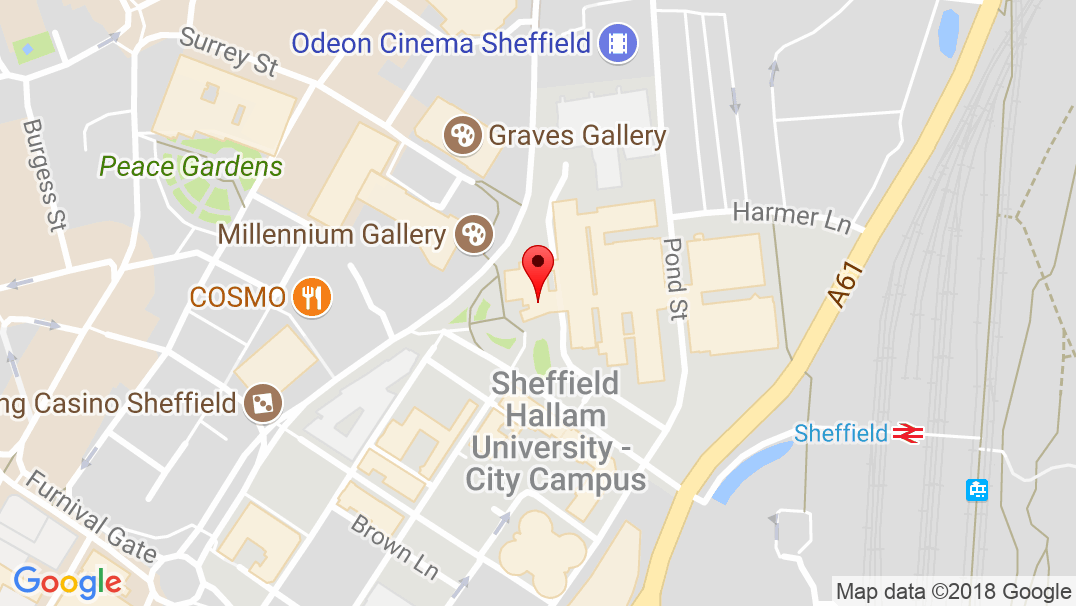
You study at City Campus through a structured mix of lectures, seminars and practical sessions as well as access to digital and online resources to support your learning.
City Campus
City Campus is located in the heart of Sheffield, within minutes of the train and bus stations.
City Campus map | City Campus tour
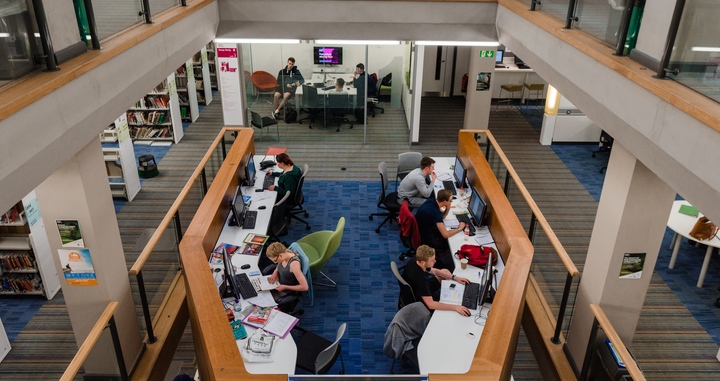
Adsetts library
Adsetts Library is located on our City Campus. It's open 24 hours a day, every day.
Explore the libraryEntry requirements
All students
UCAS points
- Standard offer: 112 UCAS points
- Contextual offer: 96 UCAS points
We make contextual offers to local applicants, applicants living in low participation areas and applicants with specific personal circumstances. Check your eligibility for a contextual offer.
This must include at least 40 points in both Physics and Mathematics A levels, or equivalent. For example:
- BBC at A Level including Physics and Mathematics.
- DMM in BTEC Extended Diploma in a relevant subject.
- Merit overall from a T level qualification.
- A combination of qualifications which must include Physics and Mathematics and may include AS levels and EPQ
You can find information on making sense of UCAS tariff points here and use the UCAS tariff calculator to work out your points.
GCSE
- English Language at grade C or 4
- Maths at grade C or 4
GCSE equivalents
- Level 2 Literacy or Functional Skills Level 2 English
- Level 2 Numeracy or Functional Skills Level 2 Maths
• Access - an Access to HE Diploma with at least 45 credits at level 3 and 15 credits at level 2. At least 18 level 3 credits must be at merit grade or above, from a QAA-recognised Access to HE course, or an equivalent Access to HE certificate.
If English is not your first language, you will need an IELTS score of 6.0 with a minimum of 5.5 in all skills, or equivalent.
We will consider applicants who have studied other areas individually. Please contact us for more information.
Additional information for EU/International students
If you are an International or non-UK European student, you can find out more about the country specific qualifications we accept on our international qualifications page.
For details of English language entry requirements (IELTS), please see the information for 'All students'.
Fees and funding
Home students
Our tuition fee for UK students on full-time undergraduate courses in 2027/28 is £10,050 per year (capped at a maximum of 20% of this during your placement year). These fees are regulated by the UK government and therefore subject to change in future years.
If you are studying an undergraduate course, postgraduate pre-registration course or postgraduate research course over more than one academic year then your tuition fees may increase in subsequent years in line with Government regulations or UK Research and Innovation (UKRI) published fees. More information can be found in our terms and conditions under student fees regulations.
International students
Our tuition fee for International/EU students starting full-time study in 2027/28 is £18,900 per year (capped at a maximum of 20% of this during your placement year)

Financing your studies
Explore tuition fees, student loans, scholarships and financial support available, including up to £2,100 a year towards living costs for eligible students.
Explore fees and funding ›
Discover cost-of-living support ›
Find scholarships and bursaries ›
Additional course costs
The links below allow you to view estimated general course additional costs, as well as costs associated with key activities on specific courses. These are estimates and are intended only as an indication of potential additional expenses. Actual costs can vary greatly depending on the choices you make during your course.
General course additional costs
Additional costs for School of Engineering and Built Environment (PDF, 253.6KB)Legal information
Any offer of a place to study is subject to your acceptance of the University’s Terms and Conditions and Student Regulations.