
Everything you need to know...
-
Tuition fees
Home: £11,490 for the course
International/EU: £19,530 for the course -
Course duration
1 Year
-
Study location
-
Start date
September 2027
Course summary
- Learn social research methods and the supporting theories and philosophies.
- Develop areas of specialist interests to integrate into your methodological training.
- Discuss research issues with students from other postgraduate and doctoral courses.
- Critique current developments and conduct your own original research.
On this course, you’ll focus on research specialisms encompassing sociology, social policy, politics, criminology, education studies, urban studies, youth studies and cultural studies. You’ll study a range of research methodologies – including interview-based narrative and biographical research, case studies, media analysis and statistical analysis of large data sets.
Student satisfaction
This course scored 100% for overall student satisfaction in the Postgraduate Taught Student Satisfaction Survey 2026.

Come to an open day
Find out more at our postgraduate open days. Book now for your place.
How you learn
The course includes a research-based dissertation, which may become a pilot study towards a PhD. Several recent students have gone onto doctoral level study. You can also take individual modules as short courses or combine them towards a postgraduate diploma (PgDip) or certificate (PgCert) in Research Methods in Social Science.
You learn through
- essays
- research projects
- presentations
- research proposals
Graduate view

'The course was a perfect mix of social theory combined with practical research. It gave me the confidence and experience needed to secure my current job. I'm now working for a housing association in a policy and service development role.'
Pete Crean, MRes Social Science, 2018 graduate
Applied learning
Work placements
The entire MRes programme is geared towards applied learning – providing the skills (methodological, analytical, theoretical and practical) you’ll need to manage real-world research projects. These skills will be showcased in your extended dissertation.
Beyond this, you’ll have the opportunity to arrange a two-week long work placement with one of Sheffield Hallam University’s externally facing research centres – such as the Centre for Development and Research in Education, the Centre for Regional Economic and Social Research and the Sheffield Institute for Policy Studies. This will give you valuable insight into the world of policy-oriented research.
In addition to this, you will also be able to access the Professional Skills for Research Leadership programme of events, which provides advice and skills for those seeking to pursue research careers inside and outside of academia.
Live projects
In the Sociology subject group, we conduct real-world research projects and publish academic books and articles in a wide range of areas. These include postcolonial studies, gender and sexuality, research methods and reflexivity, addiction and recovery, health policy, social class and class identities, employment and welfare reform, protest and policing, evaluation of educational interventions, subcultures and consumption.
Staff from Sociology have been submitted to the most recent Research Excellence Framework. Sheffield Hallam University is also part of the White Rose Doctoral Training Partnership – funded by the Economic and Social Research Council to recognise excellence in the delivery of research methods instruction.
Networking opportunities
Alongside your fellow MRes Social Science students, you’ll benefit from a learning environment where you share some classes with doctoral students – giving you the opportunity to debate, share ideas and organise reading and study support sessions.
Competitions
You’ll have an opportunity to gain experience in the dissemination of research – by presenting your research projects at the annual Postgraduate Research and Early Careers Research Poster Conference and Competition.
Your course leader

Dr Bob Jeffery
Course Leader MRes Social Research and Senior Lecturer in SociologyStaff profile for Dr Bob Jeffery, Course Leader MRes Social Research and Senior Lecturer in Sociology
Modules
Important notice: The structure of this course is periodically reviewed and enhanced to provide the best possible learning experience for our students and ensure ongoing compliance with any professional, statutory and regulatory body standards. Module structure, content, delivery and assessment may change, but we expect the focus of the course and the learning outcomes to remain as described above. Following any changes, updated module information will be published on this page.
Final year
Compulsory modules
This module aims to enable you to conduct an empirical enquiry with due attention of methodology and epistemology and understanding of links between theory and method. You will produce a cogently argued piece of writing that demonstrates researcher competence and the ability to operate independently.
You’ll study topics such as:
- Research proposal
- Research design
- Critical discussion of epistemology, theory and methodology
- Research ethics
- Primary data collection and or selection of secondary data, and appropriate theorised analysis
- Writing in a style suitable to discipline and theoretical/methodological location
This module will enable your engagement with contrasting theoretical frameworks and consideration of political, social, cultural and ethical issues in context.
You’ll study topics such as:
- Social philosophies
- Marxism and Critical Theory
- Critical race theory
- Feminist theorising
- Modernity/postmodernity debates
This module enables your engagement with contrasting theoretical frameworks and consideration of political, social, cultural and ethical issues in context.
You’ll study topics such as:
- Social philosophies
- Post-modern feminist theorising
- Postcolonial thinking (e.g. Said, Fanon)
- Reflexivity (e.g. Bourdieu, Bauman)
- Globalisation theorising (e.g. Beck, Giddens)
This module develops your understanding and use of philosophies of research in developing successful research designs.
You’ll study topics such as:
- Ontology and epistemology and debates in social sciences;
- Philosophies of science and debates over scientific knowledge;
- Philosophical issues of subjectivity, objectivity and reflexivity;
- Models of research design;
- The west and the global in research
This module develops your understanding and use of philosophies of research in developing successful research designs.
You’ll study topics such as:
- Ontology and epistemology and debates in social sciences
- Philosophical issues of subjectivity, objectivity and reflexivity
- Feminist philosophies
- Debates over ‘self’ and ‘other’ in research
- Models of research design
- The west and the global in research
This module provides an overview of qualitative research methods within the social sciences, examines theoretical debates about the use and development of qualitative research approaches, and equips you to conduct a small qualitative research project, analyse data, and produce a research report.
This module enables you to recognise and explain good practice in the design of surveys and the preparation of survey data for statistical analysis.
You’ll study topics such as:
- Survey Design
- Strengths and limitations of the survey method (philosophical & practical)
- Probability & non-probability sampling
- Questionnaire design
- Data collection techniques
- Piloting & fieldwork
- Online surveys
- Data entry and cleaning
- Univariate descriptive analysis of survey data
- Overview of key social surveys (history, use and design)
- Locating, reading and interpreting statistics from key social surveys (e.g. academic publications, social trends annual release etc.)
- Ethical issues in quantitative research and design
Elective modules
This module enables you to critically appraise and employ methods of discourse or linguistic analysis; to appreciate derivations and theoretical dimensions of linguistic theory and analysis within the disciplines of sociology and psychology.
You’ll study topics such as:
- Discourse theory
- Strategies of discourse analysis and associated linguistic analysis (e.g. critical discourse analysis, semiotics, conversation analysis, narrative analysis, rhetorical analysis)
- Language in cultural context: structure and functions of language, language use, theories of language and culture.
This module develops your general understandings of qualitative research designs (including case studies, biographical approaches, ethnography, documentary analysis, others if/as appropriate) issues and debates within qualitative fieldwork and analysis, and enables you to design, conduct and report critically on a fieldwork study through development of a small-scale project.
You’ll study topics such as:
- Ethics
- Participant observation and writing biographical pieces, planning case studies, and reporting on these
- Research planning
- Fieldwork
- Data analysis
- Critical reflection
This module enables you to apply appropriate descriptive and inferential statistical techniques to survey data using statistical software in order to explore a research problem.
You’ll study topics such as:
- Data manipulation techniques
- Weighting data
- Univariate & bivariate descriptive analysis
- Graphically presenting descriptive analyses
- Statistical inference, generalisation and tests of statistical significance.
- Association, Correlation and Difference
- Parametric & non-parametric tests
- Chi-square, Cramers V, t-test, Mann-Whitney U, ANOVA, Pearsons r, Spearmans rho
- Confidence intervals
- Elaborating bivariate hypotheses
This module enables you to apply multivariate statistical modelling techniques to survey data using statistical software in order to explore a research problem.
You’ll study topics such as:
- Advanced data manipulation techniques
- Multiple linear regression modelling
- Multiple logistic regression modelling
- Model criticism techniques
- Using statistical software and interpreting output.
Future careers
This course prepares you for a career in
- social policy
- research administration
- senior executive officer positions
- the probation service
- research and lecturing
Previous graduates of this course have gone on to work for
- BMI General Healthcare
- Thornbury Hospital, Sheffield
- Graduate Centre, Sheffield Hallam University
- Department for Education and Employment
- National Probation Service
Equipment and facilities
We’ve invested over £100m in new facilities in the last five years, to help you study how and when you want. This means 24-hour libraries and study spaces designed by our students.
Where will I study?
You study at City Campus through a structured mix of lectures, seminars and practical sessions as well as access to digital and online resources to support your learning.
City Campus
City Campus is located in the heart of Sheffield, within minutes of the train and bus stations.
City Campus map | City Campus tour

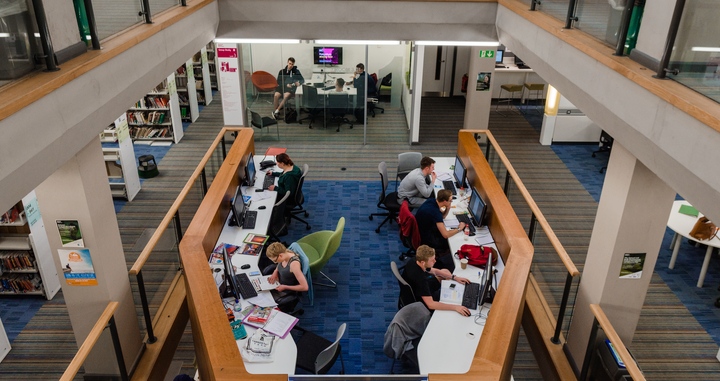
Adsetts library
Adsetts Library is located on our City Campus. It's open 24 hours a day, every day.
Explore the libraryExplore Redmires
Explore Redmires
Study in the new Redmires building – home to law, social sciences and architecture at Sheffield Hallam University.
Entry requirements
All students
Typically a 2.2 degree in a suitable subject. For example,sociology, social policy, criminology, cultural studies, youth studies, education, politics, urban studies, human geography, community studies, subcultural studies, audience studies, health policy, sexualities, policing, and drug rehabilitation. You may also be able to claim credit points which can reduce the amount of time it takes to complete your qualification at Sheffield Hallam. Find out more
International students must have an overall IELTS score of 6.5 overall with a minimum of 6.0 in writing and 5.5 in all other skill areas.
Additional information for EU/International students
If you are an International or non-UK European student, you can find out more about the country specific qualifications we accept on our international qualifications page.
For details of English language entry requirements (IELTS), please see the information for 'All students'.
Fees and funding
Home students
Our tuition fee for UK students starting full-time study in 2027/28 is £11,490 for the course.
If you are studying an undergraduate course, postgraduate pre-registration course or postgraduate research course over more than one academic year then your tuition fees may increase in subsequent years in line with Government regulations or UK Research and Innovation (UKRI) published fees. More information can be found in our terms and conditions under student fees regulations.
International students
Our tuition fee for International/EU students starting full-time study in 2027/28 is £19,530 for the course.

Scholarships and financial support
Find information on scholarships, bursaries and postgraduate student loans.
International scholarships up to £3000 ›
Alumni scholarships up to £2000 ›
Postgraduate loans for UK students ›
Additional course costs
The links below allow you to view estimated general course additional costs, as well as costs associated with key activities on specific courses. These are estimates and are intended only as an indication of potential additional expenses. Actual costs can vary greatly depending on the choices you make during your course.
General course additional costs
Additional costs for Sheffield Institute of Social Sciences (PDF, 250.4KB)Legal information
Any offer of a place to study is subject to your acceptance of the University’s Terms and Conditions and Student Regulations.