
Everything you need to know...
-
Tuition fees
Home: £10,050 per year
International/EU: £18,900 per year -
Course duration
4/5 Years
-
Study location
-
Entry requirements
-
Course code
A042
-
Start date
September 2027
-
Placement year available?
Yes
Course summary
- Learn industry-standard tools and advanced techniques in state-of-the-art studios.
- Apply them to various game art skills, from character design to environmental art.
- Explore diverse game art styles on leading gaming platforms, including PlayStation.
- Engage with games developers and our commercial games studio, Steel Minions.
- Collaborate with game designers and programmers on cutting-edge projects.
By studying this course with a foundation year, you’ll begin by developing the creative, practical and academic skills needed for degree level study within the Creative Industries. You’ll learn alongside other foundation year students from across the Creative Industries Institute, becoming part of a vibrant creative community with access to specialist facilities, technical expertise and industry focused teaching. The foundation year prepares you to progress directly onto the Animation degree, amongst a range of other courses within the Creative Industries without needing to reapply.
Employability
95% of UK graduates are in work or further study 15 months after graduating (2023/24 Graduate Outcomes Survey).
How you learn
You’ll start this course with the foundation year, joining students from across our Creative Industries courses as part of one creative community. You’ll learn together in an immersive studio environment with access to specialist facilities, exploring a range of materials, methods and processes through practical workshops that encourage experimentation and creative thinking.
Working collaboratively across different creative disciplines will help you discover your interests, develop new approaches and build confidence in your skills. With regular support and feedback from expert tutors, you’ll also be encouraged to develop your independent practice and extend your learning beyond the studio.
You learn through
- Practical workshops
- Technical inductions
- Creative projects
- Lectures and seminars
- Self-directed study and practice
- Presentations
- Field trips
- Regular formative feedback
- Group and individual tutorials
- Guided critical reflection
- Live projects
What you’ll study on the foundation year
On the foundation year, you’ll gain a strong introduction to the creative industries. You’ll develop creative thinking, practical making skills and the confidence to explore ideas, experiment and take creative risks in a supportive studio environment.
Your learning is built around two core modules. The first introduces a broad range of creative skills, materials and processes through hands-on experimentation. The second gives you the opportunity to apply what you’ve learned through longer, project-based work, with a choice of briefs linked to different degree routes.
Assessment is 100% coursework. You’ll build a portfolio that showcases your creative development, including project work, sketchbooks and digital documentation.
Game Art key themes
On the Game Art degree we’ll lay the groundwork for your journey – with an emphasis on self-development, exploration, and both practical and experiential acquisition of knowledge and skills. We’ll dedicate your second year to expanding your skills and understanding while discovering your areas of interest. We’ll emphasise user research and development, as well as contextual application and production. In your final year, we’ll shift the emphasis to the development and realisation of your professional identity as a game artist. You’ll create an industry-focused portfolio to showcase your expertise – evidencing the attributes, skills and knowledge you’ve gained on the course.
By the time you graduate you’ll have the skills, knowledge and confidence to make a meaningful impact in the ever-evolving world of gaming.
Our Game Art course offers an engaging and collaborative learning environment, where you’ll develop artistic and technical skills in an industry-focused subject. You’ll push boundaries and innovate, emerging as a globally-minded game artist, ready to make a positive impact on the gaming world. Students have previously worked with games studios such as Playground Games, Rockstar, and Sumo Digital. You’ll learn industry-standard tools and advanced techniques in state-of-the-art studios, applying them to various game art skills, from character design to environmental art. You also explore diverse game art styles on leading gaming platforms, including PlayStation, engage with games developers and our commercial games studio, Steel Minions and collaborate with game designers and programmers on cutting-edge projects.
Course-level support
We offer a holistic and person-centred approach to assessment, focusing on portfolios of individual creative work, scaffolded by targeted briefs. We offer an inclusive environment where divergent ideas, histories and practices are encouraged to thrive. Collaborating with students from different disciplines enhances your creativity, with projects that develop your critical thinking and communication skills.
You’ll be supported in your learning journey towards highly skilled, graduate-level employment through a number of key areas. These include:
- Access to specialist services to help with your personal, academic and career development
- Access to our Skills Centre with one-to-ones, webinars and online resources, where you can get help with planning and structuring your assignments
- Industry-specific employability activities such as live projects, learning in simulated environments and networking opportunities
Applied learning
The foundation year has strong links across all Creative Industries degrees, offering opportunities to engage with live projects, competitions and work related learning. You’ll graduate from the year as an adaptable, collaborative and creatively confident learner, ready to apply your cross disciplinary experience to your future degree and career.
The Game Art course you’ll progress into has been designed to embrace real-world challenges and provide you with the practical skills and knowledge to be successful.
We do this by developing your expertise in collaboration with the professional creative and cultural sectors – with commercial and creative practitioners, commissioners, clients and arts organisations.
Work experience
You can take part in Hallam’s enterprise programme, forming your own studio and developing independent games.
You’ll also have the opportunity to arrange a placement in between your third and final. This gives you valuable work experience to prepare you for your future career – as well as an Applied Professional Diploma to add to your CV.
You’ll also work on a range of projects simulating real-world working environments, allowing you to expand your skill set, your confidence, your resilience, and your ability to navigate professional interactions.
These experiences are carefully integrated into your coursework to facilitate the development of crucial knowledge, skills and professional behaviours.
Field trips
We offer opportunities to go on study trips and visits in the UK and abroad – with free travel and accommodation for all mandatory field trips. These might include workshops, conferences or visits to practitioners’ studios, cultural institutions and special collections.
These trips are valuable for the experience of seeing work first-hand and understanding the professional world of contemporary game art.
Students can also apply for funding through the Turing Scheme to support a study exchange or placement outside the UK.
Guest speakers
During your course you’ll be able to hear from a diverse range of professional guest speakers who share their experiences, insights and knowledge – offering you unique perspectives on industries and career paths.
Networking opportunities
We’ll encourage you to attend Hallam’s careers and employability events, connecting with professionals, graduates and potential employers. Building a strong professional network is so helpful for your future success, and these events provide the perfect platform for you to get started.
We also encourage you to take part in national and international ‘Game Jams’ that have the potential to make a significant impact on your career advancement and exposure. You’ll get to work as part of a team to develop a game in an informal and fun environment. It’s a great opportunity to be creative and work on something that won’t be formally marked. Taking part in these sorts of activities/events allows you to showcase your skills, gain recognition and create valuable opportunities for yourself.
Your course leader

Adam Shepherd
Senior Lecturer in Creative MediaI teach within Games Design. During my time at the university I have taught 3D modelling, Rigging, Texturing and Animation through levels 4-7, as well as various ski … Read more
Modules
Important notice: The structure of this course is periodically reviewed and enhanced to provide the best possible learning experience for our students and ensure ongoing compliance with any professional, statutory and regulatory body standards. Module structure, content, delivery and assessment may change, but we expect the focus of the course and the learning outcomes to remain as described above. Following any changes, updated module information will be published on this page.
You will be able to complete a placement year as part of this course. See the modules table below for further information.
Year 1
Compulsory modules
Module Aim:
This module provides the opportunity to apply and extend what you have learned in the first module. With a structured approach to project work you will be supported through a creative process to create an individual outcome to a brief. Workshops, seminars and studio practice help you to investigate, interrogate, research, test, trial and refine a project outcome. You extend this learning by developing strategies for organising independent study and time management.
You will be encouraged to consider the wider influences of history, environment, society and culture on Creative Industries disciplines as well as your own practice.
Indicative Content:
Theme based creative research
Choice of project briefs written in collaboration with Creative Industries degree route staff
Synthesising and communicating research
Core discipline specific vocabulary, terminology and some core discipline knowledge
Example independent study tasks to develop discipline specific knowledge
Technical inductions and other activities to support your project work
Creative process
Project proposal, management and planning strategies
Communication of work for different audiences and in different formats
Knowledge of other degree routes and broader creative and contextual awareness of the Creative Industries
This module introduces, and builds upon, core skills and techniques needed to develop creative work. Studio based activities promote an experimental approach to making which embrace risk-taking as part of the process. Curiosity, experimentation and exploration are core components of this module, developed through a wide range of workshops and practical activities.
Structured critical reflection alongside formative assessment throughout the module encourage independence and autonomy.
Applied learning strategies enable you to work alongside other students in an immersive studio environment. You learn from, and with, each other, while developing your own creative confidence.
INDICATIVE CONTENT
Creative thinking core skills: curiosity, enquiry, exploration and reflection
Drawing confidence: observational, effective sketching, technical/perspective drawing, life drawing, drawing from imagination
Workshops in: print, photography, laser cutting, sewing, woodwork and more
Group projects and tasks
Fundamental principles for all disciplines with freedom for interpretation, e.g. colour theory, form, structure and image making
Field trips and local visits
A range of additional support through the Learning Centre including, planning and managing your time, academic writing skills and digital literacy skills
Using SHU email account and the virtual learning environment (Blackboard) to help manage your time, work independently and communicate with your tutors
Use of, and exposure to, facilities across the city campus alongside meeting staff from across the Creative Industries Institute
How to access student support services offered by the university and connect with others
Year 2
Compulsory modules
Module Aim:
This module focuses on 2D and 3D art creation tools and techniques, from pre-production through to a final game asset. You will develop skills and experience in drawing and will develop a portfolio of original drawings and sketches, which can then be applied to a range of media contexts and enable you to develop conceptual skills, make judgements about the design of objects and develop skills in presenting preproduction work.
Indicative content:
-
Core Drawing skills
-
Dynamic Sketching
-
3D modelling methods
-
low poly modelling workflows
-
UV's, texture mapping, materials and shading
-
Hardware limitations
-
Real-time rendering
-
Composition and presentation
Module aim:
Students will extend their core digital asset creation skills and employ planning and pre-production processes used in the game industry.
Digital Assets will be migrated to a game engine environment where software specific procedures for shading and rendering will be explored.
Module delivery is lab based for lectures and practical elements.
Indicative content:
- Asset creation techniques
- Introduction to game engine processes
- Shading technology
- Realtime performance
This module explores the fundamental theoretical concepts relating to the creation of art for games.
It provides a basis for future practical work by introducing fundamental principles of ART and developing critical analysis of core art practice.
The module develops skills in, abstract thinking, research, communication, collaborative learning and peer critique. These skills will be essential for successful work development of core ART skills.
You are involved in exploring your own creative pathways and identifying individual targeted learning methods.
Indicative content:
- Core Visual literacy skills - Lines shape form texture colour Creativity methodologies Light and form
- Perspective
- Rendering
- Colour theory
- Image analysis
- Elements of composition
Module aim:
This module will equip you with the skills you need to work in multidisciplinary project teams. This will include skills in communication, application of project management techniques, presentation and delivering of constructive criticism of work done by others You will be given a project brief to collaborate on with students from other disciplines. You will bring the specialist practical skills and knowledge that you are learning and a game design and development student and apply them in the team working context provided by the project.
Indicative content:
-
Applying individual practice skills to a defined multi-disciplinary team-based project
-
Communication within project teams
-
Methods for project management, planning and reporting
-
Presentation of work to other team members
-
Reporting on personal and team performance
-
Receiving and giving constructive criticism and feedback
Year 3
Compulsory modules
This module will develop an understanding of theoretical and practical concepts relating to art direction. You will explore concepts such as colour theory and how to establish warm and cool areas on an image. You will use specialist software to understand the techniques you need to bring these ideas to life. The module will challenge you to create engaging visual content that explores a wide range of visual sources and to enable you to reflect on your work.
Indicative content:
-
Ideation methods
-
Art style guides
-
Visual Narrative methods
-
Mood and atmospherics
-
Emotional design approaches
-
Presentation methods for studio working
-
Exploring visual sources
Module Aim:
This module will introduce you to specialised techniques and skills that will introduce you to career pathways in the Games industry. You will build on previous learning in advanced art creation tools and undertake tasks that enable you to reflect on your future pathway.
Indicative content:
-
World building
-
Character animation
-
Specialism specific technologies and processes (e.g., Z brush)
-
Character art
-
Concept art
-
Environment art
This module will enable you to choose a specialist pathway that corresponds with a role in the Games Industry. You will develop specialist skills in an area such as Character Art or Environment Art, which you will use in a portfolio of work that you will develop across the rest of the course. This portfolio will become a calling card that you can show to organisations after graduation
Indicative content:
-
Character creation
-
Environment creation and level design
-
Visual communication
Module Aim:
This module introduces new methods and tools for creating interactive work outside the bounds of traditional screen media. You will be challenged to work in interdisciplinary groups to create an interactive artefact that responds to an industry-set brief. This module also prepares you for the sandwich placement year and future work experience opportunities.
Indicative content:
-
Workshops on immersive design, mixed reality interaction, digital narrative design & experimental game design
-
Industry-led briefings outlining theme and design challenges
-
Milestones set and reviewed by industry contact at agreed intervals
-
Presentation pitches of student solutions to industry brief
-
Client-led enhanced applied project
Elective modules
This module is for undergraduate students to study abroad in their second year, Semester 2 (only for courses that offer this option). With this module, you can spend a semester at one of the University’s approved partner institutions worldwide – from Europe to the Americas, Asia Australia or Canada.
Study Abroad plays an important role in the University's commitment to an engaging, challenging, and thriving learning culture. It offers opportunities to experience other academic cultures and foster intellectual maturity while enhancing co-curricular skills and students' long-term employability.
Study abroad for credit is permitted on existing university-approved courses only. Students are awarded credits and grades at the partner institution, which are converted into Sheffield Hallam credits and grades on return and included in the Sheffield Hallam degree classification.
Please check and refer to the webpage How study abroad works. You must submit a Learning Agreement outlining the modules you will be taking at the partner institution. The Learning Agreement will be signed off by your academic tutor to ensure that the Learning broadly covers the Learning Outcomes set out in your course curriculum during your study abroad.
Year 4
Compulsory modules
Module aim:
The aim of this module is to enhance students’ professional development through the completion of and reflection on meaningful work placement(s).
A work placement will provide students with opportunities to experience the realities of professional employment and experience how their course can be applied within their chosen industry setting. The placement will:
- Allow student to apply the skills, theories and behaviours relevant and in addition to their course
- Enable students to enhance their interpersonal skills in demand by graduate employers – communication, problem-solving, creativity, resilience, team work etc.
- Grow their student network and relationship building skills.
- Provide student with insights into the industry and sector in which their placement occurs
- Help student make informed graduate careers choices.
Indicative Content:
In this module students undertake a sandwich placement (min 24 weeks / min 21 hours per week) which is integrated, assessed and aligned to their studies.
Their personal Placement Academic Supervisor (PAS) will be their key point of contact during their placement and will encourage and support students to reflect on their experience, learning and contribution to the organisation they work for.
To demonstrate gains in professional development, students will be required to share their progress, learning and achievements with their Placement Academic Supervisor and reflect on these for the summative piece of work.
Elective modules
This module will contribute to your education by building on the knowledge you will have already gained through your previous work, applying key concepts, theories, principles and methods used in the complex field of games design and development. Members of project teams are likely to be providing skills from a diversity of backgrounds related to the creation of three-dimensional digital games. Key to the success of the development process is ensuring that the wide range of media elements, navigation and information are put together so that the user attains the best experience from playing the game.
The module aims to enable you to acquire understanding and experience of working as an interdisciplinary team to develop a successful 3D game prototype.
INDICATIVE CONTENT
Typically, the module will cover:
- Principles of design for contemporary computer games
- The creation and development of concept design documentation
- The process of designing and building a game prototype
- Approaches to evaluating design
- Evaluation paradigms and techniques for entertainment software
Final year
Compulsory modules
Module aim:
In this module you will focus on storytelling across mixed reality platforms. You will be part of a team-based project, based on a current industry theme, which will challenge you to apply your skills and creativity to craft an "Alternate Realities" artefact.
Indicative Content:
-
Storytelling across XR platforms
-
Visual Communication
-
Non-linear/Alternative narrative structures
-
UI/UX
-
Experiential design
-
Storytelling ethics/accessibility
-
Innovation across professional contexts
Module Aim:
This module will enable you to undertake a design and development major project to produce a game or a set of game assets for a defined audience and to a high standard. You will build on your research and development proposal and utilise and demonstrate the skills and knowledge you have developed throughout the course. You utilise time, project and self-management skills by working in a team alongside students from other disciplines or by undertaking the work on an individual basis.
Indicative content:
-
Research
-
Concept creation and documentation
-
Ideation
-
Project planning
-
Presenting work
-
Reflecting on feedback
-
Producing multiple iterations of work
This module is designed to further your specialist pathway skills that you started in L5. You will develop an understanding of complex graphics processes and will further develop your art portfolio to reach the standard of a junior artist in the Games and allied creative industries. You will be expected to work with greater autonomy and to conduct your own research into professional portfolios to recognise and emulate the qualities expected by employers.
Indicative content:
-
Time as an element of graphic presentation, through forms of animation: camera, character, cloth, shader effects
-
Complex shader technique
-
Intelligent use of modular elements
-
Visual narratives
Module Aim:
This module will enable you to prepare and plan strategies for your work in your ‘Final Game Project’. You will conduct research into your chosen specialism, to align your work with current industry best practices, identify a professional audience for your work and develop your ideas and practices towards developing a professional-standard portfolio. Throughout the module you will be encouraged to develop more critically informed reflection and constructive self and peer evaluation.
Indicative content:
-
Project planning and management
-
Working to professional specifications and limitations
-
Reviewing games-specific distribution methods
-
Portfolio generation
-
Pre-production documentation
-
Visual design and layout
-
Work experience
Future careers
The Game Art course prepares you for careers and future study in:
- Concept Art/Pre-Production for Creative Industries
- 3D Character development
- 3D Prop Development
- Game Environment Design and Creation
- Realtime Lighting, Cinematics and VFX
- Game Art Direction
- Interactive Entertainment
- The Metaverse
Previous graduates of this course have gone on to work for
- Rare
- Electronic Arts
- Sumo Digital
- Steel City Interactive
- Rockstar North
- Epic Games
- SEGA
- Framestore
- Jagex
- Rebellion
- NDreams
- D3t
- Creative Assembly
- KudosQA
- Digital Extremes
- Ripstone
- Playground Games
- Expression Games
- Media Molecule
- And many more!

All in on your career
We promise you’ll be ready to launch your career. With employer connections, hands-on learning and lifelong career support, we’ll help make your ambition a reality.
Equipment and facilities
On the Foundation Year, you have a dedicated studio space on City Campus, with access to all the facilities below.
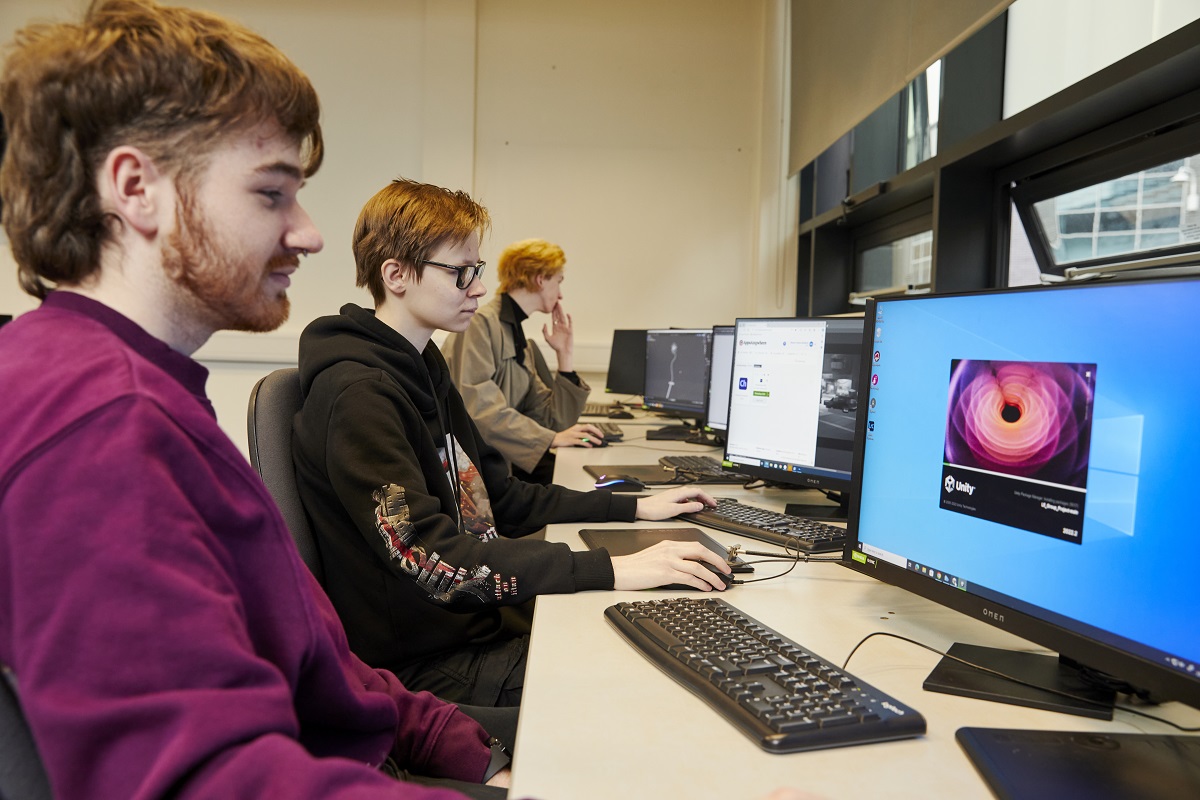
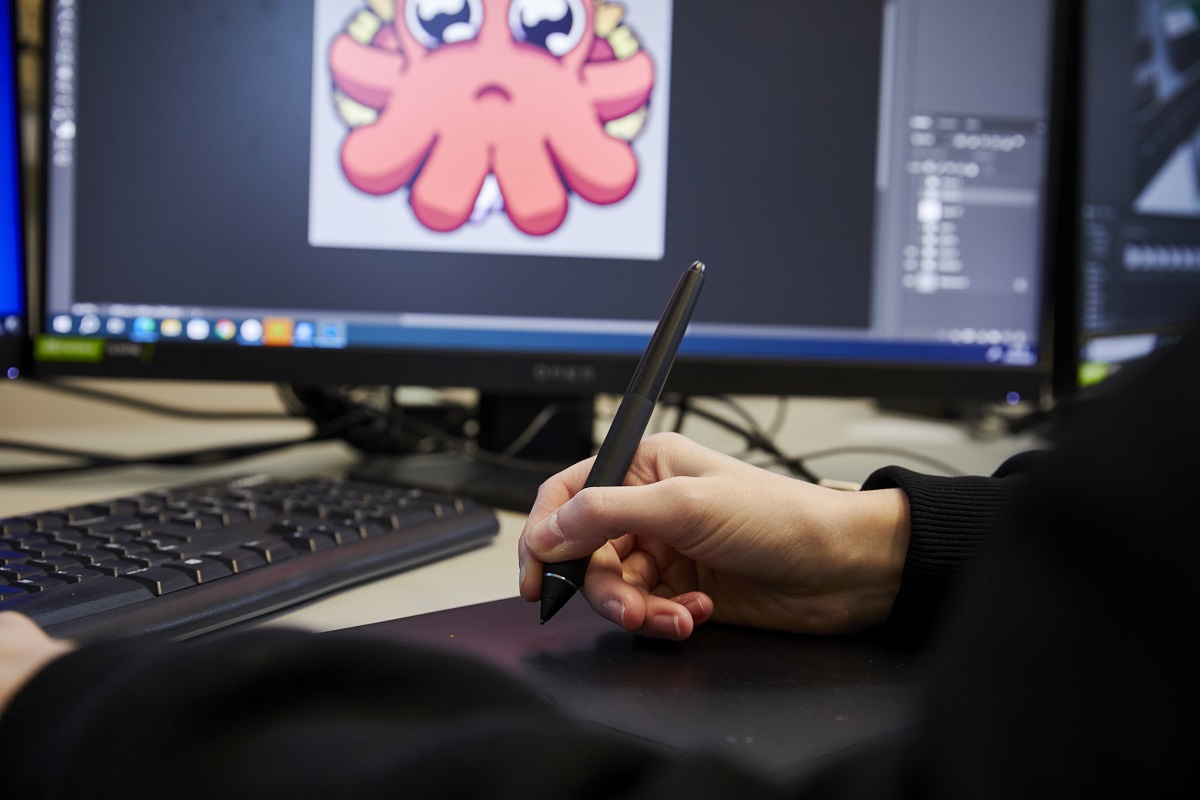
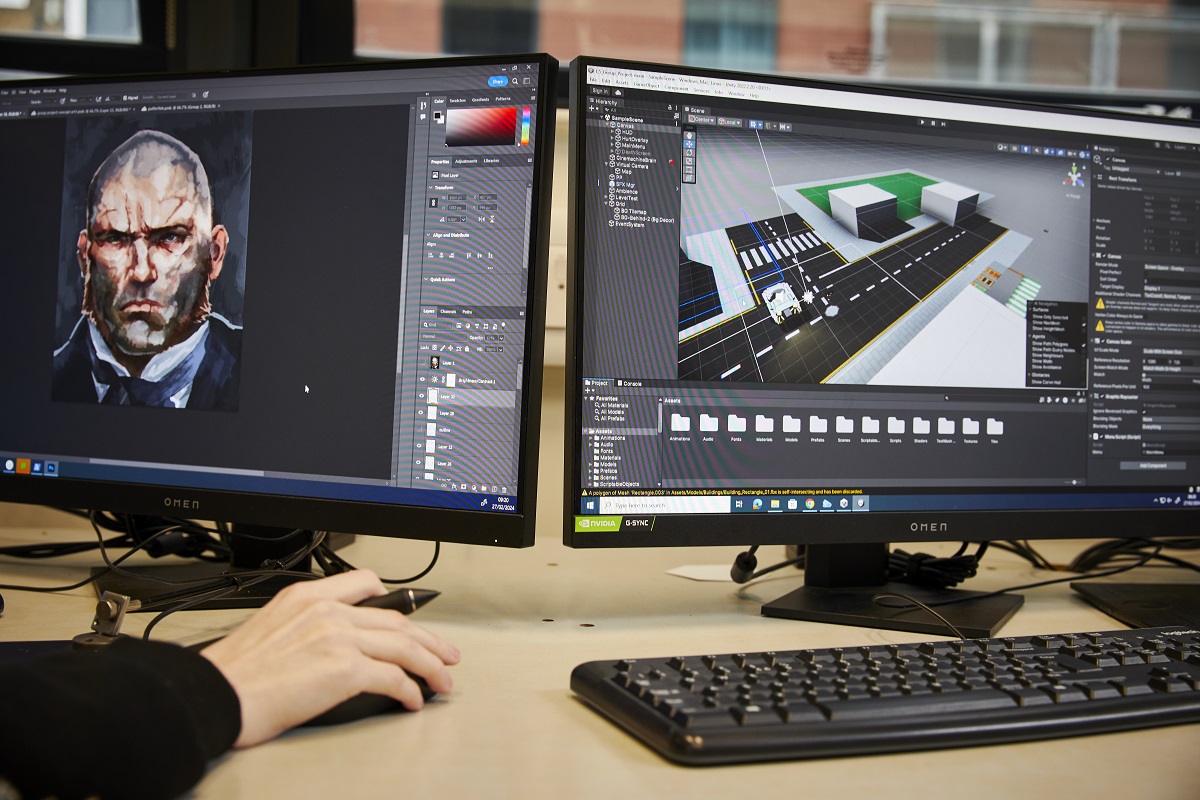
On the Game Art course we have access to industry-standard high-end gaming specification PCs and software in studio style labs.
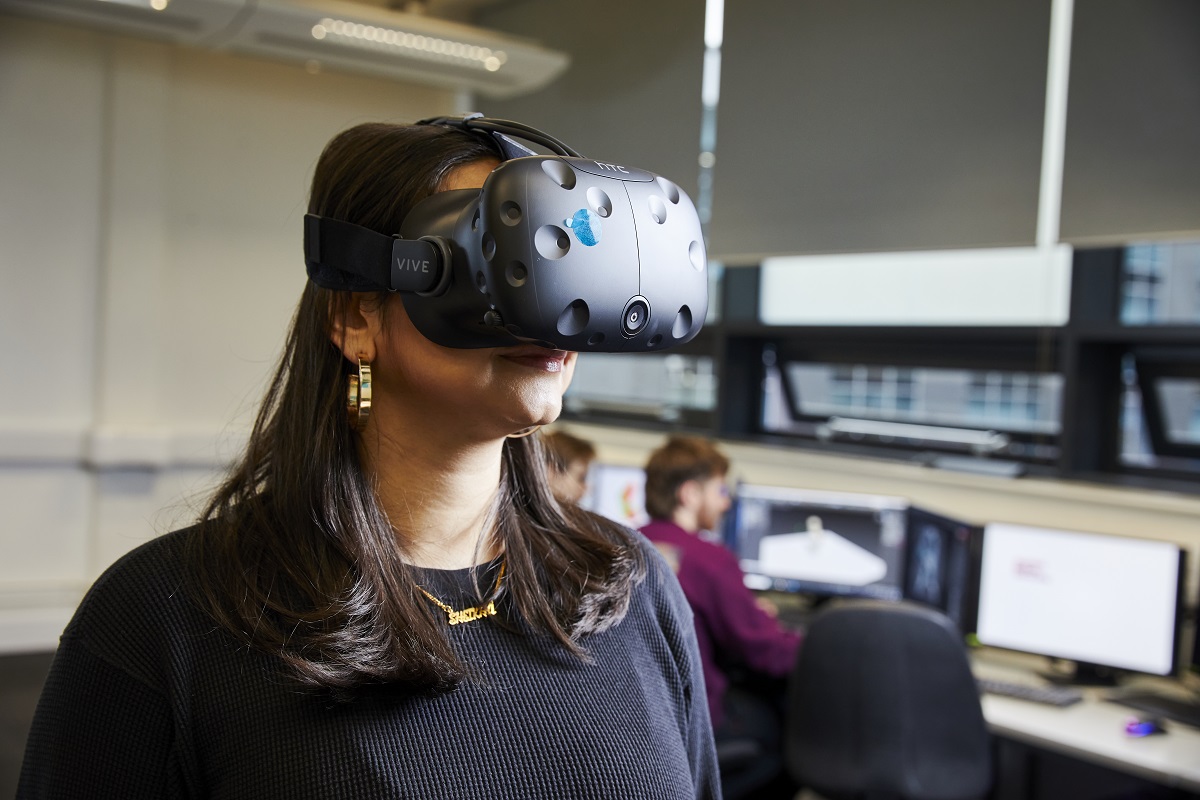
You’ll also have access to the largest PlayStation teaching facility in the world on campus, as well as:
- motion capture suite
- specialist virtual reality space
- our commercial games studio, Steel Minions
- Autodesk Maya/3D Studio Max
- ZBrush
- Unreal Engine
- Unity
- Adobe CC including Photoshop
- Substance Painter
- Substance Designer
- Marvelous Designer
Media Gallery

Learn more about your department
Media, Arts and Communications Facilities Tour
Take a look around the media, arts and communication facilities at Sheffield Hallam University with lecturer Saskia Wilson.
Where will I study?
You study at City Campus through a structured mix of lectures, seminars and practical sessions as well as access to digital and online resources to support your learning.
City Campus
City Campus is located in the heart of Sheffield, within minutes of the train and bus stations.
City Campus map | City Campus tour

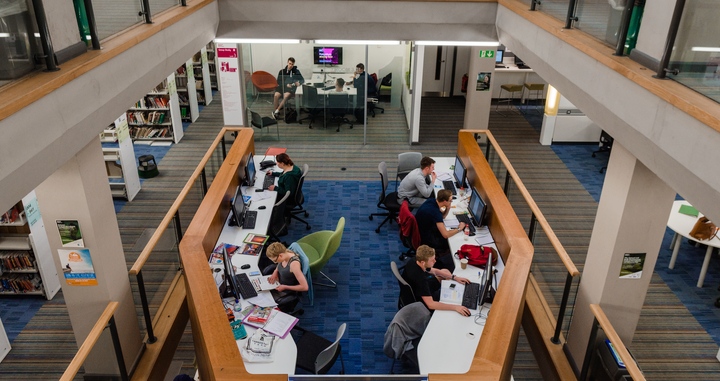
Adsetts library
Adsetts Library is located on our City Campus. It's open 24 hours a day, every day.
Explore the libraryExplore Langsett
Explore Langsett
Make your move in our brand-new building at Sheffield Business School. Find a welcoming community where you can experience state-of-the-art facilities and gold-rated teaching.
Entry requirements
All students
UCAS points
- Standard offer: 64 UCAS points
This must include at least 32 points from one A level or equivalent BTEC National qualifications. For example:
- CC at A Level.
- MPP in BTEC Extended Diploma.
- Pass (D-E) overall from a T level qualification with D from core.
- A combination of qualifications which must include an A level grade C or BTEC grade M.
You can find information on making sense of UCAS tariff points here and use the UCAS tariff calculator to work out your points.
GCSE
- English Language or Literature at grade C or 4 or equivalent
• Access - an Access to HE Diploma with at least 45 credits at level 3 and 15 credits at level 2. At least 15 level 3 credits must be at merit grade or above from a QAA-recognised Access to HE course, or an equivalent Access to HE certificate.
If English is not your first language, you will need an IELTS score of 6.0 with a minimum of 5.5 in all skills, or equivalent.
Portfolio Review
If your application is successful, you will receive an email inviting you to submit a link to your portfolio.
The portfolio helps us understand whether we are able to offer you a place on the course you've applied for. Your UCAS statement and portfolio provide you with the opportunity to demonstrate your creative experience, potential ability and enthusiasm for the course you've applied for. Visit our Portfolio Review Guidance.
Additional information for EU/International students
If you are an International or non-UK European student, you can find out more about the country specific qualifications we accept on our international qualifications page.
For details of English language entry requirements (IELTS), please see the information for 'All students'.
Fees and funding
Home students
Our tuition fee for UK students on full-time undergraduate degree courses in 2027/28 is £10,050 per year (capped at a maximum of 20% of this during your placement year). These fees are regulated by the UK government and therefore subject to change in future years.
If you are studying an undergraduate course, postgraduate pre-registration course or postgraduate research course over more than one academic year then your tuition fees may increase in subsequent years in line with Government regulations or UK Research and Innovation (UKRI) published fees. More information can be found in our terms and conditions under student fees regulations.
International students
Our tuition fee for International/EU students starting full-time study in 2027/28 is £18,900 per year (capped at a maximum of 20% of this during your placement year)

Financial support for home/EU students
How tuition fees work, student loans and other financial support available.
Additional course costs
The links below allow you to view estimated general course additional costs, as well as costs associated with key activities on specific courses. These are estimates and are intended only as an indication of potential additional expenses. Actual costs can vary greatly depending on the choices you make during your course.
General course additional costs
Additional costs for Sheffield Creative Industries Institute (PDF, 274.9KB)Legal information
Any offer of a place to study is subject to your acceptance of the University’s Terms and Conditions and Student Regulations.
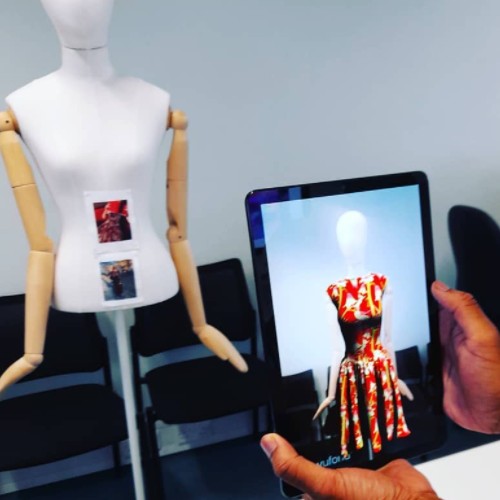
View our students' work
Find out more about the Media Arts and Communications department and view the work of some of our students.

Come to an open day
Discover our TEF Gold rated teaching and see why students voted Sheffield Hallam a top five university in England at the prestigious Whatuni Student Choice Awards.