Everything you need to know...
-
Tuition fees
Home: £10,050 per year
International/EU: £18,900 per year -
Course duration
4/5 Years
-
Study location
-
Entry requirements
-
Course code
A043
-
Start date
September 2027
-
Placement year available?
Yes
Course summary
- Learn how to gather, organise, write and present sports news, features and commentary to a professional standard across a variety of platforms.
- Gain a critical understanding of the historical, cultural and global context of sport
- Equip yourself with the skills necessary to enter a competitive industry as a freelance sports journalist.
You will examine the ethical, legal and regulatory context in which sports journalists work and learn about the historical and cultural significance of sport. You will learn how to produce content for print, web, social media, radio and TV audiences. See articles written by our current students.
Employability
95% of UK graduates are in work or further study 15 months after graduating (2023/24 Graduate Outcomes Survey).

Come to an open day
Discover our TEF Gold rated teaching and see why students voted Sheffield Hallam a top five university in England at the prestigious Whatuni Student Choice Awards.
How you learn
On the course you learn how the sports department of media organisations operate, how to produce news stories, match reports, commentary, preview features, opinion pieces and personality profiles and how to research and plan sports coverage for radio and television broadcasts. You will gain an understanding of public relations and media liaison techniques, such as how to devise and organise media opportunities and how to write web pages, press releases, news items and promotional material.
Student's success story
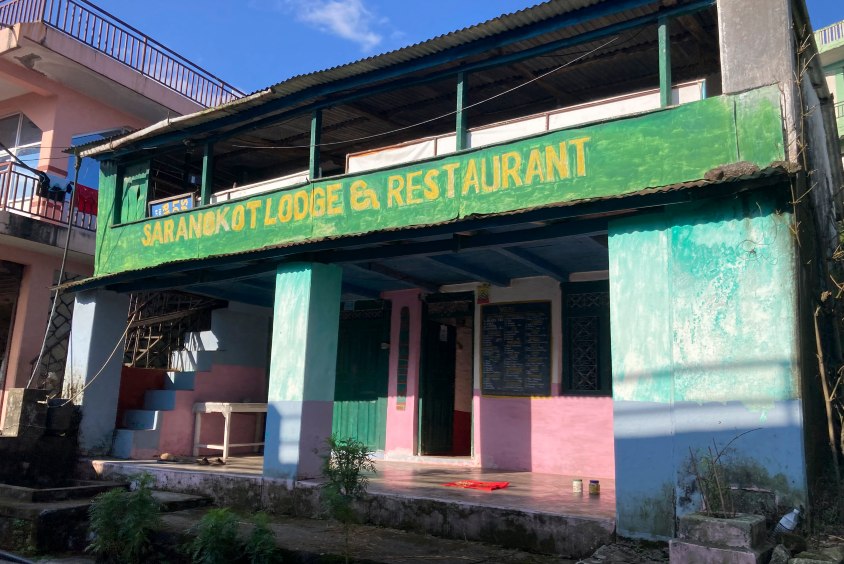
Students from the Department of Media Arts and Communication visited Nepal to document human rights issues, before exhibiting their work through a series of interactive public exhibitions in Sheffield.
“The trip was an incredible experience for all of us and as a learning experience it was unique and thrilling”, said Aron Spall, Senior Lecturer in Digital Media Production.
Siring Adol Caur, studying MA Sports Journalism said: “It will be one of the best memories from the course for each one of us, to cherish for a lifetime. It gave me quite a journalistic view and opened my mind to different experiences that are waiting for me to be explored."
Applied learning
Work Placements
You will have opportunity to study abroad in Europe, Australia or America and the option to take a placement year to work in industry.
You learn through
- Lectures
- Seminars
- Practical sessions
Modules
Important notice: The structure of this course is periodically reviewed and enhanced to provide the best possible learning experience for our students and ensure ongoing compliance with any professional, statutory and regulatory body standards. Module structure, content, delivery and assessment may change, but we expect the focus of the course and the learning outcomes to remain as described above. Following any changes, updated module information will be published on this page.
You will be able to complete a placement year as part of this course. See the modules table below for further information.
Year 1
Compulsory modules
The aim of this module is to introduce and encourage you to make imaginative and inventive use of skills appropriate to a diverse range of media project work. The module will promote an experimental, risk taking creative outlook. You will be encouraged to develop reflective thinking, understanding personal creativity and how this relates to your intended degree route.
INDICATIVE CONTENT
This module encourages you to experiment with a range of creative approaches to media production. You will learn key techniques relevant to a range of production areas. You will also receive brief introductions to the range of subject areas in the department of Media Arts and Communications in the first few weeks of the module. You will be encouraged in the early weeks of this module to experiment with a range of different media techniques and formats
Sample topics could include:
- Storyboarding
- Sketching
- Scripting
- Mark-making
- Life drawing
- Researching locations
- Use of still and video cameras
- Use of microphones
- Storytelling and narrative techniques
- Colour theory
- Understanding visual language
- Writing for different media contexts
- Layout and design
- Basic editing techniques in sound, video, images and digital design
- Working collaboratively
- Ethics, health and safety, risk assessments and release forms
The aim of this module is to introduce students to the academic study of creative media practice. Students will be supported in developing skills of academic research, learning and communication to further their appreciation of the relationship between their own practice and its wider historical, social, cultural and industry contexts.
Indicative Content:
This module introduces students to thinking and writing about their work in relation to the wider media landscape. Students will learn to write in a critical, academic style, using a range of resources to support their arguments. They will be introduced to the idea of academic texts and how to read, analyse and use these sources in their writing.
Students will be encouraged to engage in secondary research using a variety of library, gallery and media sources and think about their own production in relation to its social, cultural, historical and industry contexts.
This module will be delivered alongside the media project module and is designed to help students contextualise their practice. Students will be expected to research current and historical examples of the medium/genre they are specialising in and to show how their work relates to other examples of creative media practice. They will be introduced to some basic theoretical concepts and encouraged to think about issues in the wider media industry impacting on their practice such as regulation, copyright and distribution.
Students will cover topics such as:
- How to identify relevant literature (e.g. books and articles) to use in assignments
- How to read and understand academic literature
- Essay writing and structuring techniques
- How to use quotes and examples to illustrate a point
- Correct referencing, quoting and use of sources
- Use of libraries, databases, media archives, galleries and other resources
- Introduction to media regulation, codes and laws
- Histories of different media
- How to situate your own practice in relation to others’ work
- Identifying an audience for your work
- Analysing and critiquing arguments/messages in both academic and media texts
This module supports students in the development and production of self-directed creative media or communication project work, allowing them to demonstrate their skills across one or more media platforms. Students will produce a substantial portfolio of work relevant to their chosen area of creative media and communication, informed and supported through research and developed in consultation with a subject tutor.
INDICATIVE CONTENT
You will build on the skills you acquired in semester one to create a portfolio of media production in your chosen specialism. The nature of the work in this portfolio will be devised by you, in dialogue with your lecturers. You will be responsible for all stages of the project from idea generation and pre-production through to post-production editing and a final evaluation of your work.
Projects will be introduced by your tutors and grounded upon self-directed study and research; these form the basis of your practice work. Technical workshops and group tutorials will help you develop your skills and techniques. You will also spend some time in one-to-one supervision with a member of staff who specialises in your chosen area.
You will take part in small group peer review and critique sessions. During these sessions you will discuss your work and that of others, offering support, ideas and constructive critiques to help one another succeed.
During the module you will be encouraged to document your practical work in a research workbook using skills acquired last semester. The workbook can be presented in a format of your choice.
This module aims to support students in the development of independent learning, key study skills and attributes required for effective engagement with degree level study in the Media Arts and Communication subject areas. This module aims to help you to develop confidence in your ability to discuss and present your work clearly. You will be encouraged to reflect upon and gain an understanding of where your own strengths and weaknesses are with regard to your work, and begin to appreciate how to improve your practice and study skills. Through a range of activities and exercises you will be encouraged to take creative risks and to begin researching your ideas so that their potential can be explored. This module provides you with the necessary foundational skills from which all your future creative work can develop.
Indicative Content:
The module introduces the skills and techniques needed for university study and supports students in their development of a creative and reflective approach to their work.
The emphasis of the module will be to encourage students to develop several possible Media solutions that creatively address specified problems or fulfil the criteria of a given brief. Students will be encouraged to explore different ways of generating ideas, and to experiment with creative techniques such as: drawing, writing, creating mind maps, curating material from different sources, collages and more.
There will be introductions to essential skills in writing, drawing, IT and information gathering as well as techniques for project planning, time management and personal development planning. Students will receive training and guidance in using university resources such as the Learning Centre, student support services and careers services.
Students will be encouraged to set up a blog or other form of online portfolio during this module that can both be used to reflect on their learning and display their production work not only on this module but throughout the course.
Other topics may include:
- Using the Library, your SHU email account and the virtual learning environment (Blackboard)
- How to access the range of student support services offered by the university
- Appropriate software and associated academic procedures
- Techniques for effective communication including the written word
- How to research effectively
- How to appropriately reference your research and acknowledge sources
- Planning and managing your time effectively
- Using the university careers and employability centre
- Getting the most from tutorials, and understanding the value of constructive criticism
- Working in teams and groups
- Evaluating your own and other people’s work
- Understanding assessment criteria
- Preparing for a presentation
- Speaking to a group
- Generating and selecting ideas
- Record-keeping
Year 2
Compulsory modules
Module Aim:
On this module, you will research real-world stories and use audio and visual skills to create content for broadcast (from TV and radio to digital platforms and social media). You will gain an understanding of practical studio techniques, including production, editing, and broadcast. You will learn to reflect on your strengths, and recognise your professional behaviours, limitations, and experiences.
Indicative Content:
Story gathering and writing for broadcast.
Use of video and audio equipment
Video and sound editing using relevant software.
Studio production techniques
Ethics in broadcast journalism
Module Aim:
On this module, you will develop your understanding of live event reporting, including key roles in live broadcasting and coverage in both radio and television commentary. You’ll work with external partners to experience live sporting events and press conferences, increasing your skills and confidence in these dynamic spaces.
Indicative content:
Live reporting skills for radio and television platforms.
Live commentary skills for radio and television platforms.
Researching and planning sports coverage for radio and television broadcasts
Making TV and radio highlights packages.
Visiting sports events
Attending press conferences
Live Interviewing skills
Reflection on professional practice and ethics
Module Aim:
This module will immerse you in key issues and debates in sports journalism and reflect on the role that sport has played and continues to play in society.
You will also develop your research skills to critically reflect upon issues in sport including governance, diversity, inclusion, gender and globalisation.
INDICATIVE CONTENT
The history of sport
The development of sports coverage in the media
Foundational research skills
Representation and diversity
Equality and inclusion
Globalisation and sustainability
Governance, ethics and accountability
Module Aim:
This module introduces you to the essential skills needed to produce written sports content for target audiences across print and digital platforms. These skills will include researching and writing sports news and features and previewing and reporting on sports events.
In addition, you’ll develop an understanding of audience, news values, approaches to interviewing and inclusive practice.
Indicative content:
Sources and resources for inclusive sports news and feature writing
Understanding audiences and platforms
Interviewing techniques
Writing previews, profiles and match reports
Role of sports journalists in supporting inclusivity in sport
Reflection on professional practice
Year 3
Compulsory modules
Module Aim:
This module will equip you with the skills to deliver content across social media and digital first platforms.
It involves applying relevant methods, production techniques, and technical skills to support creative storytelling, while effectively communicating ideas tailored to specific audiences.
You will work in groups as well as with external partners, demonstrating professional awareness, ethical practice, and self-leadership.
Indicative content:
Gathering audio, video and photographic material
Editing audio, video and photographic material
Podcasting
Project planning
Audiences and online behaviour
Digital storytelling across social media and emerging publishing and broadcasting platforms
Non-linear content creation
How to use and create graphics for digital platforms
Marketing and monetisation of digital content
Module Aim:
You will develop a deeper understanding and improved practical application of the ways in which journalists use language, content, style and structure to produce features for both print and online magazines. You will be introduced to the business of magazines and develop your ability to conceptualise, justify, design, and produce your own magazine content. You will explore how print and online magazines work together within a brand, and how content is shaped differently for printed publications, websites and social media. You will reflect on and critically evaluate your learning and identify strengths and skills to support best journalistic practice.
Indicative content:
Feature writing skills
Interviewing skills
Understanding long-form platforms
Magazine design and layout
Establishing a multiplatform brand
Audience and market identification
Module Aim:
This module will introduce you to the key social, legal, governmental, and regulatory frameworks for professional journalism. Building on foundational knowledge from L4, you will focus on relevant local and national structures and processes, and on key topics of media law. You will develop a critical awareness around questions of ethics and the role of journalists in exploring, explaining, and exposing legal and political processes.
INDICATIVE CONTENT
The essential structures and processes of local and central government in England and Wales.
Knowledge of the ECHR (Human Rights Act 1998) legislation in the context of journalistic practice.
Essential media law for journalists: defamation, contempt of court, reporting restrictions, copyright and sources of UK law.
The regulatory system and ethical codes of conduct within which UK journalists operate.
Module Aim:
This module further develops writing and broadcast skills. You’ll gain experience of newsday processes and cycles in realistic professional newsroom settings, and you’ll research, develop, and prepare same-day multi-platform programmes. Through collaboration with peers on the module and with external partners, you will develop your digital fluency, technical competencies, and professional awareness.
Indicative Content
Developing, preparing, and presenting news stories
Multiple and multi-platform broadcasting
Digital fluency and technology skills
Professional contexts, expectations, and collaborations
Project management and team building
Responding to feedback
Audience and presentation
Elective modules
This module is for undergraduate students to study abroad in their second year, Semester 2 (only for courses that offer this option). With this module, you can spend a semester at one of the University’s approved partner institutions worldwide – from Europe to the Americas, Asia Australia or Canada.
Study Abroad plays an important role in the University's commitment to an engaging, challenging, and thriving learning culture. It offers opportunities to experience other academic cultures and foster intellectual maturity while enhancing co-curricular skills and students' long-term employability.
Study abroad for credit is permitted on existing university-approved courses only. Students are awarded credits and grades at the partner institution, which are converted into Sheffield Hallam credits and grades on return and included in the Sheffield Hallam degree classification.
Please check and refer to the webpage How study abroad works. You must submit a Learning Agreement outlining the modules you will be taking at the partner institution. The Learning Agreement will be signed off by your academic tutor to ensure that the Learning broadly covers the Learning Outcomes set out in your course curriculum during your study abroad.
Year 4
Compulsory modules
Module aim:
The aim of this module is to enhance students’ professional development through the completion of and reflection on meaningful work placement(s).
A work placement will provide students with opportunities to experience the realities of professional employment and experience how their course can be applied within their chosen industry setting. The placement will:
- Allow student to apply the skills, theories and behaviours relevant and in addition to their course
- Enable students to enhance their interpersonal skills in demand by graduate employers – communication, problem-solving, creativity, resilience, team work etc.
- Grow their student network and relationship building skills.
- Provide student with insights into the industry and sector in which their placement occurs
- Help student make informed graduate careers choices.
Indicative Content:
In this module students undertake a sandwich placement (min 24 weeks / min 21 hours per week) which is integrated, assessed and aligned to their studies.
Their personal Placement Academic Supervisor (PAS) will be their key point of contact during their placement and will encourage and support students to reflect on their experience, learning and contribution to the organisation they work for.
To demonstrate gains in professional development, students will be required to share their progress, learning and achievements with their Placement Academic Supervisor and reflect on these for the summative piece of work.
Final year
Compulsory modules
Module Aim:
In this module you will explore the ways research can provide a deeper insight into communication practice in a range of social contexts. You’ll develop your research skills, learning about a range of data collection methods relevant to Media, Journalism and Public Relations, and gain hands-on experience of approaches to the analysis of different types of data. The module will support you to reflect on the ethical considerations relating to research in online and in-person contexts. You will enhance your ability to define research questions, critically evaluate sources and methods, and plan projects.
Indicative Content:
Developing research questions
Approaches to data collection
Quantitative data analysis methods
Qualitative data analysis methods
Research ethics
Project planning
Identifying and critically evaluating sources
Working independently
Module Aim:
On this module, you’ll undertake a project in an area of your choosing, focusing on your interests and ambitions. With dedicated support from a supervisor, you’ll develop, plan, and carry out a project that showcases research, writing and/or other production skills to create a dissertation or practical project on your chosen topic. You’ll work closely with your colleagues as part of a learning community, providing and receiving feedback on your ideas and work in progress. This module will develop your confidence in your knowledge and skills as well as your awareness of the professional world of Sports Journalism.
Indicative Content:
Advanced research skills
Industry expectations
Ethics processes for research and writing
Understanding audiences
Project management
Planning, revising, and editing work
Providing and actioning feedback
Self-evaluation and reflection
Choosing appropriate formats
Module Aim:
Building on your previous study, this module further develops your writing and broadcasting skills. You’ll gain experience in realistic newsroom settings and through preparing and broadcasting TV, radio, and online content, for sport news. You’ll also increase your confidence by responding and adapting to developing news stories, collaborating with peers on the module to generate content for multi-platform broadcast that demonstrates professional and industry standards.
Indicative Content:
Professional behaviours, expectations, and processes
Advanced digital and technological skills for broadcasting
Use of video and audio equipment
Video and sound editing using relevant software.
Collaboration and team working
Project and team management
Module Aim:
You will develop your understanding of public relations and media management in sport and will gain practical experience of working alongside an industry partner. A key focus will be your understanding of professional expectations and behaviours in relation to inclusivity and sector values. Working collaboratively, you’ll encounter real-world challenges and roles and you’ll be supported in critical self-reflection on your strengths, professional attributes, and ambitions.
INDICATIVE CONTENT
Sport in the modern world and its relationship with the media
How sport manages its publicity, the tools of sports publicity and Public Relations in Sport
The skills of good communication in sport through online and conventional PR
Crisis management, the public face of sport, how sports organisations deal with their 'publics'
The staging of a big event, the structure and business of sport
The importance of media management in merchandising, transfer, fees global commercial investment and PR
Future careers
This course prepares you for a career in
- newspaper sports journalism
- broadcast sports journalism
- sports public relations
- online sports journalism
- magazine sports journalism
Previous graduates of this course have gone on to work for
- Talk Sport
- Liverpool FC TV
- Charlton Athletic FC
- Everton Football Club
- Leeds Rhinos
- Perform
- National Golf Magazine
- Sheffield Star
- William Hill TV
- Chesterfield Football Club
- Wolverhampton Wanderers FC

All in on your career
We promise you’ll be ready to launch your career. With employer connections, hands-on learning and lifelong career support, we’ll help make your ambition a reality.
Where will I study?
You study at City Campus through a structured mix of lectures, seminars and practical sessions as well as access to digital and online resources to support your learning.
City Campus
City Campus is located in the heart of Sheffield, within minutes of the train and bus stations.
City Campus map | City Campus tour

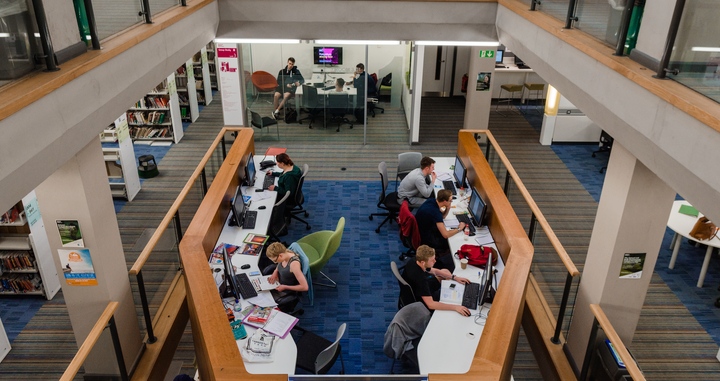
Adsetts library
Adsetts Library is located on our City Campus. It's open 24 hours a day, every day.
Explore the libraryEquipment and facilities
On this course you work with
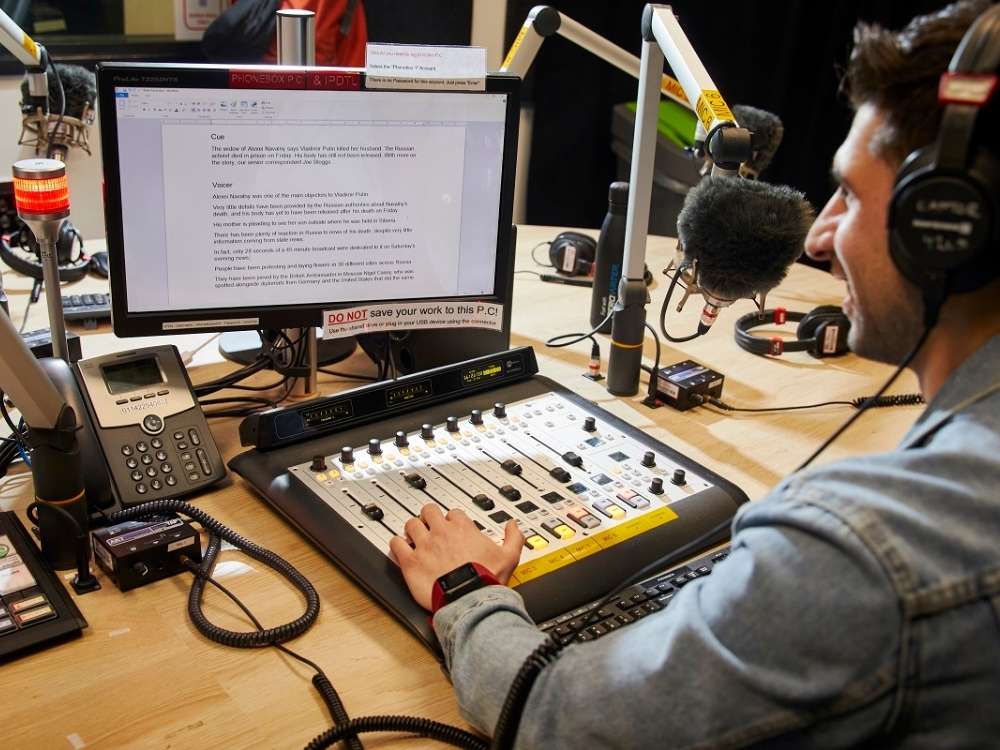
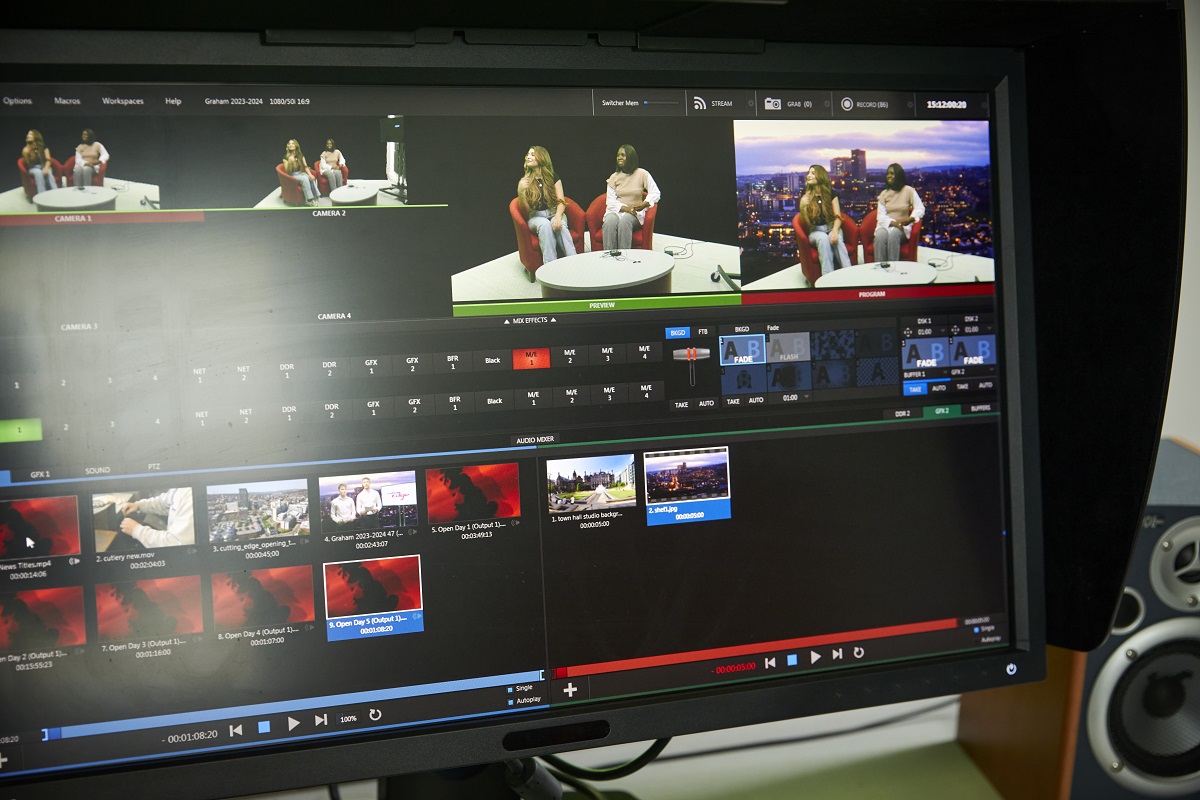
- Industry standard, state of the art broadcast studios and exclusive access to three news rooms.
360 tour - TV Studio
Learn more about your department
Media, Arts and Communications Facilities Tour
Take a look around the media, arts and communication facilities at Sheffield Hallam University with lecturer Saskia Wilson.
Media Gallery



Entry requirements
All students
UCAS points
- Standard offer: 64 UCAS points
This must include at least 32 points from one A level or equivalent BTEC qualifications. For example:
- CC at A Level.
- MPP in BTEC Extended Diploma.
- Pass (D-E) overall from a T level qualification with D from core.
- A combination of qualifications, which may include EPQ and general studies.
You can find information on making sense of UCAS tariff points here and use the UCAS tariff calculator to work out your points.
GCSE
- English Language at grade C or 4
Access - an Access to HE Diploma with at least 45 credits at level 3 and 15 credits at level 2. At least 15 level 3 credits must be at merit grade or above, from a QAA-recognised Access to HE course, or an equivalent Access to HE certificate.
If English is not your first language, you will need an IELTS score of 6.0 with a minimum of 5.5 in all skills, or equivalent.
Additional information for EU/International students
If you are an International or non-UK European student, you can find out more about the country specific qualifications we accept on our international qualifications page.
For details of English language entry requirements (IELTS), please see the information for 'All students'.
Fees and funding
Home students
Our tuition fee for UK students on full-time undergraduate degree courses in 2027/28 is £10,050 per year (capped at a maximum of 20% of this during your placement year). These fees are regulated by the UK government and therefore subject to change in future years.
If you are studying an undergraduate course, postgraduate pre-registration course or postgraduate research course over more than one academic year then your tuition fees may increase in subsequent years in line with Government regulations or UK Research and Innovation (UKRI) published fees. More information can be found in our terms and conditions under student fees regulations.
International students
Our tuition fee for International/EU students starting full-time study in 2027/28 is £18,900 per year (capped at a maximum of 20% of this during your placement year)

Financial support for home/EU students
How tuition fees work, student loans and other financial support available.
Additional course costs
The links below allow you to view estimated general course additional costs, as well as costs associated with key activities on specific courses. These are estimates and are intended only as an indication of potential additional expenses. Actual costs can vary greatly depending on the choices you make during your course.
General course additional costs
Additional costs for Sheffield Creative Industries Institute (PDF, 274.9KB)Legal information
Any offer of a place to study is subject to your acceptance of the University’s Terms and Conditions and Student Regulations.
View our students' work
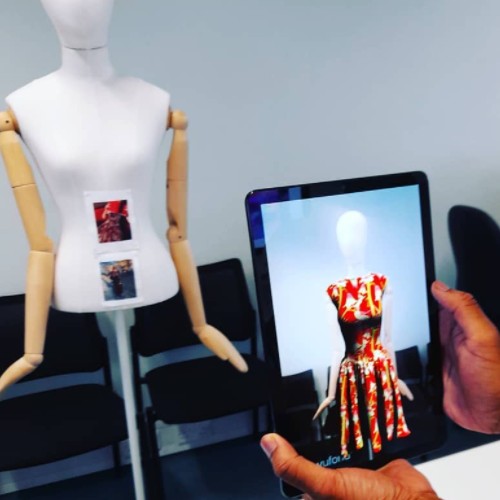
Find out more about the Media Arts and Communications department and view the work of some of our students.
Teaching Quality
Sheffield Hallam University is ranked 8th amongst UK providers for journalism in the Guardian University Guide 2023 league table.