
.jpg?sc_lang=en)
Everything you need to know...
-
Tuition fees
Home: £10,050 per year
International/EU: £20,900 per year -
Course duration
4 Years
-
Study location
-
Entry requirements
-
Course code
BB23
-
Start date
September 2027
Course summary
- Gain the skills to join the rewarding and in-demand field of mental health nursing.
- Develop professional skills for leadership roles in clinical or academic settings.
- Broaden your knowledge alongside other health and social care professionals.
- Learn from enthusiastic experts with a variety of clinical experience.
- Benefit from real-world experience with placements and hands-on practicals.
This unique course offers you an exciting opportunity to become a fully qualified nurse, providing compassionate nursing care in mental health. You’ll consider the changing nature of health, illness and recovery – as well as the relationship between healthcare professionals and service users. You’ll graduate as a reflective, competent and employable professional.
The Foundation Year course is designed for anyone who feels they would benefit from extra preparation before undertaking degree-level study or who does not meet the entry requirements for the BSc (Hons) course (due to lower predicted grades or lower performance at a selection event). The academic staff leading selection event processes are well placed to advice on the benefits of additional study or wider preparation in advance of joining a degree course.

Health and social care funding
Home fee-paying students can access a non-repayable maintenance grant of at least £5,000 per year (excluding the foundation year). You may also be eligible for additional financial support based on your circumstances.
Employability
95% of our graduates are in work or further study 15 months after graduating (2022/23 Graduate Outcomes Survey).

Come to an open day
Discover our TEF Gold rated teaching and see why students voted Sheffield Hallam a top five university in England at the prestigious Whatuni Student Choice Awards.
How you learn
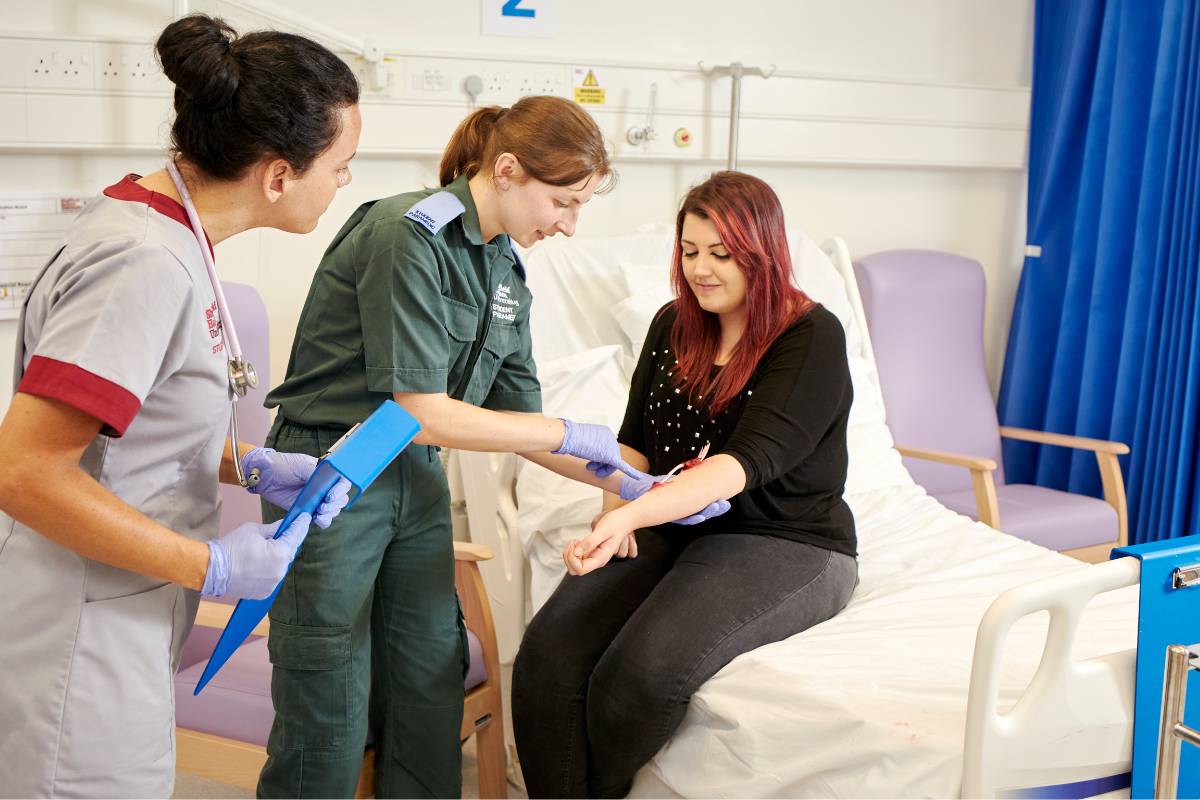
On this course you’ll learn from academic staff who have a variety of clinical expertise and experience. You’ll apply your theoretical study directly to your practice setting, using the knowledge, skills and attributes you’ve gained. The course is a blend of theory and hands-on practical work, giving you the opportunity to practise what you learn in both simulated and real-world settings.
Nurses are an integral part of a multidisciplinary team. You’ll have the chance to learn and collaborate with students from other health and social care courses, helping you to deliver person-centred care, with an understanding of how other professionals contribute to the person's journey through health and social care services.
You learn through:
- Exams
- Poster presentation
- Reflective writing
- Assessment of proficiency in practice
- Extended project
- Group and individual presentations
- Written assessment
Key Themes
You’ll learn how nurses who specialise in mental health help people. They assist with various challenges – from depression, anxiety and dementia to bulimia nervosa, post-natal depression, and other conditions that may trigger unconstructive thoughts and beliefs. You’ll then learn theoretical underpinnings, such as recovery-based practice, DSM-V criteria and psycho-social interventions.
You’ll explore the various settings mental health nurses work in – from acute inpatients to accident & emergency to community treatment teams. You’ll also discover the areas of practice that mental health nurses often specialise in, such as child and adolescent mental health.
Course Support
We’ll support you to thrive as a skilled, adaptable and proficient mental health nurse. We’ll nurture your creativity, encouraging you to ask compelling questions and providing you with the tools to answer them.
With our high ratio of staff to students, you’ll always be able to receive the support you need on your learning journey towards highly-skilled, graduate-level employment. This includes:
- Access to our student support triangle to help with your personal, academic and career development.
- Access to our Skills Centre for support with one-to-ones, webinars and online resources, where you can get help with planning and structuring your assignments and assessment preparation.
Applied learning
Live Projects
Applied learning takes place in our specialist labs, practice facilities, simulation environments and workshops – as well externally through field trips, educational visits, digital technologies, and even by loan access to specialist equipment so you can work on or off-campus. These activities are directed or supported by lecturers or technical experts, providing you with opportunities to practise and apply your learning.
Practice learning takes place in a range of settings where nurses care for adults, children, and young people. You’ll participate in activities that contribute to your training and demonstrate the responsibilities involved.
Work Placements
You’ll apply your learning through real-world placements, projects, internships and voluntary activities. These take place in work settings, through online interfaces and within the university.
There’s also an optional placement – where you can arrange an experience nationally or internationally to meet your personal professional development needs and support your employability.
You’ll be supervised and supported by practice supervisors, practice assessors, link lecturers and academic assessors – enabling you to learn and safely achieve proficiency and autonomy in your professional role.
Modules
Important notice: The structure of this course is periodically reviewed and enhanced to provide the best possible learning experience for our students and ensure ongoing compliance with any professional, statutory and regulatory body standards. Module structure, content, delivery and assessment may change, but we expect the focus of the course and the learning outcomes to remain as described above. Following any changes, updated module information will be published on this page.
Year 1
Compulsory modules
Module Aim
This module will develop your knowledge and understanding of academic, personal, and professional skills that enable transition into Level 4 study and future employability.
The module will be delivered through a combination of face-to-face and digital lectures and seminars, practical's, Academic advising, and simulations.
Indicative content
Content of the module is agile and flexible to allow for changing professional situations and contemporary perspectives. Typical indicative content includes:
-
Fundamental principles of health care
-
Key organisations, agencies, services, professional bodies.
-
Professionalism, Professional standards, and code of conduct/ethics/practice within relevant work-related roles.
-
Equality, Diversity, and Inclusion
-
Academic writing conventions
-
Sciences related the 11 health professionals including biology, physics and chemistry.
-
All sciences will cover fundamentals and basic overview also exploring links to professional specific knowledge.
Module Aim
In this module you will develop your knowledge and understanding of a range of contemporary issues that currently influence healthcare. It will focus on developing your ability to find, select and apply appropriate research and evidence.
The module will be delivered through workshops and seminars.
Also, Academic advising session within this module.
Indicative content
Content of the module is agile and flexible to allow for changing professional situations and contemporary perspectives. You should be able to:
-
Search and identify appropriate evidence.
-
Explore issues impacting on Healthcare.
-
Identify policies and actions that lead to sustainable healthcare.
-
Explore the challenges of working with diverse communities.
-
Recognise strategic delivery partners Healthcare.
-
Examine the use of interventions to address challenges in healthcare.
Year 2
Compulsory modules
This module introduces you to the biopsychosocial, cognitive, political, economic, and medical factors which influence the health and wellbeing of individuals, diverse populations and communities. You’ll work with peers from other professions to consider how collaborative practice impacts on health and wellbeing outcomes, and helps you thrive in your own professional practice.
You’ll study topics such as:
-
Models of care, support and empowerment
-
Social capital and cultural humility
-
Social accountability and determinants of health
-
Safeguarding practice
-
Public health agendas, inquiries and evidence-based reports
-
Building effective, trusting relationships
-
Community profiles and place-based care systems
-
Person-centred service delivery
-
Behaviour change and microaggressions
-
Diversity and inclusion
-
The effects of planetary health on wellbeing
This module explores the knowledge, skills and attitudes that underpin and support nursing, holistic care and professionalism. You’ll also reflect on your personal attributes and values, supporting your progression into the profession.
You’ll study topics such as:
-
Professional behaviours, attendance and evaluations
-
Evidenced-based nursing practice
-
Inclusivity, exclusion, unconscious bias and anti-racism
-
Preparation for practice
-
Adult, mental health and learning disabilities nursing
-
Psychological concepts to develop relationships with others
-
Child development and psychological dimensions of play
-
Positive behaviours support
-
Cognitive behavioural therapy skills
-
Equality act and reasonable adjustments
This module spans year one of the undergraduate pre-registration nursing programme, providing the learning opportunities to achieve part one through completion of the PAN Midlands Yorkshire and East Practice Assessment Document (MYEPAD), or equivalent. You’ll develop your professional behaviours, knowledge and skills in preparation for registration with the NMC, combining learning in the practice setting with simulated practice placements.
You’ll apply skills and learning such as:
-
Reflection for portfolio development
-
MYEPAD training
-
Fundamental nursing skills – part one proficiencies
-
Medicines administration and test
-
Mandatory basic life support training
-
Mandatory moving and handling training
-
Mandatory PMVA training
-
Mandatory e-learning for health
-
Technology and informatics (telehealth)
-
A wide range of clinical experiences within each allocated practice setting
This module consolidates your progression to graduate-level study and professional practice, reflecting on your role as a professional who delivers safe and effective person-centred care. You’ll be supported to identify influencing factors on your professional practice – developing strategies which support you to thrive personally, professionally and academically.
You’ll study topics such as:
-
Reflective practice and writing skills
-
Personal and professional development and identity
-
Emotional intelligence
-
Self-perception, privilege and introduction intersectionality and allyship
-
Self-management, feedback and leadership
-
Ethics in professional practice
-
Communication methods and techniques
-
Contemporary policy for professional practice
-
Teamwork and collaborating across professional boundaries
-
Personal behaviour and self-assessment techniques
-
The impact of behaviours, values, research and anti-oppressive and inclusive practice
The aim of this module is to enable you to understand the key bio/psycho/social principles, that underpin person centred care and health care practice across the life span.
Indicative content:
Applicable to all fields of nursing:
Anatomy and physiology
- Microbiology
- Genomics
- Sepsis
- Musculoskeletal
- Overview of body structures and anatomical/physiological terminology
- Altered human anatomy
- Endocrine
- A - Airway – Respiratory System
- B - Breathing - respiratory system
- C - Circulation - Cardiovascular and renal systems
- D - Disability - Neurological and blood glucose management
- E – Exposure – Skin and homeostasis
Clinical terminology in preparation for practice
- Pharmacology
- Pharmacokinetics
- Pharmacodynamics
- Absorption, distribution, metabolism, excretion,
Psychology
- Introduction to psychology
- Psychological concepts
- Psychological development across the lifespan.
- The impact of illness on self-concept, self-esteem and body image
- Cultural perspectives
- An introduction to spirituality & spiritual care
- Pain
Sociology & Public Health
- Life course models
- Social models of health
- Sociological theories
- Equality, Diversity & Inclusion in society
- Essentials of public health and health screening
- Environmental influences on global health
Additional field specific content:
Adult field:
- Positive ageing
Children’s field:
- Attachment
Mental health field:
- Assessment and formulation
- Treatment and evaluation
- Cultural and global perspectives.
Learning disabilities field
- Life course models
- Models of Disability: social vs medical.
- Ecological and systems approaches.
- Psychological concepts applied to the human condition: Attachment Theory, Grief and Loss.
- Theoretical models for understanding human development and human behaviour across the life span.
Year 3
Compulsory modules
This module applies the key biological, psychological and sociological principles that underpin healthcare practice and person-centred care. You’ll explore this in a range of issues across the lifespan and diverse groups.
You’ll study topics such as:
-
Anatomy and physiology
-
Digestive system
-
Haematology
-
Immunology
-
Psychology
-
Sociology
-
Adult nursing
-
Children’s nursing
-
Mental health nursing
-
Learning disabilities
This module is your chance to apply your professional knowledge, skills and values in an integrated manner. You’ll work collaboratively with peers from other disciplines to assess, intervene and overcome the challenges of complex health and social care situations – supporting individuals, groups and communities.
You’ll study topics such as:
-
Drivers for integrated and person-centred health and social care
-
Inter-professional teamworking across multiple service interfaces
-
Shared ethical decision-making, collaboration and co-production
-
Assessment, treatment planning, evaluation and risk management
-
The realities of living with long-term conditions and multi-morbidities
-
Mental capacity, best interest assessment, equality and reasonable adjustments
-
Resilience, communication, breaking bad news, difficult conversations
-
Interpersonal and systemic discrimination in health and social care
-
Inclusive language and terminology including challenging microaggressions
-
Technology-enabled care and digitalisation within integrated care systems
This module develops your practice in nursing and healthcare practice for all people who use services and carers. You’ll enhance your holistic and timely care – optimising safety and minimising risk – with a focus on the application to practice.
You’ll apply learning and skills such as:
- Professional resilience and promoting positivity
- Therapeutic relationships: challenging and complexity
- Perspectives of people who use services
- Nursing formulation, providing and evaluating care
- Critical incidents, risk management and aversion
- Clinical and ethical decision-making
- Critical awareness, escalation and raising concerns
- Orientation to placements and work-based learning
- Trauma informed care
- Wound care
This module introduces you to research and enquiry design and methods. You’ll be able to apply them to an area of investigation – considering factors that impact on literature appraisal – preparing you to undertake and manage an investigation as a professional practitioner.
You’ll study topics such as:
-
What makes a good question
-
Research design, types of evidence and suitability of methods
-
Co-production – patient and public involvement
-
Inclusive perspectives of research
-
Data collection methods, strengths and weaknesses
-
Analysis techniques
-
Usefulness/impact and implications for practice
-
Ethics and governance
-
Sample of existing appraisal tools
-
Searching and critically reviewing the literature
This module spans year two of the undergraduate pre-registration nursing programme, providing learning opportunities to achieve part two of the programme through completion of the PAN Midlands Yorkshire and East Practice Assessment Document (MYEPAD), or equivalent. The central focus is to maintain professional attitudes and behaviours while developing knowledge and skills in preparation for registration with the NMC.
You’ll apply learning and skills such as:
- Reflection for portfolio development
- MYEPAD training
- Fundamental nursing skills: part 2 proficiencies
- Medicines administration and test
- Mandatory training: basic life support
- Mandatory training: PMVA
- Mandatory training: e-learning for health
- Technology and informatics (telehealth)
- Academic assessing guidance and support sessions
- Wide range of clinical experiences
Final year
Compulsory modules
This module develops your systematic understanding of leadership and education concepts in practice. You’ll critically reflect on these in the context of collaboration within health and social care practice – considering how you can effectively support people who use services, their carers and families, and communities who have complex health and care needs to thrive.
You’ll study topics such as:
-
Differences between management, leadership and the role of the critical follower
-
Leadership theories, models and styles most relevant to health and social care
-
Self-awareness and seeing ourselves as leaders
-
Recognising our own personal impact, rank, power and privilege
-
Professional cultures, traditional hierarchies and becoming an agent of change
-
Leading psychologically safe, anti-racist and inclusive teams
-
Resilience, volatility and acknowledging the wellbeing needs of the workforce
-
Sustainable practice, quality improvement and leadership
-
Tackling inequalities in health and social care through advocacy and education
-
Technology-enabled care and digitalisation within integrated care systems
This module consolidates the key biological, psychological and sociological principles that underpin the management of people with complex care needs. This will be critically evaluated in an applied range of issues across the lifespan and diverse groups.
You’ll study topics such as:
-
Planning and delivering health promotion interventions
-
Care navigation, knowledge and skills
-
Safeguarding and serious case reviews
-
Biosciences, pharmacology and genomics
-
Genitourinary medicine and reproductive health
-
Principles of non-medical prescribing
-
Pharmacokinetics case study walk through
-
Under-represented groups and inclusive services
- Strategies for promoting self-care
-
Common long-term conditions
This module allows you to demonstrate that you’ve met the requirements for registration with the Nursing and Midwifery Council. You’ll complete the requirements throughout the course, mainly in practice placements, of which there are 60 weeks over the three years.
You’ll apply your learning and skills to:
- Complete a self-declaration of good health and good character
- Achieve a full and final set of clinical professional values
- Achieve 2,300 hours in practice placements
- Achieve 2,300 hours of theory
This module spans year three of the undergraduate pre-registration nursing programme, providing the learning opportunities to achieve part three of the programme through the PAN Midlands Yorkshire and East Practice Assessment Document (MYEPAD), or equivalent. You’ll consolidate your knowledge and skills in leading and co-ordinating nursing care, working towards becoming an independent autonomous practitioner, able to respond flexibly to a range of complex situations.
You’ll apply your learning and skills to:
- Reflection for portfolio development
- MYEPAD training
- Fundamental Nursing skills: part 3 proficiencies
- Medicines administration and test
- Mandatory training: basic life support
- Mandatory training: e-learning for health
- Technology and informatics (telehealth)
- Academic assessing guidance and support sessions
- A wide range of clinical experiences
This module enables you to undertake a sustained, in-depth piece of independent learning, demonstrating a critical understanding and applying appropriate research methods within a piece of work. This work will challenge and contribute to improvements in areas of practice through the dissemination of findings to professional communities.
You’ll apply learning and skills such as:
-
An individual independent project/dissertation
-
Creating and contributing to research and evaluation for practice
-
Application of approaches to research
-
Research, improvement and evaluation methodologies
-
Addressing inclusivity in your research process
-
Dissemination of project outcomes
-
Challenges in applying research outcomes to practice
This module enables you to demonstrate effective leadership knowledge and skills within contemporary mental health nursing practice. You’ll be able to consolidate leadership, management and co-ordination of safe and effective care within a range of care settings.
You’ll study topics such as:
- Psychologically informed nurse-led interventions and formulation
- Leading on and improving the safety and quality of care
- Implementing research findings, near misses and major incidents
- Challenging practice and colleagues
- Management of merge service resources
- Prioritising care, resources and risk management
- Practice supervisor-ready teaching and assessment
- Managing transition for patients and their carers
- Working holistically with patients who use services and their carers
- Ethical decision-making and risk management

All in on your career
We promise you’ll be ready to launch your career. With employer connections, hands-on learning and lifelong career support, we’ll help make your ambition a reality.
Future careers
This course prepares you for a career in clinical nursing within a range of health and social care settings, including:
- Primary and community care
- Secondary care
- Private and voluntary organisations
- Advanced practice roles
- Management positions in clinical nursing
- Lecturing
- Further study, such as health visiting, masters and doctoral education
Previous graduates of this course have gone on to work in:
- Hospital and community nursing environments
- Health centres
- GP surgeries
- The armed forces
- Education
Equipment and facilities
On this course you work with:
- A range of clinical nursing placement environments
- Our purpose-built clinical simulation suites
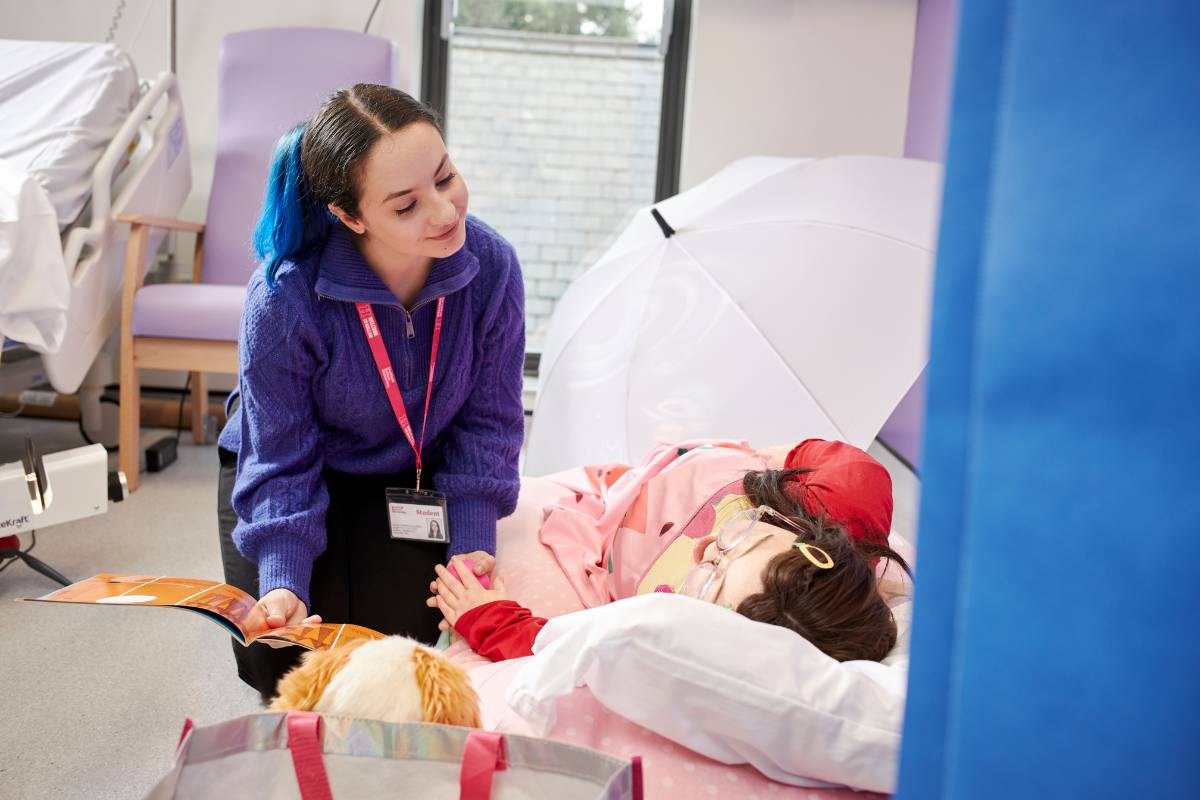
- Mock wards and community spaces
- Technology-enhanced learning
- Clinical skills laboratories
- 24-hour libraries and study spaces designed by our students
360 tour - nursing and midwifery facilities
Media Gallery



Where will I study?
You study at Collegiate Campus through a structured mix of lectures, seminars and practical sessions as well as access to digital and online resources to support your learning.
Collegiate campus
Collegiate Campus can be found just off Ecclesall Road, a bustling student district.
Collegiate Campus map | Campus facilities


Collegiate library
Collegiate Library can be found just off Ecclesall Road. It's open 24 hours a day, every day.
Learn moreEntry requirements
All students
UCAS points
- Standard Offer: 64 UCAS Points
From A levels to include at least 24 points in any one A level or BTEC National qualifications. We do not accept general studies. For example:
- CC at A Level.
- MPP in BTEC Extended Diploma.
- Pass overall from a T level qualification with D or E from core.
- A combination of qualifications, which may include AS levels and EPQ.
You can find information on making sense of UCAS tariff points here and use the UCAS tariff calculator to work out your points.
GCSE
- Science at grade C or 4 or equivalents*
- Maths at grade D or 4 or equivalents**
- English Language or Literature at grade C or 4 or equivalents***
*GCSE Science equivalents
- OCR Science level 2.
- Science units gained on a level 3 BTEC or OCR National Diploma or Extended Diploma qualification.
- Science credits gained on Access to Higher Education Diplomas (at least 12 credits at level 2 or 6 credits gained at level 3).
- Science equivalency test from www.equivalencytesting.co.uk
**GCSE Maths equivalents
- Level 2 Key Skills/ Application of Number/ Level 2 Maths credits from an Access course.
- Maths equivalency test from www.equivalencytesting.co.uk
***GCSE English equivalents
- Level 2 Literacy.
- Level 2 Key Skills.
• Access - an Access to HE Diploma from a QAA recognised Access to HE course in a science based subject. Normally we require 15 credits at level 2 and 45 at level 3.
If English is not your first language, you will need an IELTS score of 7.0 or above, with a minimum score of 6.5 in each skill.
Non-academic entry requirements
Before enrolling you must complete all the professional requirements that are mandatory as part of entry for the course:
Occupational Health Screening
Satisfactory medical clearance, by completion of a health screening assessment, will be a condition of your offer and you cannot enrol on your course without it. This occupational health screening will be provided by the University free of charge and ensures that you meet the medical fitness to train in your profession as per professional and regulatory body requirements and the Higher Education Occupational Practitioners (HEOPs) standards.
As part of this assessment, you are expected to provide all relevant, truthful and accurate information to ensure a safe environment for yourself and patients/service users
If there is any change to your health during your course, you must notify the University immediately so that we that we can undertake an assessment/reassessment to ensure you continue to meet the medical fitness to train in your profession.
Immunisations
All students must comply with the immunisation requirements of the programme in line with the Department of Health (DoH) Green Book standards / current guidelines or equivalent evidence-based standards, which must be met to undertake placements and continue on the course. The NHS updates the list of vaccinations required and these may change over the course of your programme of study.
To remain enrolled, you must complete your full immunisation programme as outlined in the Universities Immunisation Policy.
Self-Declaration
Completion of a Sheffield Hallam University Suitability Self-Declaration form will be condition of your offer and you cannot enrol without completing it. You must fully declare the following information:
- Unfiltered criminal convictions, cautions, reprimands or warnings. This includes convictions considered as ‘spent’ as an Enhanced DBS Criminal record check (required for this course) will show. For further information on unfiltered offences and Disclosing your criminal record please see the Disclosure and Barring Service website and refer to information on Unlock.
- Involvement in disciplinary proceedings during paid or voluntary employment or education establishments.
- Involvement with safeguarding proceedings, social services or related organisations.
- If you have ever been removed from another programme as a result of your behaviour or would have been removed if you had not left the programme.
Disclosure Barring Service (DBS)
Completion of an Enhanced DBS criminal record application will be a condition of your offer. This is a legal requirement for anyone involved in contact with children or vulnerable adults engaging in regulated activity. This check will be provided by the university free of charge. You will need to present valid identity documents as part of the application process. Please refer to the ID checking guidelines for further information.
Positive Disclosures will be reviewed by the Fitness to Practise Operational Group and/or Criminal Records Consultative Panel in conjunction with your Self-Declaration form.
You must inform the University immediately of any changes to your criminal record after your DBS certificate is issued so that we can consider the change and confirm whether you remain suitable to continue your application/studies.
Overseas Criminal Record Check
Applicants who have been resident outside of the UK for 12 months or more (whether continuously or in total) in the last 10 years, while aged 18 or over must provide an overseas criminal record check. Further information on obtaining an overseas criminal record check.
Mandatory Training
Students must complete mandatory training prior to attending placement. Failure to complete this training may result in delayed progression to the next level of study or withdrawal from the course.
Placement hours ‐ Nursing and Midwifery courses only
Placements commence when you start the three-year BSc (Hons) degree.
To progress from the foundation year to the BSc (Hons) degree, you must:
- successfully complete and pass all foundation year modules
- obtain a clear Enhanced Disclosure and Barring Service (DBS) check
- meet the Occupational Health clearance requirements
You must complete the required number of placement hours at each level of the degree. The course team will confirm these requirements with you. If you don't complete the required hours, your progression to the next level may be delayed and you could be withdrawn from the course.
Disability support
We strongly recommend that you tell us about any long term health conditions, learning difficulty or disability you may have. This is so we can assess whether we can deliver the course in such a way that you can meet standards of proficiency and take part without disadvantage both in University and on placement.
You can contact our University student support staff and explore any issues you may have.
The Disability Disclosure booklet provides information for students and will help you understand the importance of disclosing your disability at the earliest possible stage. This is so you can be assessed for the support you may require to succeed on the course.
Additional information for EU/International students
If you are an International or non-UK European student, you can find out more about the country specific qualifications we accept on our international qualifications page.
For details of English language entry requirements (IELTS), please see the information for 'All students'.
Fees and funding
Home students
Our tuition fee for UK students on full-time undergraduate degree courses in 2027/28 is £10,050 per year. These fees are regulated by the UK government and therefore subject to change in future years. The NHS Learning Support Fund offers a non-repayable training grant of £5,000 per year to all eligible new and current pre-registration students. The first year of this course (foundation year) is not included in this grant. You may also be eligible for additional financial support based on your circumstances up to the value of around £6,000. This includes parental support, travel/accommodation expenses, specialist subject payments and a financial hardship fund. Find out about health and social care funding options.
If you are studying an undergraduate course, postgraduate pre-registration course or postgraduate research course over more than one academic year then your tuition fees may increase in subsequent years in line with Government regulations or UK Research and Innovation (UKRI) published fees. More information can be found in our terms and conditions under student fees regulations.
International students
Our tuition fee for International/EU students starting full-time study in 2027/28 is £20,900, which includes an annual placement supplement of £2,000.

Financial support for home/EU students
How tuition fees work, student loans and other financial support available.
Additional course costs
The links below allow you to view estimated general course additional costs, as well as costs associated with key activities on specific courses. These are estimates and are intended only as an indication of potential additional expenses. Actual costs can vary greatly depending on the choices you make during your course.
General course additional costs
Additional costs for Health and Social Care (PDF, 371.2KB)Legal information
Any offer of a place to study is subject to your acceptance of the University’s Terms and Conditions and Student Regulations.