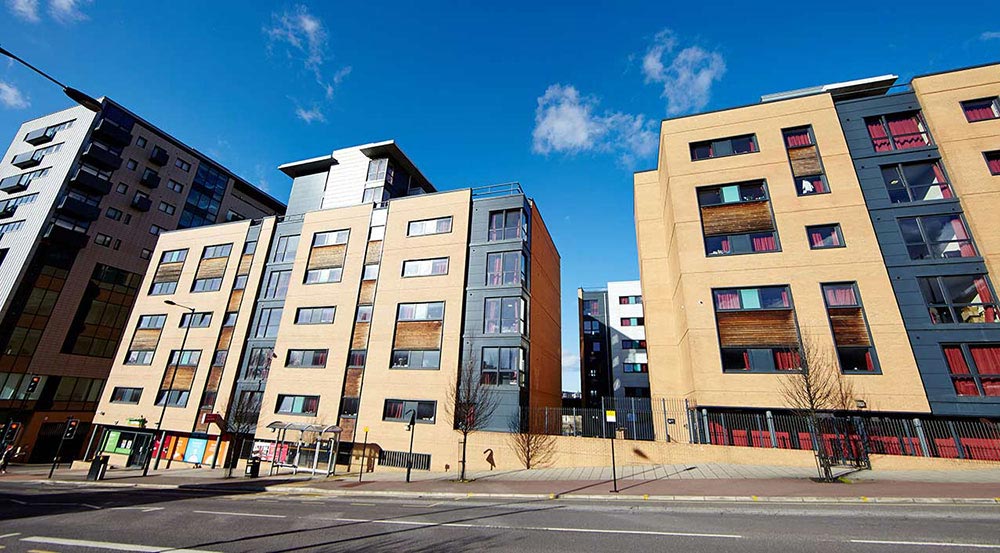

Everything you need to know...
-
Tuition fees
Home: £10,050 per year
International/EU: £18,900 per year -
Course duration
3 / 4 Years
-
Study location
-
Entry requirements
-
Course code
C800
-
Start date
September 2027
-
Placement year available?
Yes
Course summary
- Career readiness – our BSc Psychology is accredited by the British Psychological Society (BPS), preparing you for further study or diverse careers.
- Authentic experience – gain real-world insights through employer-led briefs, applied projects and professional placements.
- Tailored learning – specialise in your final year with clinical, counselling and psychotherapy, developmental, or forensic psychology routes.
- Conduct your own research – design and run experiments, surveys, interviews and focus groups to build practical skills.
- Expand your perspective – study abroad for a semester or complete a year-long placement in industry.
- By exploring different perspectives on human behaviour, motivations, and emotions, you will learn to apply psychological knowledge to real-world challenges. This BSc Psychology degree equips you with the skills and insights needed to thrive in diverse professional settings, from mental health and education to business, research, and beyond.
In your final year you can tailor your degree by either taking a multi-perspective approach on the BSc Psychology or choosing one of three specialist routes: BSc Psychology (clinical, counselling and psychotherapy), BSc Psychology (developmental) or BSc Psychology (forensic).
Employability
95% of our graduates are in work or further study fifteen months after graduating (2022/23 Graduate Outcomes Survey).
Accredited by

British Psychological Society (BPS)
This psychology degree is accredited by the British Psychological Society (BPS) and gives eligibility for the graduate basis for chartered membership (GBC) with the BPS.
Graduate basis for chartered membership is an entry requirement for all BPS accredited postgraduate training courses in psychology to become a clinical, educational, occupational, health or counselling psychologist. Applicants for GBC need to have passed the empirical research project module and to have attained an undergraduate honours degree at a minimum lower second class honours level.
How you learn
You’re taught by experts whose research makes a real impact on society as a whole. Projects focus on themes such as mental health and well-being (healthier lives), connected and inclusive communities, preventing knife crime (safer and secure places) and the psychological benefits of nature (green futures).
You learn through:
- lectures – introducing core concepts and theories
- seminars and workshops – for discussion, collaboration and deeper understanding
- lab classes – practical experiences to design and conduct research, and analyse data
- work placements and applied projects – with real-world briefs from employers
- supervision – to support your independent final-year research project
- independent study – to develop confidence as a self-directed learner
You will be assessed through a variety of methods (for example, research or professional reports, case studies, reflections, exams, essays, posters, blogs) that showcase how you apply psychological knowledge to real-world settings. These authentic tasks build practical skills, enhance employability, and prepare you to make a meaningful impact in a wide range of professional careers.
Key themes
Everything we do here focuses on the science of thoughts, feelings, and behaviour, how the brain works, the processes of the mind, and how these develop over time.
We’ll support you to gain foundational knowledge, skills and independence, before you develop your own ideas and projects. You’ll acquire crucial key skills – from competence in research design to methods of enquiry, hypothesis testing and quantitative and qualitative analysis. You’ll also learn how to apply knowledge in local, national and global settings through case studies and tackling real-world challenges.
Tailored learning
In your final year, you can study contemporary themes such as trauma, neurodiversity, emotions and personality from a variety of perspectives on the BSc Psychology route. Alternatively, there’s the flexibility to specialise in one of three routes – BSc Psychology (forensic), BSc Psychology (clinical, counselling and psychotherapy), or BSc Psychology (developmental).
Course support
You will be supported in your learning journey towards highly-skilled, graduate-level employment through a number of key areas. These include:
- Access to specialist support services to help with your personal, academic and career development.
- Access to our Skills Centre with one-to-ones, webinars, and online resources.
- Access to specialist technical services to support you in conducting your own research.
The opportunity to join our Sheffield Hallam Student Union award-winning psychology student society.
Study psychology at Sheffield Hallam University
At Sheffield Hallam University, you'll have the opportunity to study British Psychological Society (BPS)-accredited psychology courses. Learn from experts at the forefront of research, gain hands-on experience in our specialist labs, and tailor your studies by specialising in the area of psychology that interests you most.
Applied learning
Work Placements
You’ll have the opportunity to arrange a year-long work placement in between your second and third years. This gives you valuable work experience to prepare you for your future career and allows you to graduate with an Applied Professional Diploma to add to your CV.
Alternatively, you can undertake a shorter, semester-long work placement in your second year.
Organisations which have or currently offer placements include St Anne's Mental Health Service, The Hesley Group autism care provider, Sheffield Children's Hospital (NHS), the Centre for Regional Economic and Social Research, Drug and alcohol service (RDASH), Sheffield MENCAP, the City Hearts human trafficking support service and Cavendish Cancer Care.
Study Abroad
You can study abroad for one semester in your second year at one of our partner universities. Examples of our current or previous partner institutions include Georgia Southern University in the US, Trent University and Carleton University in Canada, Queensland University of Technology, LaTrobe University and Deakin University in Australia, University of Jyvaskyla in Finland, Tallinn University in Estonia, the University of Warsaw in Poland, and Aarhus University in Denmark.
Student work
Psychology student, Frankie Wardale, has been exploring how students feel about using AI as a learning tool.
Your course leader

Modules
Important notice: The structure of this course is periodically reviewed and enhanced to provide the best possible learning experience for our students and ensure ongoing compliance with any professional, statutory and regulatory body standards. Module structure, content, delivery and assessment may change, but we expect the focus of the course and the learning outcomes to remain as described above. Following any changes, updated module information will be published on this page.
You will be able to complete a placement year as part of this course. See the modules table below for further information.
Year 1
Compulsory modules
This module introduces further theories, research, applications and conceptual and historical issues relating to cognitive psychology, psychobiology and individual differences (following the BPS core curriculum).
You’ll study topics such as:
- Key historical and current theories
- BPS core curriculum: Cognitive psychology, psychobiology and individual differences
- Key methods and research findings
- Perception, attention, memory and problem-solving
- Neural function and psychobiological methods
- Mechanisms of reinforcement and evolution
- Trait theories, personality and intelligence
This module helps you understand, design and develop research in psychology, with an understanding of the main qualitative and quantitative research methods, their advantages and disadvantages, and areas of application. You’ll gain skills in writing (scientific) proposals and using the library and online resources for scientific research, plus an understanding of the ethical issues related to conducting research in psychology.
You’ll study topics such as:
- Science of psychology
- Getting started in research
- Research ethics
- Psychological measurements
- Experimental research
- Non-experimental research
- Qualitative design
- Presenting your research
- Introducing statistics
- Ethical and innovative use of generative AI
This module provides the skills to answer basic psychological research questions. You’ll learn how to analyse data using qualitative and quantitative methods, and how to write-up research in the appropriate format.
You’ll study topics such as:
-
Questionnaire design
-
Qualitative coding
-
Reliability and validity
-
Associational research and correlation
-
Chi-square
-
T-test
-
ANOVA and post-hoc tests
-
Effect size
This module introduces key theories, research, applications and conceptual and historical issues relating to developmental psychology, social psychology and individual differences (following the BPS core curriculum). Learning sessions outline key content through activities and discussion, encouraging the application of learning to real-world contexts/problems, while also showcasing research methods.
You’ll study topics such as:
- Different research approaches
- Attachment
- Cognitive, identity and atypical development
- Social cognition, attitude and behaviour change
- Social influence and social relations
- Individual differences
- Historical psychoanalytical approaches
- Learning theories and behaviourism
- Humanistic theories and trait theories
- Cultural and historical influences
Year 2
Compulsory modules
This module strengthens your critical understanding and application of cognitive psychology, psychobiology and neuroscience – as well as physiological and genetic approaches to individual differences. You’ll explore a diverse range of research, evaluating the application of theories on the basis of relevant empirical evidence.
You'll study topics such as cognitive and/or biological approaches to:
- Learning and memory
- Emotion
- Decision-making and problem-solving
- Consciousness, neuropsychology and brain imaging
- Metacognition, language and computational modelling
- Neurodiversity
You'll also study individual differences topics:
- Physiological approaches to personality
- Genetics and personality
- Intelligence: nature vs nurture
This module strengthens your critical understanding and application of key theories in social psychology, developmental psychology and individual differences.
You’ll study topics such as:
-
Human development throughout the lifespan
-
Debates in developmental psychology
-
The acquisition and development of identity
-
Social cognition and social behaviour
-
Social influence
-
Social identity
This module extends research design, quantitative and statistical analytical knowledge – providing the skills to undertake more advanced psychological research designs, including competence in using statistical software. You’ll develop competence in qualitative research approaches and data analysis using a range of different methodologies and methods, engaging in reflective practice and considering the researcher’s role in conducting high quality, ethically sound research.
You’ll study topics such as:
- Research methods and statistics
- Factorial analysis of variance and multiple regression
- Qualitative data collection and analysis
- Interpretative phenomenological analysis (IPA)
- Narrative and discourse analysis
- Observations and interviews
- Ethical and innovative use of generative AI
Elective modules
This module provides significant employer interaction and associated learning. You’ll immerse in work-integrated learning (WIL) projects co-created with external organisations.
You’ll apply skills and learning such as:
-
Authentic professional activities
-
An intertwined strand of academic content
-
Relevant theory and research evidence
-
Forensic psychology
-
Applied developmental psychology
-
Mental health and wellbeing practice
-
Behaviour change
This module is for undergraduate students to study abroad in their second year, Semester 2 (only for courses that offer this option). With this module, you can spend a semester at one of the University’s approved partner institutions worldwide – from Europe to the Americas, Asia Australia or Canada.
Study Abroad plays an important role in the University's commitment to an engaging, challenging, and thriving learning culture. It offers opportunities to experience other academic cultures and foster intellectual maturity while enhancing co-curricular skills and students' long-term employability.
Study abroad for credit is permitted on existing university-approved courses only. Students are awarded credits and grades at the partner institution, which are converted into Sheffield Hallam credits and grades on return and included in the Sheffield Hallam degree classification.
Please check and refer to the webpage How study abroad works. You must submit a Learning Agreement outlining the modules you will be taking at the partner institution. The Learning Agreement will be signed off by your academic tutor to ensure that the Learning broadly covers the Learning Outcomes set out in your course curriculum during your study abroad.
This module provides an extended period of work placement to enhance your employability experience and skills – gaining direct psychological insight into the world of work. The module is delivered through a combination of lectures, workshops and drop-in sessions before, during and after the placement.
You’ll apply your learning and skills to:
-
Commercial awareness
-
Reflective practice
-
Graduate employability
-
Personal development
-
Workplace experience
Year 3
Compulsory modules
Module aim:
The aim of this module is to enhance students’ professional development through the completion of and reflection on meaningful work placement(s).
A work placement will provide students with opportunities to experience the realities of professional employment and experience how their course can be applied within their chosen industry setting. The placement will:
- Allow student to apply the skills, theories and behaviours relevant and in addition to their course
- Enable students to enhance their interpersonal skills in demand by graduate employers – communication, problem-solving, creativity, resilience, team work etc.
- Grow their student network and relationship building skills.
- Provide student with insights into the industry and sector in which their placement occurs
- Help student make informed graduate careers choices.
Indicative Content:
In this module students undertake a sandwich placement (min 24 weeks / min 21 hours per week) which is integrated, assessed and aligned to their studies.
Their personal Placement Academic Supervisor (PAS) will be their key point of contact during their placement and will encourage and support students to reflect on their experience, learning and contribution to the organisation they work for.
To demonstrate gains in professional development, students will be required to share their progress, learning and achievements with their Placement Academic Supervisor and reflect on these for the summative piece of work.
Final year
Compulsory modules
This module supports you to develop into a fully ethically aware psychology student – ready to design and carry out psychology projects with the potential for real positive impact. The skills and attributes you’ll develop here will help you prepare for your future career.
You’ll study topics such as:
-
Reflections on inclusivity
-
Ethical practice in relation to the self
-
Values, respect, competence, responsibility and integrity
-
Unethical, non-inclusive issues in psychology
-
Wellbeing, equality, diversity and inclusion
-
Global citizenship
-
Sustainability
This module engages in an extensive and independent psychology research project – applying your knowledge and skills to ethics procedures and the production of a substantial written report. The project typically involves the collection of primary, empirical data from participants or equivalent alternatives, and passing the module is required for your eligibility for Graduate Basis for Chartered membership of the British Psychological Society (BPS).
You’ll apply your learning and skills to:
-
A core research framework
-
Designing, carrying out and writing up the project
-
Meeting supervisors
-
Drop-in sessions
-
Enquiry-based learning
-
Workshops for practical experience
-
Expertise in the use of technology
-
Other research processes to support the project
Elective modules
This module introduces psychological theories of health, illness and healthcare – including how individual behaviour, health-related cognitions and wider practices in healthcare delivery may impact on health and wellbeing. We’ll also explore the link between psychological knowledge and its application to people’s health and wellbeing.
You’ll study topics such as:
-
Psychological theories of health, illness and health care
-
Impact of individual behaviour, cognitions and practices
-
Psychological knowledge and people’s health and wellbeing
This module examines issues related to human sexual behaviour and sexuality from a biopsychosocial perspective – with theories presented in large group sessions, and seminars to apply knowledge to practical scenarios. You’ll be challenged to examine your own personal attitudes and gain an understanding of how sexual behaviour and attitudes are shaped by culture and perspective.
You’ll study topics such as:
-
Sexual desire and sexual responses
-
Sexuality and gender
-
Sexual coercion and violence
-
Sexuality and disability
-
Atypical sexual practices
-
Sexual issues and dysfunctions
This module strengthens your knowledge of conditions associated with the neurodiversity construct, with particular focus on strengths and challenges, intervention and support. You’ll enhance your understanding of different causal theories and issues surrounding stigmatisation, inclusion and diversity.
You’ll study topics such as:
-
Key theoretical perspectives
-
Biological, cognitive, social and neurodiverse explanations
-
Autism
-
ADHD
-
Dyslexia
-
Dyspraxia
-
Tourette’s syndrome
-
Risk factors and protective factors
-
Vulnerability and resilience
This module explores the measurement, classification and implications of dysfunction (violent, undermining, antisocial) and functional (prosocial, agreeable) behaviour in clinical, forensic and occupational settings.
You’ll study topics such as:
-
Theories and models of functional and dysfunctional personality:
-
Dark triad and Five Factor Model
-
Antisocial to prosocial traits
-
Assessment, classification and psychometrics
-
Methods of measurement and scale development
-
Application of measurement to different settings
-
Practical and statistical measurement skills
-
Ethical and professional issues in assessment and classification
This module introduces the field of positive psychology and explores its applicability to real-world problems. You’ll develop and extend your knowledge and understanding of key theories, principles and the research methods typically utilised in the field of positive psychology.
You’ll study topics such as:
-
Positive emotions
-
Character strengths
-
Optimism
-
Gratitude
-
Resilience
-
Mindfulness
-
The application of positive psychologyto a range of settings
-
Emerging interventions
This module develops your critical understanding of the psychology of emotions and the importance of emotions in everyday life, introducing psychological research literature and emotions within a variety of sub-disciplines. You’ll have the opportunity to develop your critical evaluation skills through a variety of practical and theoretical activities in seminars – helping you understand how emotions play a role in all areas of psychology and life.
You’ll study topics such as:
-
Emotion development
-
Emotion regulation
-
Emotional dysfunction
-
Positive and negative emotions
-
Emotion and cognition
-
Emotional intelligence
-
Emotion and health
-
Physiology of emotion
-
Emotion and behaviour
Social and Affective Neuroscience (SAN) aims to integrate research from social and affective psychology and neuroscience to explain social and emotional behaviour at three levels; The social level, which includes descriptions of experience, behaviour, and context; the affective level, which specifies the interplay between affective and information processing system in applied everyday situations; and the neural level, which specifies neural systems that instantiate social and affective processes.
INDICATIVE CONTENT
During the lectures key concepts of SAN will be introduced and various methodologies for research in the area will be discussed. Topics that will be discussed include how social behaviour is influenced outside our awareness, how we can control our thoughts, actions and feelings, the role of facial expressions on identifying emotions, the role of sleep in emotional processing, social emotions such as loneliness, empathy and social pain, as well as neural and affective theories of decision-making and reasoning, and positivity effects in emotional processing and social interactions. The module will cover a wide range of contemporary topics that are being discussed in the field of SAN, which is a fast growing integrative and interdisciplinary field in psychology and neuroscience and will refer to key researchers in the field. During the workshops students will be involved in hands-on activities to explore the research methodologies in SAN by participating in real experiments in lab-based settings, and/or designing and testing novel tasks to answer questions in the field of SAN.
This module develops your knowledge of cognition and behaviour in animals. You’ll expand on your core psychology studies at level 5 by comparing the psychology of humans and animals.
You’ll study topics such as:
-
Language, intelligence, and mating strategies in animals
-
Personality, social systems,social cognition and prosocial behaviour in animals Cultural symbolism
-
Use of animals in forensics
-
Welfare and ethics in animal research
-
Research methods in animal psychology
-
Consciousness in animals
-
Animal behaviour and cognition
-
Memory and problem-solving capacities in animals
-
Evolutionary approach to behaviour and cognition
-
Animal human interaction
This module takes a multi-perspective and inter-disciplinary approach to the psychology of trauma. You’ll explore traumatic experiences from the perspective of the individual experiencing trauma, trauma survivors, family, community and professionals.
You’ll study topics such as:
-
Traumatic death and bereavement
-
Forensic perspectives: adverse childhood experience
-
Chronic pain, management and professional trauma
-
Sexual abuse, exploitation, correction and violence
-
Social psychology perspectives of war
-
Counselling perspectives
Final year specialist routes
Tailor your BSc Psychology degree in your final year by choosing one of three specialist routes:
BSc Psychology (Clinical, Counselling and Psychotherapy) - explore topics in clinical psychology, as well as the theory, practice and professional issues in counselling and psychotherapy.
BSc Psychology (Developmental) - focus on atypical child development and the intersection of psychology and education.
BSc Psychology (Forensic) - delve into the psychology of offenders and offending, and the experiences of witnesses and victims.
Future careers
This psychology degree is accredited by the British Psychological Society (BPS) and gives eligibility for the graduate basis for chartered membership (GBC) with the BPS. GBC is an entry requirement for all BPS-accredited postgraduate training courses in psychology – to become a clinical, forensic, educational, occupational, health or counselling psychologist.
Applicants for GBC need to have passed the empirical research project module, and to have attained an undergraduate honours degree at a minimum lower second-class honours level.
You will have the opportunity to network and gain professional connections at our careers and employability events. Invited speakers are selected from a range of professions including the applied psychology workforce. Previous speakers have delivered presentations on the following careers: counselling and psychotherapy, clinical psychology, emotional and behavioural counselling in schools, mental health nursing, educational psychology, social research in the civil service and academic/PhD research.
This course prepares you to complete professional training in:
- Clinical psychology
- Educational psychology
- Occupational psychology
- Health psychology
- Forensic psychology
- Counselling psychology
- Sports psychology
The skills you’ll develop during your degree will enable you to successfully transition into a range of potential career paths. For example, it prepares you for a career in:
- Teaching
- Local government
- Civil service
- Industry and commerce
- Education
- Careers and counselling
- Legal and advice work
- Social work
- Social research
- Personnel and human resources
- Marketing and advertising
- Management
Where will I study?
You study at City Campus through a structured mix of lectures, seminars and practical sessions as well as access to digital and online resources to support your learning.
City Campus
City Campus is located in the heart of Sheffield, within minutes of the train and bus stations.
City Campus map | City Campus tour

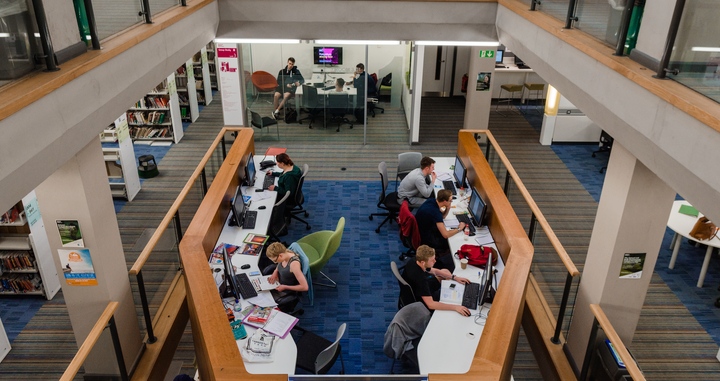
Adsetts library
Adsetts Library is located on our City Campus. It's open 24 hours a day, every day.
Explore the libraryExplore Redmires
Explore Redmires
Study in the new Redmires building – home to law, social sciences and architecture at Sheffield Hallam University.
Equipment and facilities
This course will soon move into our new Redmires building, where psychology students will have access to modern facilities, including speech, eye tracking and psychophysiology labs.
You’ll also have the opportunity to experience our specialist research facilities, such as:
- An observation suite
- An eye-tracking laboratory
- A BioPac psychophysics laboratory
- A low-level vision laboratory
- A food laboratory
- Electroencephalography (EEG) equipment
Media Gallery
-
-
-
-
-
Media Gallery Image Item -
Media Gallery Image Item -
Media Gallery Image Item
Entry requirements
All students
UCAS points
- Standard offer: 120 UCAS points
- Contextual offer: 104 UCAS points
We make contextual offers to local applicants, applicants living in low participation areas and applicants with specific personal circumstances. Check your eligibility for a contextual offer.
This must include at least 64 points from two A levels or equivalent BTEC qualifications excluding general studies. For example:
- BBB from A Level.
- DDM in BTEC Extended Diploma.
- Merit overall from a T level qualification.
- A combination of qualifications, which may include AS levels and EPQs.
You can find information on making sense of UCAS tariff points here and use the UCAS tariff calculator to work out your points.
• Access - at least 45 credits at level 3 and 15 credits at level 2 from a relevant Open College Network accredited course.
If English is not your first language, you will need an IELTS score of 6.5 with a minimum of 5.5 in all skills, or equivalent.
We consider other qualifications from the UCAS tariff. Applicants with alternative qualifications or a combination of qualifications and work experience are also considered. We welcome applications from people of any age. Please contact us for further advice.
Meeting the qualifications on the entry criteria does not guarantee you a place. You should ensure that you submit a personal statement and reference as these are considered as part of the selection process. Guidelines on personal statements and references can be found on the UCAS website.
Additional information for EU/International students
If you are an International or non-UK European student, you can find out more about the country specific qualifications we accept on our international qualifications page.
For details of English language entry requirements (IELTS), please see the information for 'All students'.
Fees and funding
Home students
Our tuition fee for UK students on full-time undergraduate courses in 2027/28 is £10,050 per year (capped at a maximum of 20% of this during your placement year). These fees are regulated by the UK government and therefore subject to change in future years.
If you are studying an undergraduate course, postgraduate pre-registration course or postgraduate research course over more than one academic year then your tuition fees may increase in subsequent years in line with Government regulations or UK Research and Innovation (UKRI) published fees. More information can be found in our terms and conditions under student fees regulations.
International students
Our tuition fee for International/EU students starting full-time study in 2027/28 is £18,900 per year (capped at a maximum of 20% of this during your placement year)

Financial support for home/EU students
How tuition fees work, student loans and other financial support available.
Additional course costs
The links below allow you to view estimated general course additional costs, as well as costs associated with key activities on specific courses. These are estimates and are intended only as an indication of potential additional expenses. Actual costs can vary greatly depending on the choices you make during your course.
General course additional costs
Additional costs for Sheffield Institute of Social Sciences (PDF, 250.4KB)Legal information
Any offer of a place to study is subject to your acceptance of the University’s Terms and Conditions and Student Regulations.

Come to an open day
Discover our TEF Gold rated teaching and see why students voted Sheffield Hallam a top five university in England at the prestigious Whatuni Student Choice Awards.