Everything you need to know...
-
What is the fee?
Home: £12,440 for the course
International/EU: £20,100 for the course -
How long will I study?
2 Years
-
Where will I study?
-
When do I start?
September 2026
-
Placement year available?
Yes
Come to an open day
Find out more at our postgraduate open days. Book now for your place.
Course summary
- Explore the creation, delivery and evaluation of international events at masters-level.
- Deepen your knowledge of global cultural, sporting and business events.
- Understand the economic and social contribution and impact of events on all scales.
- Solve complex real-world problems with innovative, analytical and critical thinking.
- Gain an internationally recognised industry-accredited qualification in Health and Safety (IOSH).
You’ll focus on the strategic role that authentic events play in contemporary global society, including how they contribute to organisational and environmental objectives. The course combines the latest theories of strategic event management with the application of knowledge through problem-solving and collaboration with industry partners. You’ll also have a 12-month placement opportunity to gain further experience.
Student satisfaction
This course scored 100% for overall student satisfaction in the Postgraduate Taught Student Satisfaction Survey 2025.
Sheffield Business School accreditation
Sheffield Business School is accredited by the Association to Advance Collegiate Schools of Business (AACSB) and has been awarded the Business School Impact System label by the European Foundation for Management Development (EFMD).
How you learn
Sheffield Hallam is one of the top providers of events courses in the UK. As a founder member of the Association of Event Management Educators (AEME), we’re involved in establishing academic benchmarks in events education. As a result, the MSc International Event Management course has an innovative learning and assessment approach that puts you at its centre.
You’ll be supported by industry-experienced academic staff. You’ll also be encouraged to collaborate with peers – both as part of your learning and through extra-curricular activities – creating a strong sense of course community.
This course is delivered face-to-face over three semesters – with teaching scheduled based on the length of your course and the academic calendar.
You learn through:
- practical workshops
- lectures
- tutorials
- site visits
- field trips
- industry guest lectures and key speakers
- staging live, online or simulated events
- coursework
- regular feedback
Key themes
You’ll join the course and gain a fundamental insight and understanding of the events industry, its importance locally, nationally and globally, and its overall contribution to economies and communities. From the very beginning of the course you’ll learn about event design, strategy, operations and delivery.
You’ll study the creation of events, key trends impacting the global events sector and how to evaluate event outcomes. Our course also challenges you to reflect on your own development to improve business communication and leadership skills. You’ll study a range of operational event management topics, including event marketing, finance and budgets, resources, venues, staffing and stakeholder management.
We’ll also focus on important global and societal issues through applied practical skills – including sustainability, equity, diversity and inclusion, and making ethical business decisions.
Assessments include a variety of written, verbal, digital and practical formats. We’ll support your success with formative feedback and student supervision. And where appropriate, we’ll build flexibility and personalisation into the assessment design to allow you to tailor your own learning
Course support
- You’ll have an academic adviser, an employability adviser and a student support adviser.
- Our teaching is digitally enriched, with opportunities to engage online with peers and tutors.
- You’ll have in-person workshops to welcome you and support you with placements.
- Supported independent study builds confidence and resilience, shaping individual creative practice.
- Collaboration with external partners gives vital experience of the professional world.
Applied learning
Work placements
You’ll have the opportunity to source a work placement for up to 12 months, where you’ll apply academic theory and your skills in a real-world setting. This hands-on experience will enhance your professional development and help you to make informed career choices after graduation. Throughout your placement, you’ll be supported to reflect on your experience and contribution to the organisation you work for. You'll also share your progress and achievements with your Placement Academic Supervisor as part of your final assessment.
Work placements are competitive and will require you to make formal applications to employers and be successful in securing an opportunity. The application process for placements takes place while you are a student with us. To support you in applying for placements, you’ll complete an additional placement preparation program that introduces you to the UK employment landscape and prepares you for the recruitment and assessment activities you will experience during that process. We also maintain a large database of placement offers that you can search to find opportunities most relevant to your course that you can apply for.
Live projects
You’ll be able to complete a live project as part of the Event Management in Action module – designing, planning, marketing and delivering an event. This could be for a charity or a business client, using all the skills, knowledge and experience you’ve gained so far.
We also work with local, regional, national and international event organisations to offer you opportunities to get involved in a range of roles and types of events. Through our wide network, you’ll have the chance to work, volunteer or look behind the scenes at some of these events.
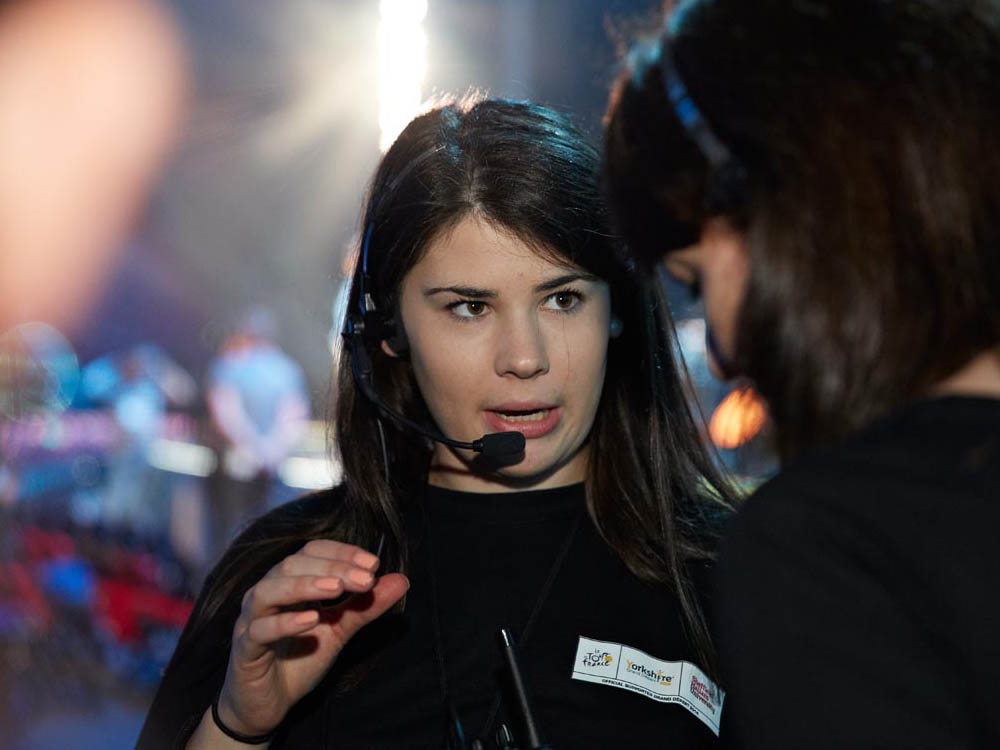
Previous examples include Sheffield Doc/Fest, Sheffield's Chinese New Year celebrations, Leeds Festival, Festival Republic and the Tour de France Grand Depart.
Field trips
To enhance your learning further, we include a residential trip. This is usually in London, with past students visiting the Olympia Conference Centre, Olympic Park, the Excel and the annual international trade show Confex.
Networking opportunities
Our links with industry mean you’ll be able to engage with a wide range of guest speakers from across the events industry – including visiting academics, researchers and other professionals. You’ll also benefit from our membership with the Association of Events Management Educators and National Outdoor Events Association. Since 2002 we’ve developed an impressive track record of forming tomorrow’s leaders in events management – with successful alumni working across the globe. Our graduates regularly return to share their career stories and events expertise.
Course leaders and tutors
Jaffer (Jay) Idris
Senior Lecturer and Course Leader in International Events Management and International MarketingJaffer Idris (Jay) is a lecturer working in Events Management within the Sheffield Business School at Sheffield Hallam University. Jay maintains a strong academic pr … Read more
Modules
Important notice: The structure of this course is periodically reviewed and enhanced to provide the best possible learning experience for our students and ensure ongoing compliance with any professional, statutory and regulatory body standards. Module structure, content, delivery and assessment may change, but we expect the focus of the course and the learning outcomes to remain as described above. Following any changes, updated module information will be published on this page.
You will be able to complete a placement year as part of this course. See the modules table below for further information.
Year 1
Compulsory modules
This module introduces you to the world of events management by giving you the chance to work on a real project for a live client. You’ll apply what you’ve learned in other parts of your course to plan and deliver an event, while building key professional and employability skills. You’ll also reflect on your personal development and growth as a future events professional.
You’ll study topics such as:
- How to design, plan, and deliver a live event using industry principles
- The value of reflective practice in developing as an events professional
- Teamwork and communication skills essential for working in the events industry
- How to plan your career and continue your professional development (CPD)
- Managing stakeholders and promoting equality, diversity, and inclusion in events
- Solving problems and making decisions in high-pressure situations
- Using digital tools and understanding graduate opportunities in the sector
- Developing leadership skills for a responsible career in events
- Exploring entrepreneurship and innovation in the events industry
This module explores how to design events strategically on a global scale. You’ll learn why events are important for organisations and communities, and how to create them with purpose. The module looks at key global trends—like rising audience expectations, the need to show return on investment, growing competition, and the increasing focus on sustainability and technology.
You’ll study topics such as:
- An introduction to key event theories, types of events, and the global scale of the industry
- Current trends and major factors shaping the global events sector
- What strategic event creation means and why it matters
- How to design events with clear goals and understand their wider impact
- How to identify and engage with different stakeholders
- The principles of purposeful event design
- How to evaluate event outcomes and apply lessons to future planning
The aim of this module is to enhance students’ professional development through the completion of, and reflection on meaningful work experience.
A work experience will provide students with opportunities to experience the realities of professional employment and experience how their course can be applied within their chosen industry setting. The placement will:
Allow student to apply the skills, theories and behaviours relevant and in addition to their course.
Enable students to enhance their interpersonal skills in demand by graduate employers – communication, problem solving, creativity, resilience, team work etc.
Grow their student network and relationship building skills.
Provide students with insights into the industry and sector in which their placement occurs.
Help student make informed graduate careers choices.
In this module, students will undertake a work experience (minimum duration and expectations as per HESA regulations – clarified on assignment brief/Blackboard) which is integrated, assessed and aligned to their studies and appropriate for their level of study.
Their personal Placement Academic Supervisor (PAS) will be their key point of contact during their work experience and will encourage and support students to reflect on their experience, learning and contribution to the organisation they work for.
To demonstrate gains in professional development, students will be required to share their progress, learning and achievements with their Placement Academic Supervisor and reflect on these for the summative piece of work.
In this module, you’ll learn how to design and deliver events using strategic planning and project management techniques. Working from a real client brief, you’ll explore how to meet changing client expectations and manage economic and operational challenges. You’ll also examine how different parts of the events industry work together and what that means for various stakeholders. This module will help you build the skills to analyse and respond to the wider events environment.
You’ll study topics such as:
- How to apply project management to event design, planning, and delivery
- Key aspects of running an event, including marketing, budgeting, staffing, venue selection, and stakeholder management
- How to design engaging and effective event programmes
- The essentials of event production
- Managing risks to ensure safe and secure events
- Planning and delivering sustainable events, including ISO20121 standards
- Making events accessible and inclusive for all audiences
- Using technology to plan and enhance events, including tools like OnePlan for site design
- Evaluating event outcomes and understanding long-term impact and legacy
This module develops your ability to make ethical, sustainable, and strategic business decisions. You’ll explore how to analyse environments, interpret data, and implement responsible strategies aligned with global priorities.
You’ll study topics such as:
- Analysing internal and external business environments
- Interpreting finance and business intelligence data
- Developing sustainable products and markets
- Designing international business strategies
- Ethical recruitment and inclusive workforce planning
- Evaluating strategic options responsibly
- Implementing strategic decisions effectively
- Aligning strategies with the United Nations Sustainable Development Goals
- Planning personal and professional development
- Enhancing sector awareness through reflection
Final year
Elective modules
This module develops your consultancy skills through a live project with a real client. You’ll investigate a specific organisational issue, apply research methods, and deliver practical insights. Alongside the project, you’ll reflect on its broader relevance to professional practice.
You’ll study topics such as:
- Defining project scope with your client
- Applying relevant theoretical frameworks
- Choosing appropriate research methods
- Addressing ethical research considerations
- Conducting a focused literature review
- Analysing and interpreting research data
- Drawing evidence-based conclusions
- Communicating findings clearly and professionally
- Managing your project effectively
- Reflecting on consultancy in professional practice
This module strengthens your critical research skills as you explore a current issue within your discipline. You’ll design and carry out an independent research project, generating insights that contribute to both academic knowledge and professional practice.
You’ll study topics such as:
- Defining your research question and focus
- Applying theoretical frameworks effectively
- Selecting appropriate research methods
- Addressing ethical research considerations
- Conducting a structured literature review
- Analysing and interpreting research data
- Drawing meaningful, evidence-based conclusions
- Managing your dissertation timeline
- Writing clearly and persuasively
- Reflecting on research in professional contexts
This module will enhance your critical research and analysis skills as you explore and reflect on a specific issue in relation to your work experience. You will investigate an organisational issue and provide valuable insights for organisational stakeholders, and you will also consider wider relevance to professional practice.
You’ll study topics such as:
- Working with stakeholders to formulate research purpose and focus
- Theoretical frameworks to inform research design
- Research methods including ethical considerations
- Literature review
- Analysis, interpretation, and evaluation of data
- Writing up/managing your research project
Future careers
Prepare for a career in management and senior management roles within the fast-paced field of event management. You’ll have support from an academic member of staff, workshops and support sessions to help prepare you for your future career.
This course prepares you for a career in:
- event management
- venue management
- project management
- global hotel management
- event account management
- event coordination for government organisations
- international association coordination
- conference and event organisation
- international leisure resort management
- events and conference business analysis and consultancy
- These are just a few of the many career paths you can follow in the industry.
- Previous graduates of this course have gone on to work as:
- Sales Manager, Maritime Industry, Vancouver
- Associate Director, Initiative, Leeds
- Client Strategy Manager, Pico, London
- Events Project Senior Supervisor, Dotera, China
- Senior Project Coordinator, Smyle Agency, London
- Associate Account Director, Innocean Worldwide, India
Equipment and facilities
You’ll develop your event leadership and management skills in our event spaces and specialist facilities on campus – delivering live events in the community through a wealth of partner venues in Sheffield and the surrounding area.
You’ll develop your digital skills using management software to plan and manage events. For example, previous students have used OnePlan event software to plan and deliver the Olympic Games in Paris 2024, enhancing their learning.
In recent years we’ve invested over £100m in new facilities to help you study how and when you want. This means 24-hour libraries and study spaces designed by our students.
Where will I study?
You study at City Campus through a structured mix of lectures, seminars and practical sessions as well as access to digital and online resources to support your learning.
City Campus
City Campus is located in the heart of Sheffield, within minutes of the train and bus stations.
City Campus map | City Campus tour
Adsetts library
Adsetts Library is located on our City Campus. It's open 24 hours a day, every day.
Learn moreEntry requirements
All students
Normally an honours degree or recognised equivalent qualification
We welcome enquiries from those who have substantial management experience but do not have the normal entry requirements. We may invite you for an interview to discuss your particular background, experience and qualifications. You may also be able to claim credit points which can reduce the amount of time it takes to complete your qualification at Sheffield Hallam. Find out more
Through accreditation of prior learning you may be able to claim entry with credit or exemptions based on your existing qualifications, knowledge and experience.
Work Experience Route
If English is not your first language you will need an IELTS 6.5 score with a minimum of 6.0 in all skills or equivalent.
Non Work Experience Route
If English is not your first language you will need an IELTS 6.0 score with a minimum of 5.5 in all skills or equivalent.
Additional information for EU/International students
If you are an International or non-UK European student, you can find out more about the country specific qualifications we accept on our international qualifications page.
For details of English language entry requirements (IELTS), please see the information for 'All students'.
Fees and funding
Home students
Our tuition fee for UK students starting full-time study in 2026/27 is £12,440 for the course. The tuition fee displayed above is for the full course. For this work experience route, your fees will be payable over two years, divided into two annual payments based on credits studied. The fee includes dedicated employability support to help you prepare for and secure work experience. It does not guarantee you a placement and if a placement is not secured the work experience fee will still be charged. If a placement is not secured you will transfer to the standard version of the course to complete your remaining credits, where the balance of your course fees will be due in year one in line with completing the course.
If you are studying an undergraduate course, postgraduate pre-registration course or postgraduate research course over more than one academic year then your tuition fees may increase in subsequent years in line with Government regulations or UK Research and Innovation (UKRI) published fees. More information can be found in our terms and conditions under student fees regulations.
International students
Our tuition fee for International/EU students starting full-time study in 2026/27 is £20,100 for the course. The tuition fee displayed above is for the full course. For this work experience route, your fees will be payable over two years, divided into two annual payments based on credits studied. The fee includes dedicated employability support to help you prepare for and secure work experience. It does not guarantee you a placement and if a placement is not secured the work experience fee will still be charged. If a placement is not secured you will transfer to the standard version of the course to complete your remaining credits, where the balance of your course fees will be due in year one in line with completing the course.
Scholarships and financial support
Find information on scholarships, bursaries and postgraduate student loans.
International scholarships up to £3000 ›
Alumni scholarships up to £2000 ›
Postgraduate loans for UK students ›
Additional course costs
The links below allow you to view estimated general course additional costs, as well as costs associated with key activities on specific courses. These are estimates and are intended only as an indication of potential additional expenses. Actual costs can vary greatly depending on the choices you make during your course.
General course additional costs
Additional costs for Sheffield Business School (PDF, 278.4KB)Legal information
Any offer of a place to study is subject to your acceptance of the University’s Terms and Conditions and Student Regulations.