
Everything you need to know...
-
Tuition fees
Home: £10,050 per year
International/EU: £18,900 per year -
Course duration
3 / 4 Years
-
Study location
-
Entry requirements
-
Course code
B004
-
Start date
September 2027
-
Placement year available?
Yes
Course summary
- Research, plan and produce journalistic content in audio, video and written formats.
- Use the latest recording and editing technologies to create online content.
- Develop and manage successful PR campaigns and events.
- Gain insights through connections like This Morning, Rise at Seven and Disney.
- Debate the relationship between journalism, PR, media and wider society.
Learn from industry experts in top class facilities, gaining a wide range of knowledge to help you succeed in these dynamic professions. You’ll examine key theories and issues relating to journalism and PR while working with communications professionals, journalists and content creators. You’ll learn essential practical skills relevant to these industries, the media in general and the workplace beyond.
Employability
95% of our graduates are in work or further study 15 months after graduating (2022/23 Graduate Outcomes Survey).

Come to an open day
Discover our TEF Gold rated teaching and see why students voted Sheffield Hallam a top five university in England at the prestigious Whatuni Student Choice Awards.
Top 10 in the UK
This course is ranked 10th in its subject area in the Guardian University Guide 2024.
Accredited by
Chartered Institute of Public Relations (CIPR)
How you learn
On this course your studies are led by a team that includes award-winning journalism, PR and media practitioners, alongside internationally recognised theorists with experience across a range of industries. These include TV, radio, newspapers, magazines and digital expertise across a range of sectors, from health and charity to finance and politics.
We’ll draw on the creative industries in Sheffield as well as broader national and international connections. Throughout the course you’ll respond to live PR briefs and/or engage with real-life journalistic stories. The course is outward looking and engages with real-life scenarios, with a special focus on underrepresented communities.
We’ll introduce key topics and concepts through a mix of tutor-directed learning and discussions, as well as student-led exercises and tasks. You’ll engage in collaborative activities both in person and online, supported by digitally enhanced teaching.
You learn through:
- lectures
- workshops
- seminars
- essays
- practical work
- case studies
- reports
- group work
- research projects
- presentations and pitches
- portfolios
Key themes
Your course begins with the basics of journalism and PR. You’ll learn how to manage a PR campaign and how to write and broadcast as a journalist, gaining vital recording and editing skills along the way.
During your second year, you’ll build on these skills with a firm grounding in the legal and regulatory requirements of industry, while also improving your research and investigation skills. The ‘content creation’ module gives you the cutting-edge industry-based skills to create PR or journalistic-based audio, video and written material.
Your final year is about preparing you for the workplace, whether that’s a traditional office, freelancing, being your own boss, or a portfolio career. You’ll also create a final piece of in depth work in your dissertation or applied project, with the support of a personal tutor. Previous students have researched the health impacts of social media, the representation of women’s cricket in the media, and investigations into whether young people are still interested in politics and voting.
Course support
We’ll support you every step of the way to help you fulfil your potential and personal ambitions. This might be through working with others in small groups, or by developing your own independent learning style. As this is a practical course, we’ll assess you through coursework rather than exams.
You’ll be supported in your learning journey towards highly skilled, graduate-level employment through a number of key areas. These include:
- access to specialist services to help with your personal, academic and career development
- access to our Skills Centre with one-to-ones, webinars and online resources, where you can get help with planning and structuring your assignments
- industry-specific employability activities such as live projects, learning in simulated environments and networking opportunities
Applied learning
Work Placement
You’ll be encouraged and supported to undertake a full-time work placement between your second and third year of the course. This valuable experience can have a transformative impact on your personal and professional development, which you can enhance further by completing Sheffield Hallam’s Applied Professional Diploma.
Your course is designed to give you the knowledge, confidence and readiness to secure and succeed in your placement. To complement this, you’ll have access to various support activities, resources, employer events and opportunities from our careers & employability team, helping you make the most of your work experience opportunities during your degree.
Recent students have worked with a wide range of organisations, from regional newspapers to the voluntary sector. These include the BBC, Disney, the Purple PR music agency, Mattel, Douwe Egberts, Dentsu Aegis, Top Cashback, South Yorkshire Police, Sheffield Children’s Hospital and Sheffield Showroom.
Live projects
During the course you’ll have opportunities to engage in real client-based projects. Previous students have undertaken projects for festivals and events such as Sensoria and Doc/Fest, as well as local and national PR agencies and organisations.
Networking opportunities
We often invite guests from across the journalism and PR sectors to speak to our students. In previous years, our visiting speakers have lectured on topics ranging from regional and national journalism to digital and social skills, search engine optimisation, crisis management, charity, sports and music PR.
Field trips
You’ll have the opportunity to go on study trips locally and further afield. These could include visits to regional, national or international events, organisations and agencies. Previous students have visited the Berlin Film Festival and Media City, The Branding Museum in London, and CIPR conferences. You’ll also have the chance to visit PR and media agencies to get an insight into what it’s like to work for one.
You can even apply for our Go Global student initiative – which has taken our students to destinations such as Malaysia and Paris – gaining new skills and a broader cultural insight into how journalism and PR are applied internationally.
There’s also an opportunity to study abroad, with the possibility of funding through the Turing scheme.
Your course leader


View our students' work
View our gallery of student work and learn more about the exciting projects they've been working on this year.
Modules
Important notice: The structure of this course is periodically reviewed and enhanced to provide the best possible learning experience for our students and ensure ongoing compliance with any professional, statutory and regulatory body standards. Module structure, content, delivery and assessment may change, but we expect the focus of the course and the learning outcomes to remain as described above. Following any changes, updated module information will be published on this page.
You will be able to complete a placement year as part of this course. See the modules table below for further information.
Year 1
Compulsory modules
Module Aim:
On this module, you will research real-world stories and use audio and visual skills to create content for broadcast (from TV and radio to digital platforms and social media). You will gain an understanding of practical studio techniques, including production, editing, and broadcast. You will learn to reflect on your strengths, and recognise your professional behaviours, limitations, and experiences.
Indicative Content:
Story gathering and writing for broadcast.
Use of video and audio equipment
Video and sound editing using relevant software.
Studio production techniques
Ethics in broadcast journalism
Module Aim:
This module will develop your communication, planning and management skills, with a focus on working across multiple digital platforms, and introduce you to the strategic and tactical skills and practices of a public relations professional.
You’ll develop an understanding of and apply relevant professional research skills to questions of audiences and stakeholders, as well as to the broader global, political, economic, social and technical environments in which the campaigns are based.
Topics are likely to include:
Campaign planning, including research
Understanding audiences and online behaviour
Working with journalists, ambassadors, influencers and across social media channels
Understanding organisational position and voice
Applying relevant frameworks and models such as PESO (Paid, Earned, Shared, and Owned)
Exploring digital platforms
PR budgets, paid use of social media; ambassador/influencer contracts
Campaign evaluation
Module Aim:
This module will introduce you to the practices and theories of news journalism, including industry expectations and competencies, editorial judgement, and ethics in journalism. You'll explore strategies for finding relevant and engaging news items, and practice writing stories for both print and online media.
INDICATIVE CONTENT
Sources of news
Interviewing
Practical research
Understanding audiences
Media platforms (print and online)
Self-reflection
Editing and revising work
Ethics and journalism
Module Aim:
On this module, you’ll gain a foundation in what Public Relations is, how it evolved and how it works. You will explore the history of public relations and journalism. You’ll encounter key theoretical perspectives on media and strategies of persuasive communication. Consideration is also given to how public relations works in contemporary contexts, particularly in terms of shaping perception and managing reputations.
Indicative content:
History and context of journalism and public relations
Theories and definitions of PR and persuasion
Significance of propaganda and ‘spin’
Introduction to media economics and ownership
PR in practice: how the industry works.
Key PR tools, techniques and skills, including Artificial Intelligence (AI).
Year 2
Compulsory modules
Module Aim:
This module will equip you with the skills to deliver content across social media and digital first platforms.
It involves applying relevant methods, production techniques, and technical skills to support creative storytelling, while effectively communicating ideas tailored to specific audiences.
You will work in groups as well as with external partners, demonstrating professional awareness, ethical practice, and self-leadership.
Indicative content:
Gathering audio, video and photographic material
Editing audio, video and photographic material
Podcasting
Project planning
Audiences and online behaviour
Digital storytelling across social media and emerging publishing and broadcasting platforms
Non-linear content creation
How to use and create graphics for digital platforms
Marketing and monetisation of digital content
Module Aim:
On this module, you will explore theoretical, conceptual and practical approaches to understanding, anticipating and analysing issues and crises which threaten the reputation of individuals and organisations. You’ll learn how to establish priorities and strategies for managing these situations and develop contingency plans and action points.
Indicative content:
Issue and crisis management
Online reputation management
Conflict between an organisation and its public
Key principles, concepts and theories related to the practice of PR issue and crisis management
Case studies in issue and crisis management
Developing and applying issue and crisis management strategies
Monitoring and evaluating crises.
Module Aim:
You will develop a deeper understanding and improved practical application of the ways in which journalists use language, content, style and structure to produce features for both print and online magazines. You will be introduced to the business of magazines and develop your ability to conceptualise, justify, design, and produce your own magazine content. You will explore how print and online magazines work together within a brand, and how content is shaped differently for printed publications, websites and social media. You will reflect on and critically evaluate your learning and identify strengths and skills to support best journalistic practice.
Indicative content:
Feature writing skills
Interviewing skills
Understanding long-form platforms
Magazine design and layout
Establishing a multiplatform brand
Audience and market identification
Module Aim:
This module will introduce you to the key social, legal, governmental, and regulatory frameworks for professional journalism. Building on foundational knowledge from L4, you will focus on relevant local and national structures and processes, and on key topics of media law. You will develop a critical awareness around questions of ethics and the role of journalists in exploring, explaining, and exposing legal and political processes.
INDICATIVE CONTENT
The essential structures and processes of local and central government in England and Wales.
Knowledge of the ECHR (Human Rights Act 1998) legislation in the context of journalistic practice.
Essential media law for journalists: defamation, contempt of court, reporting restrictions, copyright and sources of UK law.
The regulatory system and ethical codes of conduct within which UK journalists operate.
Elective modules
This module is for undergraduate students to study abroad in their second year, Semester 2 (only for courses that offer this option). With this module, you can spend a semester at one of the University’s approved partner institutions worldwide – from Europe to the Americas, Asia Australia or Canada.
Study Abroad plays an important role in the University's commitment to an engaging, challenging, and thriving learning culture. It offers opportunities to experience other academic cultures and foster intellectual maturity while enhancing co-curricular skills and students' long-term employability.
Study abroad for credit is permitted on existing university-approved courses only. Students are awarded credits and grades at the partner institution, which are converted into Sheffield Hallam credits and grades on return and included in the Sheffield Hallam degree classification.
Please check and refer to the webpage How study abroad works. You must submit a Learning Agreement outlining the modules you will be taking at the partner institution. The Learning Agreement will be signed off by your academic tutor to ensure that the Learning broadly covers the Learning Outcomes set out in your course curriculum during your study abroad.
Year 3
Compulsory modules
Module aim:
The aim of this module is to enhance students’ professional development through the completion of and reflection on meaningful work placement(s).
A work placement will provide students with opportunities to experience the realities of professional employment and experience how their course can be applied within their chosen industry setting. The placement will:
- Allow student to apply the skills, theories and behaviours relevant and in addition to their course
- Enable students to enhance their interpersonal skills in demand by graduate employers – communication, problem-solving, creativity, resilience, team work etc.
- Grow their student network and relationship building skills.
- Provide student with insights into the industry and sector in which their placement occurs
- Help student make informed graduate careers choices.
Indicative Content:
In this module students undertake a sandwich placement (min 24 weeks / min 21 hours per week) which is integrated, assessed and aligned to their studies.
Their personal Placement Academic Supervisor (PAS) will be their key point of contact during their placement and will encourage and support students to reflect on their experience, learning and contribution to the organisation they work for.
To demonstrate gains in professional development, students will be required to share their progress, learning and achievements with their Placement Academic Supervisor and reflect on these for the summative piece of work.
Final year
Compulsory modules
Module Aim:
In this module you will explore the ways research can provide a deeper insight into communication practice in a range of social contexts. You’ll develop your research skills, learning about a range of data collection methods relevant to Media, Journalism and Public Relations, and gain hands-on experience of approaches to the analysis of different types of data. The module will support you to reflect on the ethical considerations relating to research in online and in-person contexts. You will enhance your ability to define research questions, critically evaluate sources and methods, and plan projects.
Indicative Content:
Developing research questions
Approaches to data collection
Quantitative data analysis methods
Qualitative data analysis methods
Research ethics
Project planning
Identifying and critically evaluating sources
Working independently
Module Aim:
This module equips you with the skills, contextual knowledge, and confidence to succeed in a flexible working environment and to understand the issues, problems and opportunities involved in freelancing or starting your own business. Working with external professional clients, you’ll apply academic learning, take responsibility for goal setting, and demonstrate professional behaviours.
Indicative content:
Ethical working practices
Entrepreneurship theory and practice
Financial competency for business and self-employment
Managing clients and stakeholders
Goal setting
Applied research and pitching skills
Branding and networking
Resilience
Ongoing professional development
Module Aim:
On this module, you’ll undertake a project in an area of your choosing, focusing on your interests and ambitions. With dedicated support from a supervisor, you’ll develop, plan, and carry out a project that showcases research, writing and/or other production skills to create a dissertation or practical project. You’ll work closely with your colleagues as part of a learning community, providing and receiving feedback on your ideas and work in progress. This module will develop your confidence in your knowledge and skills as well as your awareness of the professional world of Journalism, PR, and Media.
Indicative Content:
Advanced research skills
Industry expectations
Ethics processes for research and writing
Understanding audiences
Project management
Planning, revising, and editing work
Providing and actioning feedback
Self-evaluation and reflection
Choosing appropriate formats
Module Aim:
This module supports your understanding and critical awareness of organisational responses to ethical issues, corporate social responsibility, and environmental and social governance. You’ll enhance your knowledge of different specialisms and hone your expertise in a range of core industry skills. Through an exploration of professional issues and trends you will critically evaluate economic, political, and social factors affecting the communications industry.
Indicative content:
Communications practice and skills across a range of sectors
Models, theories and key debates surrounding ethical and socially responsible practices
Organisational engagement with ethics, CSR and ESG
Combatting disinformation and fake news
Equity, diversity and inclusivity in the communications industry.
Activism
Future careers
This course prepares you for a career in:
- journalism
- music and entertainment management
- in-house and agency PR
- media relations
- digital PR
- event management
- corporate communications
- lobbying and political communications
- radio
- film and TV production
- blogging
- social media
- content creation
Previous journalism and PR graduates have gone on to work in social media campaigning and environmental lobbying positions, as well as for:
- BBC World Service
- BBC local radio
- Channel 4
- Sky
- TalkSport
- Oxford University
- Diva Creative
- Edelman
- Nelson Bostock
- Liverpool FC TV
- TUI’s head office PR team

All in on your career
We promise you’ll be ready to launch your career. With employer connections, hands-on learning and lifelong career support, we’ll help make your ambition a reality.
Where will I study?
You study at City Campus through a structured mix of lectures, seminars and practical sessions as well as access to digital and online resources to support your learning.
City Campus
City Campus is located in the heart of Sheffield, within minutes of the train and bus stations.
City Campus map | City Campus tour


Adsetts library
Adsetts Library is located on our City Campus. It's open 24 hours a day, every day.
Explore the libraryEquipment and facilities
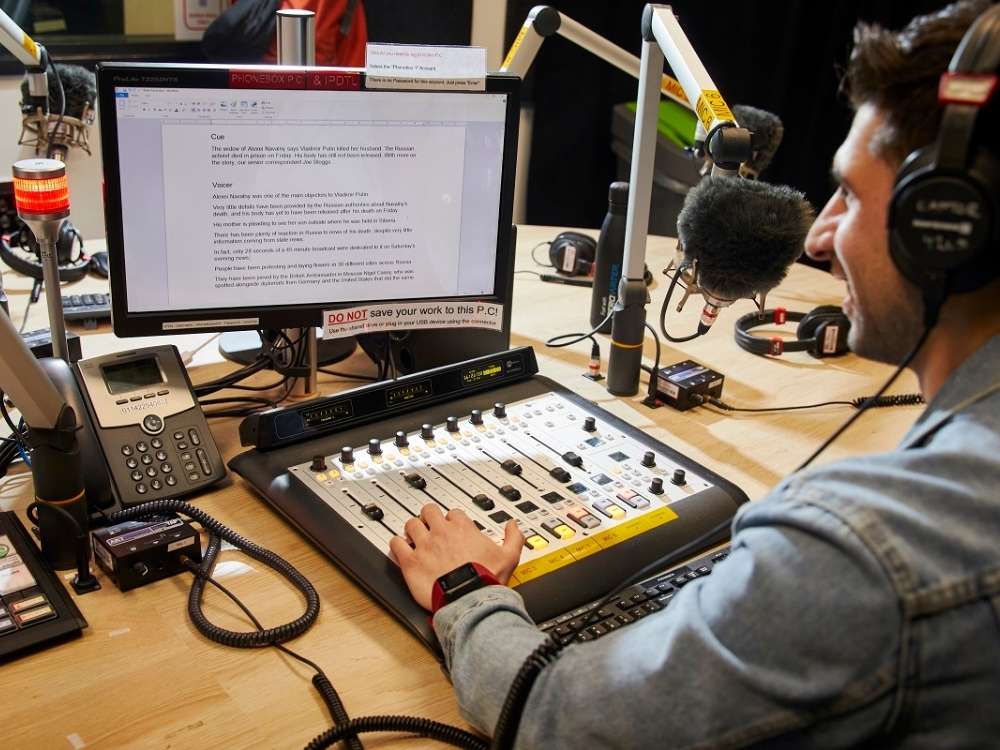
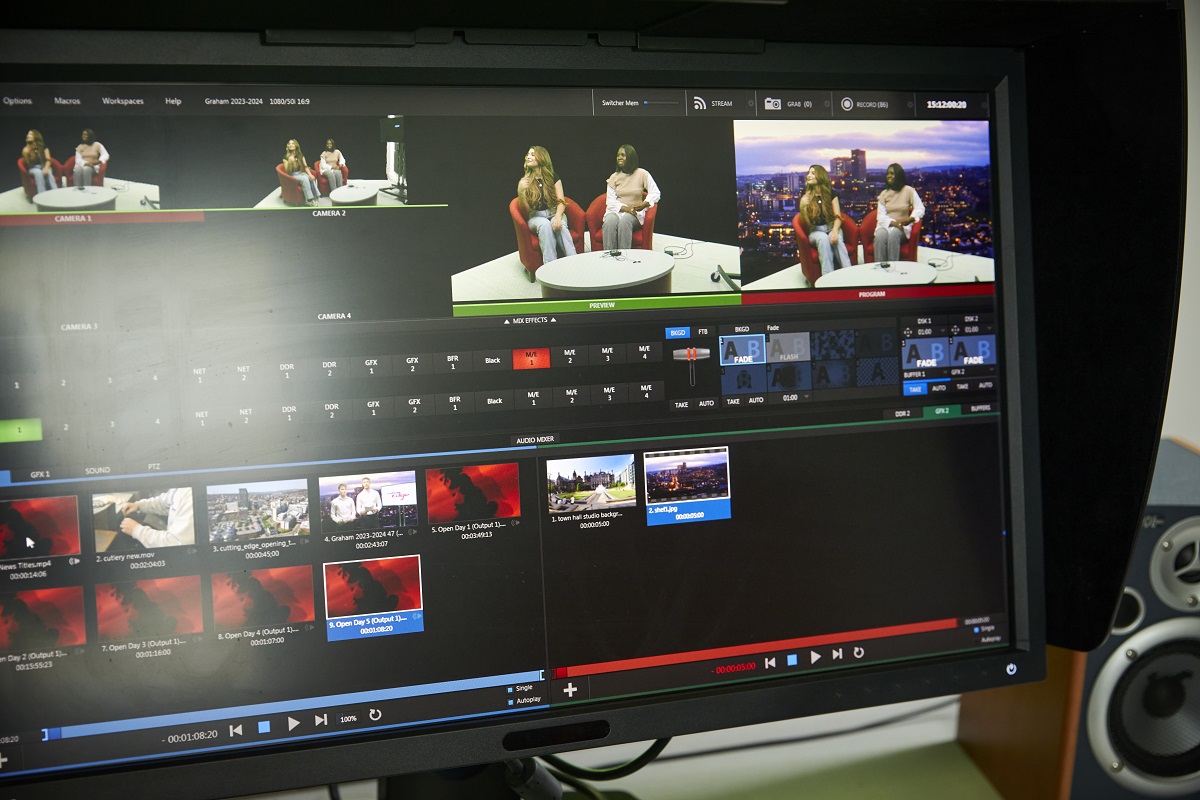
On this course you work with:
- our PR Hub, a custom-designed flexible teaching and learning space
- our TV studio to broadcast news bulletins and learn about production
- our radio studios to gain skills for audio broadcast
- editing software and video/audio hardware
- our Creative Media Centre’s skilled support team
360 tour - TV Studio
Learn more about your department
Media, Arts and Communications Facilities Tour
Take a look around the media, arts and communication facilities at Sheffield Hallam University with lecturer Saskia Wilson.
Media Gallery



Entry requirements
All students
UCAS points
- Standard offer: 104 UCAS points
- Contextual offer: 96 UCAS points
We make contextual offers to local applicants, applicants living in low participation areas and applicants with specific personal circumstances. Check your eligibility for a contextual offer.
This must include at least 64 from 2 A levels or equivalent BTEC National qualifications including at least 32 points in a relevant subject. For example:
- BCC from A Level.
- DMM in BTEC Extended Diploma.
- Merit overall from a T level qualification.
- A combination of qualifications, which may include AS levels, EPQs and general studies. Where an applicant has not taken AS Level qualifications we may make a lower offer.
You can find information on making sense of UCAS tariff points here and use the UCAS tariff calculator to work out your points.
GCSE
- English Language at grade C or 4
Access - an Access to HE Diploma with at least 45 credits at level 3 and 15 credits at level 2. At least 15 level 3 credits must be at merit grade or above, from a QAA-recognised Access to HE course, or an equivalent Access to HE certificate.
If English is not your first language you must have an IELTS score of 6.0 with a minimum of 5.5 in all skills or equivalent.
Additional information for EU/International students
If you are an International or non-UK European student, you can find out more about the country specific qualifications we accept on our international qualifications page.
For details of English language entry requirements (IELTS), please see the information for 'All students'.
Fees and funding
Home students
Our tuition fee for UK students on full-time undergraduate courses in 2027/28 is £10,050 per year (capped at a maximum of 20% of this during your placement year). These fees are regulated by the UK government and therefore subject to change in future years.
If you are studying an undergraduate course, postgraduate pre-registration course or postgraduate research course over more than one academic year then your tuition fees may increase in subsequent years in line with Government regulations or UK Research and Innovation (UKRI) published fees. More information can be found in our terms and conditions under student fees regulations.
International students
Our tuition fee for International/EU students starting full-time study in 2027/28 is £18,900 per year (capped at a maximum of 20% of this during your placement year)

Financial support for home/EU students
How tuition fees work, student loans and other financial support available.
Additional course costs
The links below allow you to view estimated general course additional costs, as well as costs associated with key activities on specific courses. These are estimates and are intended only as an indication of potential additional expenses. Actual costs can vary greatly depending on the choices you make during your course.
General course additional costs
Additional costs for Sheffield Creative Industries Institute (PDF, 277.5KB)Legal information
Any offer of a place to study is subject to your acceptance of the University’s Terms and Conditions and Student Regulations.
Financial support for home/EU students
How tuition fees work, student loans and other financial support available.